Lindbergh's Flight over the Atlantic
Six well known aviators had thus already lost
their lives in pursuit of the Orteig Prize when
Lindbergh took off on his successful attempt
in the early morning of May 20, 1927. Dubbed
the Spirit of St. Louis, his "partner" was a
fabric covered, single-seat, single-engine
"Ryan NYP" high wing monoplane (CAB
registration: N-X-211) designed by Donald Hall
and custom built by Ryan Aeronautical
Company of San Diego, California. Although
the primary source of funding for the purchase

 |  |  |  |
| If you enjoy our quizzes, don't forget to order our books! Click here. |
| If you have a picture you'd like us to feature a picture in a future quiz, please email it to us at CFitzp@aol.com. If we use it, you will receive a free analysis of your picture. You will also receive a free Forensic Genealogy CD or a 10% discount towards the purchase of the Forensic Genealogy book. |

| Quiz #163 Results |


 |  |  |  |
| ********** |
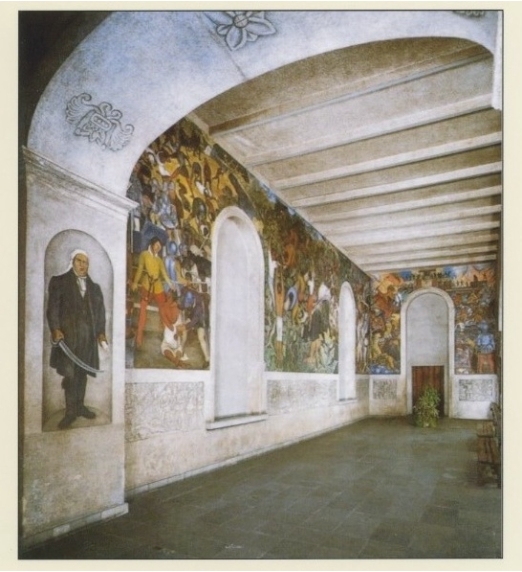
| 1. Diego Rivera, of Course! 2. The mural was commission by Dwight Morrow, U.S. Ambassador to Mexico and Charles Lindbergh's Father-in-Law 3. Palace of Cortez in Cuernavaca |
| ********** |
| Answer to Quiz #163 - June 15, 2008 |
| ********** |
Palacio now houses, among other things, the Cuauhnáhuac regional history museum,
documenting the history of the Cuernavaca area. Among many items of interest are the
famous mural by Diego Rivera, named Batalla de los Aztecas y Españoles Fresco
Cuernavaca, or in English, Battle between Aztecs and Spaniards Fresco Cuernavaca.It
was commissioned by the then U.S. ambassador Dwight Morrow, father-in-law of the
transatlantic flyer Charles Lindbergh, and painted in 1929 and 1930. They depict scenes
from the Conquest, the history of Cuernavaca, the War of Independence and the
Mexican Revolution. The image of Emiliano Zapata leading Hernán Cortés' white horse
symbolises the people's re-appropriation of the land.
documenting the history of the Cuernavaca area. Among many items of interest are the
famous mural by Diego Rivera, named Batalla de los Aztecas y Españoles Fresco
Cuernavaca, or in English, Battle between Aztecs and Spaniards Fresco Cuernavaca.It
was commissioned by the then U.S. ambassador Dwight Morrow, father-in-law of the
transatlantic flyer Charles Lindbergh, and painted in 1929 and 1930. They depict scenes
from the Conquest, the history of Cuernavaca, the War of Independence and the
Mexican Revolution. The image of Emiliano Zapata leading Hernán Cortés' white horse
symbolises the people's re-appropriation of the land.
| 1. What famous Mexican muralist created this painting? 2. How is the mural connected to The Lone Eagle? 3. Where is the mural located? |
| Thanks to Robert E. McKenna for suggesting this quiz. |
the FAI General Secretary Paul Tissandier informed the National Aeronautic Association
on August 31st, 1927, that Lindbergh's flight was certified as the Class-C World
Record for non-stop flight over a distance of 5809 kilometres".
on August 31st, 1927, that Lindbergh's flight was certified as the Class-C World
Record for non-stop flight over a distance of 5809 kilometres".
| ********** |
| The Connection between Diego Rivera and The Lone Eagle http://www.planetware.com/cuernavaca/cuauhnahuac-regional-history-museum-palacio-cortes-mex-mor-pc.htm |
Note: Bob McKenna, who suggested this quiz, was a resident of Mexico City and the
construction manager for a large American company there. Bob submitted a previous
quiz relating to his successful relocation of the Diego Rivera mural Sueño de una tarde
dominical en la Alameda Central (A Dream of a Sunday Afternoon in Alameda Park)
painted in 1947-1948. The mural was originally in the main dining room of the Alameda
Hotel, but the view of the mural was obstructed by three pillars. Bob designed and
supervised the successful move of the mural to the Museo Mural Diego Rivera, Mexico
City. It can now be seen and enjoyed without obstruction.
construction manager for a large American company there. Bob submitted a previous
quiz relating to his successful relocation of the Diego Rivera mural Sueño de una tarde
dominical en la Alameda Central (A Dream of a Sunday Afternoon in Alameda Park)
painted in 1947-1948. The mural was originally in the main dining room of the Alameda
Hotel, but the view of the mural was obstructed by three pillars. Bob designed and
supervised the successful move of the mural to the Museo Mural Diego Rivera, Mexico
City. It can now be seen and enjoyed without obstruction.
| The Detroit Institute of Art Diego Rivera Murals Another Connection to Lindy |
| All of the paintings that show aspects of industry and technology are colorful and detailed. The human figures appear to be deeply absorbed in their labors, while huge and accurately rendered machines dwarf and appear to dominate them. Rivera superimposed faces of many well-known people from the time onto characters in the paintings. For example, in the vaccination panel, which resembles a nativity scene, the nurse has the face of the actress Jean Harlow, the model for the physician was art historian William Valentiner (DIA director during the time Rivera painted the murals), and the child is based on Charles A. Lindbergh, Jr., who was kidnapped in 1932. |
| Detroit Industry Mural North Wall |
Charles Lindbergh departed Bolling Field in Washing
DC on December 13, 1927 on a goodwill tour of
Mexico. He arrived at Balbuena Field in Mexico City
at 3:40 p.m. EST of the December 14.
One week later, on December 21, Anne Morrow
arrived into Mexico City to spend Christmas with her
family. That was the day Charles and Anne met at the
US Embassy in Mexico City. The irony is that she
was not very happy about the idea of the hero who
was invading the family environment, so much that
she even wrote on her diary that "she was not to
reverence Lindy".
DC on December 13, 1927 on a goodwill tour of
Mexico. He arrived at Balbuena Field in Mexico City
at 3:40 p.m. EST of the December 14.
One week later, on December 21, Anne Morrow
arrived into Mexico City to spend Christmas with her
family. That was the day Charles and Anne met at the
US Embassy in Mexico City. The irony is that she
was not very happy about the idea of the hero who
was invading the family environment, so much that
she even wrote on her diary that "she was not to
reverence Lindy".
| Charles Lindbergh Meets His Future Wife Anne Spencer Morrow http://www.charleslindbergh.com/history/mexico.asp |
Something the shy, little, cultivated and beautiful Anne, didn't count on, was destiny
itself. On December 22, Mrs. Evangeline Lindbergh, Charles' mother, arrived in Mexico
City for the holidays. She celebrated Christmas Eve the Morrow family, embassy
officers, and some close guests of the family. On Christmas Day Lindbergh went back
to Xochimilco with the Morrows and his mother, playing "unknown" with some
success. On the February 26 he flew the same Ford Trimotor that brought his mother
to Mexico; among the passengers were members of the Morrow family including Mrs.
Morrow, Elizabeth, Constance and Anne (first time on the air with Charles!)
On February 12, 1929, Ambassador Morrow announced at the Embassy in Mexico City
"the formal engagement of their daughter Anne Spencer Morrow to Colonel Charles A.
Lindbergh". On the 24th the groom returned to Mexico City. This particular airplane
was later known as "Miss Wichita" and "Romancer", this last name apparently in honor
of Charles and Anne.
itself. On December 22, Mrs. Evangeline Lindbergh, Charles' mother, arrived in Mexico
City for the holidays. She celebrated Christmas Eve the Morrow family, embassy
officers, and some close guests of the family. On Christmas Day Lindbergh went back
to Xochimilco with the Morrows and his mother, playing "unknown" with some
success. On the February 26 he flew the same Ford Trimotor that brought his mother
to Mexico; among the passengers were members of the Morrow family including Mrs.
Morrow, Elizabeth, Constance and Anne (first time on the air with Charles!)
On February 12, 1929, Ambassador Morrow announced at the Embassy in Mexico City
"the formal engagement of their daughter Anne Spencer Morrow to Colonel Charles A.
Lindbergh". On the 24th the groom returned to Mexico City. This particular airplane
was later known as "Miss Wichita" and "Romancer", this last name apparently in honor
of Charles and Anne.
| Charles A. Lindbergh and The Spirit of St. Louis http://en.wikipedia.org/wiki... |
| Charles A. Lindbergh (February 4, 1902 - August 6, 1974) http://www.charleslindbergh.com/history/index.asp |
| Charles Nungesser |
use for the flight. Less than two weeks later, the first contenders
to actually get airborne were French war heroes Captain Charles
Nungesser and his navigator, François Coli, who departed from
Paris - Le Bourget Airport on May 8, 1927, on a westbound flight
in the Levasseur PL 8, The White Bird (L'Oiseau Blanc). All
contact was lost with them after crossing the coast of Ireland,
however, and they were never seen or heard from again.
Clarence ChamberlinAmerican air racer Clarence D. Chamberlin
and Arctic explorer CDR (later RADM) Richard E. Byrd were also
to actually get airborne were French war heroes Captain Charles
Nungesser and his navigator, François Coli, who departed from
Paris - Le Bourget Airport on May 8, 1927, on a westbound flight
in the Levasseur PL 8, The White Bird (L'Oiseau Blanc). All
contact was lost with them after crossing the coast of Ireland,
however, and they were never seen or heard from again.
Clarence ChamberlinAmerican air racer Clarence D. Chamberlin
and Arctic explorer CDR (later RADM) Richard E. Byrd were also
Charles Augustus Lindbergh was the well known
American aviator who made the first solo nonstop
flight across the Atlantic Ocean. On May 20-21,
1927 he rose from virtual obscurity to world fame
as the result of his piloting of the first solo nonstop
Transatlantic flight from New York (Roosevelt
Field) to Paris (Le Bourget Field), in the single-seat,
single-engine monoplane Spirit of St. Louis.
Lindbergh was awarded the nation's highest
military decoration, the Medal of Honor, in 1927
for his exploit. Other pilots had crossed the Atlantic
before him. But Lindbergh was the first person to
do it alone nonstop.
Lindbergh's feat gained him immediate,
international fame. The press named him "Lucky
Lindy" and the "Lone Eagle." Americans and
Europeans idolized the shy, slim young man and
showered him with honors.
American aviator who made the first solo nonstop
flight across the Atlantic Ocean. On May 20-21,
1927 he rose from virtual obscurity to world fame
as the result of his piloting of the first solo nonstop
Transatlantic flight from New York (Roosevelt
Field) to Paris (Le Bourget Field), in the single-seat,
single-engine monoplane Spirit of St. Louis.
Lindbergh was awarded the nation's highest
military decoration, the Medal of Honor, in 1927
for his exploit. Other pilots had crossed the Atlantic
before him. But Lindbergh was the first person to
do it alone nonstop.
Lindbergh's feat gained him immediate,
international fame. The press named him "Lucky
Lindy" and the "Lone Eagle." Americans and
Europeans idolized the shy, slim young man and
showered him with honors.
well financed contenders. Ironically the one exception
among these competitors was the still boyish, 25-year old
relative latecomer to the race — Charles Lindbergh — who,
in relation to the others, was virtually anonymous to the
public as an aviation figure, had considerably less overall
flying experience, and was being primarily financed by just
a $15,000 bank loan and his own modest savings.
among these competitors was the still boyish, 25-year old
relative latecomer to the race — Charles Lindbergh — who,
in relation to the others, was virtually anonymous to the
public as an aviation figure, had considerably less overall
flying experience, and was being primarily financed by just
a $15,000 bank loan and his own modest savings.
| Other Views of the Mural http://www.mexperience... |
Before Japan attacked Pearl Harbor in 1941, Lindbergh campaigned against voluntary
American involvement in World War II. Many Americans criticized him for his
noninvolvement beliefs. After the war, he avoided publicity until the late 1960's, when
he spoke out for the conservation of natural resources. Lindbergh served as an adviser
in the aviation industry from the days of wood and wire airplanes to supersonic jets.
Pursuing the Orteig Prize
Designated to be awarded to the pilot of the first successful nonstop flight made in
either direction between New York City and Paris within five years after its
establishment, the $25,000 Orteig Prize was first offered by the French born New York
hotelier (Lafayette Hotel) Raymond Orteig on May 19, 1919. Although that initial time
limit lapsed without a serious challenger, the state of aviation technology had advanced
sufficiently by 1924 to prompt Orteig to extend his offer for another five years, and this
time it began to attract an impressive grouping of well known, highly experienced, and
American involvement in World War II. Many Americans criticized him for his
noninvolvement beliefs. After the war, he avoided publicity until the late 1960's, when
he spoke out for the conservation of natural resources. Lindbergh served as an adviser
in the aviation industry from the days of wood and wire airplanes to supersonic jets.
Pursuing the Orteig Prize
Designated to be awarded to the pilot of the first successful nonstop flight made in
either direction between New York City and Paris within five years after its
establishment, the $25,000 Orteig Prize was first offered by the French born New York
hotelier (Lafayette Hotel) Raymond Orteig on May 19, 1919. Although that initial time
limit lapsed without a serious challenger, the state of aviation technology had advanced
sufficiently by 1924 to prompt Orteig to extend his offer for another five years, and this
time it began to attract an impressive grouping of well known, highly experienced, and
| ********** |
The first of the well known challengers to actually attempt a flight was famed World
War I French fighter ace René Fonck who on September 21, 1926, planned to fly
eastbound from Roosevelt Field in New York in a three-engine Sikorsky S-35. Fonck
never got off the ground, however, as his grossly overloaded (by 10,000 lbs) transport
biplane crashed and burned on takeoff when its landing gear collapsed. (While Fonck
escaped the flames, his two crew members, Charles N. Clavier and Jacob Islaroff, died
in the fire.) U.S. Naval aviators LCDR Noel Davis and LT Stanton H. Wooster were
also killed in a takeoff accident at Langley Field, VA, on April 26, 1927, while testing
the three-engine Keystone Pathfinder biplane, American Legion, that they intended to
Situated not far from the Plaza Principal (Zócalo or
Plaza Morelos), the Palacio Cortés, was begun in
about 1530.. It was once Cortés' residence and
administrative headquarters. The first floor loggias
offer splendid views of the city and its environs. The
Plaza Morelos), the Palacio Cortés, was begun in
about 1530.. It was once Cortés' residence and
administrative headquarters. The first floor loggias
offer splendid views of the city and its environs. The
in the race. Although he did not win, Chamberlin and his passenger, Charles Levine,
made the far less well remembered second successful nonstop flight across the Atlantic
in the single engine Wright-Bellanca WB-2 Miss Columbia (N-X-237) leaving Roosevelt
Field two weeks after Lindbergh's flight on June 4, 1927, and landing in Eisleben,
Germany near Berlin 43 hours and 31 minutes later on June 6, 1927. (Ironically the
Chamberlin monoplane was the same one that the Lindbergh group had originally
intended to purchase for his attempt but passed on when the plane's manufacturer
insisted on selecting the pilot.) Byrd followed suit in the Fokker F.VII trimotor,
America, flying with three others from Roosevelt Field on June 29, 1927. Although they
reached Paris on July 1, 1927, Byrd was unable to land there because of weather and
was forced to return to the Normandy coast where he ditched the tri-motor high wing
monoplane near the French village of Ver-sur-Mer.
made the far less well remembered second successful nonstop flight across the Atlantic
in the single engine Wright-Bellanca WB-2 Miss Columbia (N-X-237) leaving Roosevelt
Field two weeks after Lindbergh's flight on June 4, 1927, and landing in Eisleben,
Germany near Berlin 43 hours and 31 minutes later on June 6, 1927. (Ironically the
Chamberlin monoplane was the same one that the Lindbergh group had originally
intended to purchase for his attempt but passed on when the plane's manufacturer
insisted on selecting the pilot.) Byrd followed suit in the Fokker F.VII trimotor,
America, flying with three others from Roosevelt Field on June 29, 1927. Although they
reached Paris on July 1, 1927, Byrd was unable to land there because of weather and
was forced to return to the Normandy coast where he ditched the tri-motor high wing
monoplane near the French village of Ver-sur-Mer.
| ********** |
| The Spirit of St. Louis in the U.S. Air and Space Museum Washington, DC |
| Diego and Frieda Barn Owls See the Owl Cam at www.theowlcam.com |
I went down the primrose path on this one. I decided the best approach was to start
with Lindbergh, not realizing what a big deal he and his family were in Mexico in the
1920's and 1930's. So I got bogged down in the works of muralist Juan O'Gorman
who painted several murals depicting either Lindbergh or his kidnapped son. Clever quiz.
Carolyn Cornelius
*****
These Morrows are no relative to yours truly… my grandpa Morrow had quite an
interesting past, none of which included being any way connected to Dwight Morrow,
et. al…. such is! My luck!! Karen [Morrow] Petrus
*****
The coolest thing I learned was this muralist also painted some murals which adorn the
walls at the Detroit Art Institute that I've seen when I was a young girl on a field trip.
Rhonda Hensley
*****
I found most of my answer by coming up with Dwight Morrow on wikipedia. There
quite a few websites devoted to the life of Diego Garcia and his murals.It does take a
bit of time for various photo galleries of his murals to pop up. I did finally find the
image of the contest photo by linking to "diego rivera - web museum murals" image #
31. Mike Dalton
*****
I didn't know about the Lindbergh connection until I read about it tonight. The mural
was donated by the Morrows who were Lindbergh's in-laws. This one was relatively
easy (only because we have spent a fair amount of time in Mexico and have visited
Cortes's palace and seen the murals. Last week's I gave up on though.
Milene Rawlinson
*****
As an aside, I used to go to Cuernavaca at least twice yearly for work) Many years
later, I now live in a planned community in Mountain View, CA named Cuernavaca.
Maureen O'Connor
*****
So mesmerized was I by the unlikely combination of names (Juan and O'Gorman), and
the fact that he was connected to Diego RIVERA in work, time and space, that I felt
sure that "famous Mexican muralist" was a red herring! (Just making things more
complicated than they needed to be, huh?) I confess to not actually ever finding an
image of "The Conquest of Air", but finding other O'Gorman works along the way (see
attached) I leapt to the incorrect conclusion. Beth Long
with Lindbergh, not realizing what a big deal he and his family were in Mexico in the
1920's and 1930's. So I got bogged down in the works of muralist Juan O'Gorman
who painted several murals depicting either Lindbergh or his kidnapped son. Clever quiz.
Carolyn Cornelius
*****
These Morrows are no relative to yours truly… my grandpa Morrow had quite an
interesting past, none of which included being any way connected to Dwight Morrow,
et. al…. such is! My luck!! Karen [Morrow] Petrus
*****
The coolest thing I learned was this muralist also painted some murals which adorn the
walls at the Detroit Art Institute that I've seen when I was a young girl on a field trip.
Rhonda Hensley
*****
I found most of my answer by coming up with Dwight Morrow on wikipedia. There
quite a few websites devoted to the life of Diego Garcia and his murals.It does take a
bit of time for various photo galleries of his murals to pop up. I did finally find the
image of the contest photo by linking to "diego rivera - web museum murals" image #
31. Mike Dalton
*****
I didn't know about the Lindbergh connection until I read about it tonight. The mural
was donated by the Morrows who were Lindbergh's in-laws. This one was relatively
easy (only because we have spent a fair amount of time in Mexico and have visited
Cortes's palace and seen the murals. Last week's I gave up on though.
Milene Rawlinson
*****
As an aside, I used to go to Cuernavaca at least twice yearly for work) Many years
later, I now live in a planned community in Mountain View, CA named Cuernavaca.
Maureen O'Connor
*****
So mesmerized was I by the unlikely combination of names (Juan and O'Gorman), and
the fact that he was connected to Diego RIVERA in work, time and space, that I felt
sure that "famous Mexican muralist" was a red herring! (Just making things more
complicated than they needed to be, huh?) I confess to not actually ever finding an
image of "The Conquest of Air", but finding other O'Gorman works along the way (see
attached) I leapt to the incorrect conclusion. Beth Long
| Comments from Our Readers |
lines at the far end of the field
"by about twenty feet with a fair
reserve of flying speed." Over
the next 33.5 hours he and the
"Spirit" — which Lindbergh
always jointly referred to simply
as "WE" — faced many
challenges including skimming
over both storm clouds at
10,000 feet and wave tops at as
low at 10 ft, fighting icing,
flying blind through fog for
several hours, and navigating
only by the stars (when visible)
"by about twenty feet with a fair
reserve of flying speed." Over
the next 33.5 hours he and the
"Spirit" — which Lindbergh
always jointly referred to simply
as "WE" — faced many
challenges including skimming
over both storm clouds at
10,000 feet and wave tops at as
low at 10 ft, fighting icing,
flying blind through fog for
several hours, and navigating
only by the stars (when visible)
of the Spirit and other expenses related to the overall New York to Paris effort came
from a $15,000 State National Bank of St. Louis loan made on February 18, 1927, to
St. Louis businessmen Harry H. Knight and Harold M. Bixby, the project's two principal
trustees[25], and another $1,000 donated by Frank Robertson of RAC on the same day,
Lindbergh himself also personally contributed $2,000 of his own money from both his
savings and his earnings from the 10 months that he flew the Air Mail for RAC.
Burdened by its heavy load of 450 gallons of gasoline (2,385 lbs) and hampered by a
muddy, rain soaked runway, Lindbergh's Wright Whirlwind powered monoplane gained
speed very slowly as it made its 7:52 AM takeoff run from Roosevelt Field, but its J-5C
radial engine still proved powerful enough to allow the "Spirit" to clear the telephone
from a $15,000 State National Bank of St. Louis loan made on February 18, 1927, to
St. Louis businessmen Harry H. Knight and Harold M. Bixby, the project's two principal
trustees[25], and another $1,000 donated by Frank Robertson of RAC on the same day,
Lindbergh himself also personally contributed $2,000 of his own money from both his
savings and his earnings from the 10 months that he flew the Air Mail for RAC.
Burdened by its heavy load of 450 gallons of gasoline (2,385 lbs) and hampered by a
muddy, rain soaked runway, Lindbergh's Wright Whirlwind powered monoplane gained
speed very slowly as it made its 7:52 AM takeoff run from Roosevelt Field, but its J-5C
radial engine still proved powerful enough to allow the "Spirit" to clear the telephone
| Lindbergh Lands at Le Bourget Field in Paris May 21, 1927 http://www.waidev2.com/php/IMAGES/..... |
and "dead reckoning" before landing at Le Bourget at 10:22 PM on May 21. A crowd
estimated at 150,000 spectators stormed the field, dragged Lindbergh out of the
cockpit, and literally carried him around above their heads for "nearly half an hour."
While some damage was done to the "Spirit" (especially to the fabric covering on the
fuselage) by souvenir hunters, both Lindbergh and the Spirit were eventually "rescued"
from the mob by a group of French military flyers, soldiers, and police who took them
both to safety in a nearby hanger,[30] From that moment on, however, life would never
again be the same for the former little known Air Mail pilot who by his successful flight
had achieved virtually instantaneous — and lifelong — world fame.
estimated at 150,000 spectators stormed the field, dragged Lindbergh out of the
cockpit, and literally carried him around above their heads for "nearly half an hour."
While some damage was done to the "Spirit" (especially to the fabric covering on the
fuselage) by souvenir hunters, both Lindbergh and the Spirit were eventually "rescued"
from the mob by a group of French military flyers, soldiers, and police who took them
both to safety in a nearby hanger,[30] From that moment on, however, life would never
again be the same for the former little known Air Mail pilot who by his successful flight
had achieved virtually instantaneous — and lifelong — world fame.
| Orteig Prize check made out to Charles Lindbergh http://www.charleslindbergh.com/history/paris.asp |
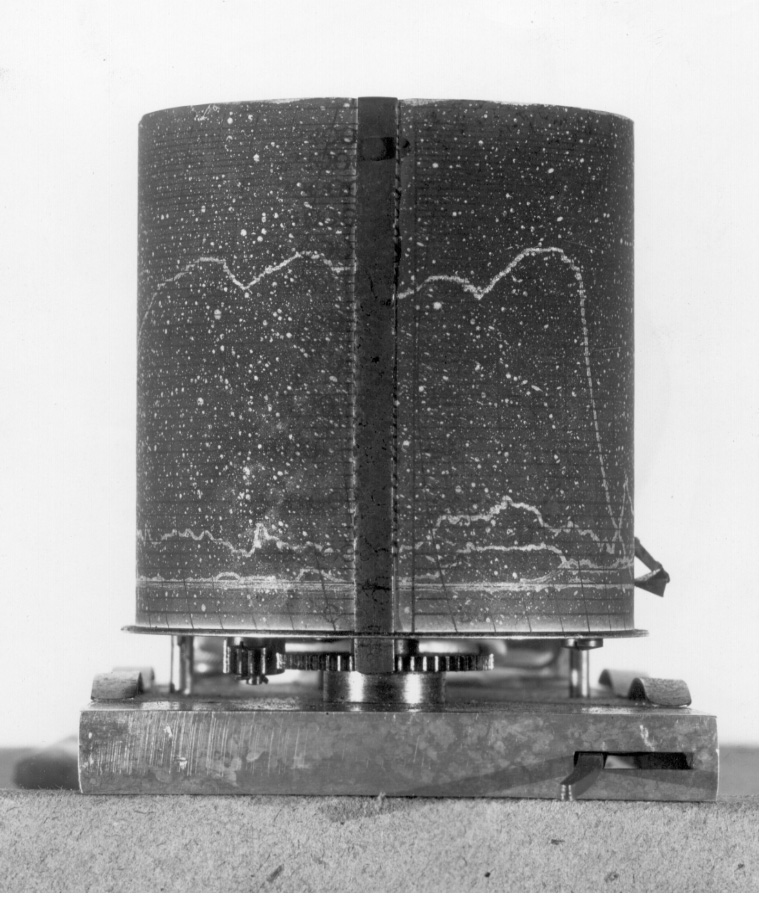
| Barograph recording Lindbergh's altitude. |
| Certifying He Made It Fair and Square http://www.charleslindbergh.com/history/paris.asp |
| ********* |
| Congratulations to Our Winners! Evan Hindman Arwen Newman Cristina Janessa Roberts Roxanne Connelly Teresa Yu Kelly Fetherlin Cheri Black Norma Longmire Anna Farris Mary South Claudio Trapote Marilyn Hamill Tom Tollefsen Don Draper Diane Burkett Tom Davis Joe Ruffner Carolyn Cornelius Dave Doucette Andy Hoh Karen [Morrow] Petrus Mike Swierczewski Rhonda Hensley Mike Daton Milene Rawlinson Karen Kay Bunting Stan Read Fred Stuart Barbara Battles Eric Rupp Rex Cornelius Pam Hoffman Gary Sterne Judy Pfaff Maureen O'Connor Brian Kemp Mary Osmar Diane Burkett |
documents to prove the performance. A sealed barograph, an
instrument working with atmospheric pressure, was loaded
on the aircraft; its six-hour cylinder recorded the altitudes
flown and proved that the flight was uninterrupted. The start
of the flight was attested by the US National Aeronautic
Association and the Procès-verbal established by the
Aéro-Club de France on Lindbergh's arrival attested that the
barograph was found sealed and reported that 322 litres of
gas (85 gallons) remained in the sealed tanks. This
Procès-verbal was signed by no less than 13 French officials,
the US Ambassador Myron Herrick, the Belgian Air Attaché
Willy Coppens and, of course Charles Lindbergh himself.
Finally,
instrument working with atmospheric pressure, was loaded
on the aircraft; its six-hour cylinder recorded the altitudes
flown and proved that the flight was uninterrupted. The start
of the flight was attested by the US National Aeronautic
Association and the Procès-verbal established by the
Aéro-Club de France on Lindbergh's arrival attested that the
barograph was found sealed and reported that 322 litres of
gas (85 gallons) remained in the sealed tanks. This
Procès-verbal was signed by no less than 13 French officials,
the US Ambassador Myron Herrick, the Belgian Air Attaché
Willy Coppens and, of course Charles Lindbergh himself.
Finally,
The Fédération Aéronautique
Internationale (FAI) - the World Air
Sports Federation - is the sole
organisation authorized to certify
aeronautical and astronautical world
records worlwide.
The certification of Charles
Lindbergh's flight required several
Internationale (FAI) - the World Air
Sports Federation - is the sole
organisation authorized to certify
aeronautical and astronautical world
records worlwide.
The certification of Charles
Lindbergh's flight required several
| ********** |

| The mural was the subject of Quiz #29, now retired. To access the quiz and read more about the mural, click here. |


| Detroit Industry Mural South Wall |


| ********** |


| ********** |



| Barograph recording Lindbergh's altitude. |


| NY Times Headlines May 21, 1927 Read story. Click here. |

| Gift from the Sea by Anne Morrow Lindbergh Click here. |
| "We" by Charles A. Lindbergh, Jr. Click here. |

| Charles Lindbergh and the Spirit of St. Louis by Charles A. LIndbergh Click here. |


