the Washington Monument. The March was supposed to start at 11:30am, but the "Big
Six" leaders were still meeting with members of Congress. Everyone could see the
Lincoln Memorial just a mile distant and they didn't need anyone to tell them what they
were there for. People spontaneously began singing freedom songs, then started
flowing down Constitution and Independence Avenues towards the Memorial.
"My God, they're going!" shouted Rustin from the steps of the Capitol, "We're
supposed to be leading them!" As they tried to catch up, John Lewis later recalled, "I
remember thinking, there goes America. We were supposed to be the leaders of this
march, but the march was all around us, already taking off, already gone." In the crush,
the Big Six were unable to overtake the front. Marshals managed to clear a space in the
middle so that they could pose for pictures side by side as if they were at the head of
the remaining marchers now dammed up behind them.
Each of the 10 sponsoring organizations had a speaker on the program. To ensure that
the event ended on time and all the marchers were out of town before dark, each
address was limited to a maximum of seven minutes. Dr. King was the last of the
organizational speakers. Deeply rooted in the rhythm and cadence of the Black church,
Six" leaders were still meeting with members of Congress. Everyone could see the
Lincoln Memorial just a mile distant and they didn't need anyone to tell them what they
were there for. People spontaneously began singing freedom songs, then started
flowing down Constitution and Independence Avenues towards the Memorial.
"My God, they're going!" shouted Rustin from the steps of the Capitol, "We're
supposed to be leading them!" As they tried to catch up, John Lewis later recalled, "I
remember thinking, there goes America. We were supposed to be the leaders of this
march, but the march was all around us, already taking off, already gone." In the crush,
the Big Six were unable to overtake the front. Marshals managed to clear a space in the
middle so that they could pose for pictures side by side as if they were at the head of
the remaining marchers now dammed up behind them.
Each of the 10 sponsoring organizations had a speaker on the program. To ensure that
the event ended on time and all the marchers were out of town before dark, each
address was limited to a maximum of seven minutes. Dr. King was the last of the
organizational speakers. Deeply rooted in the rhythm and cadence of the Black church,

 |  |  |  |
| If you have a picture you'd like us to feature a picture in a future quiz, please email it to us at CFitzp@aol.com. If we use it, you will receive a free analysis of your picture. You will also receive a free Forensic Genealogy CD or a 10% discount towards the purchase of the Forensic Genealogy book. |
| Quiz #177 Results |


 |  |  |  |
| 1. The Civil Rights March on Washington for Jobs and Freedom 2. August 28, 1963 3. About 250,000 people attended. |
| ********** |
| Click here to see results of 5th occasional photoquiz survey. |
| Click here to see results of 5th occasional photoquiz survey. |
| Quiz #177 - September 28, 2008 |
| ********** |
| 1. What is the event shown in this photograph? 2. When did it occur? 3. How many people attended? (For a lower resolution version of this photo that loads faster, click here.) |
| ********** |

| Thanks to Harold Clupper who has an affinity for photos of the backs of heads. See Quiz #167. |

| If you enjoy our quizzes, don't forget to order our books! Click here. |


The March on Washington for Jobs and Freedom was a
large political rally that took place in Washington, D.C. on
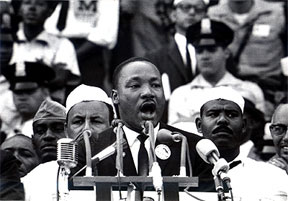
August 28, 1963. Martin Luther King, Jr. delivered his
historic "I Have a Dream" speech advocating racial harmony
at the Lincoln Memorial during the march.
The march was organized by a group of civil rights, labor,
and religious organizations. Estimates of the number of
participants varied from 200,000 (police) to over 300,000
(leaders of the march). About 80% of the marchers were
large political rally that took place in Washington, D.C. on
August 28, 1963. Martin Luther King, Jr. delivered his
historic "I Have a Dream" speech advocating racial harmony
at the Lincoln Memorial during the march.
The march was organized by a group of civil rights, labor,
and religious organizations. Estimates of the number of
participants varied from 200,000 (police) to over 300,000
(leaders of the march). About 80% of the marchers were
| Comment from the Quizmaster General |
| MARCH ON WASHINGTON FOR JOBS AND FREEDOM AUGUST 28, 1963 LINCOLN MEMORIAL PROGRAM 1. The National Anthem Led by Marian Anderson. 2. Invocation The Very Rev. Patrick O'Boyle Archbishop of Washington. 3. Opening Remarks A. Philip Randolph Director March on Washington for Jobs and Freedom. 4. Remarks Dr. Eugene Carson Blake Stated Clerk United Presbyterian Church of the U.S.A. Vice Chairman Commission on Race Relations of the National Council of Churches of Christ in America. 5. Tribute to Negro Women Fighters for Freedom Daisy Bates Diane Nash Bevel Mrs. Herbert Lee Rosa Parks Gloria Richardson Mrs. Medgar Evers 6. Remarks John Lewis, National Chairman Student Nonviolent Coordinating Committee. 7. Remarks Walter Reuther President United Automobile, Aerospace and Agricultural Implement Workers of America, AFL-CIO Chairman Industrial Union Department, AFL-CIO. 8. Remarks James Farmer, National Director, Congress of Racial Equality. 9. Selection Eva Jessye Choir 10. Prayer Rabbi Uri Miller, President Synagogue Council of America. 11. Remarks Whitney M. Young, Jr. Executive Director, National Urban League. 12. Remarks Matthew Ahmann Executive Director National Catholic Conference for Interracial Justice. 13. Remarks Roy Wilkins Executive Secretary National Association for the Advancement of Colored People. 14. Selection Miss Mahalia Jackson 15. Remarks Rabbi Joachim Prinz President American Jewish Congress. 16. Remarks The Rev. Dr. Martin Luther King, Jr. President, Southern Christian Leadership Conference. 17. The Pledge A. Philip Randolph 18. Benediction Dr. Benjamin E. Mays President, Morehouse College. "WE SHALL OVERCOME" http://www.africanamericans.com/MarchonWashington.htm |
Today, when mass marches in the nation's
capitol are commonplace (five in 2007, for
example), it is hard to imagine how radical
(and ominous) was Randolph's idea of
100,000 Black protesters descending on
Washington. The largest previous event had
been a racist march by 35,000 members of the
Ku Klux Klan in 1925. The suffragettes had
managed to mobilize 8,000 marchers in 1913
for womens' voting rights, and in 1957
Randolph, Rustin, and King mobilized close to
30,000 for a Prayer Pilgrimage for Civil
capitol are commonplace (five in 2007, for
example), it is hard to imagine how radical
(and ominous) was Randolph's idea of
100,000 Black protesters descending on
Washington. The largest previous event had
been a racist march by 35,000 members of the
Ku Klux Klan in 1925. The suffragettes had
managed to mobilize 8,000 marchers in 1913
for womens' voting rights, and in 1957
Randolph, Rustin, and King mobilized close to
30,000 for a Prayer Pilgrimage for Civil
| Congratulations to Our Winners! ~~ Ashley Hicks and Jina Yi, Mr. Rick's Quiz Angels ~~ Jessica and Samantha Bailey Jim Kiser Maureen O'Connor Christopher Tennant Sandy Thompson Carolyn Cornelius Alan Cullinan Teresa Yu Anna Farris Alecsandra Long Mick Reed Elaine C. Hebert Dan Schlesinger Karen Petrus Margaret Waterman Carol Darrow Deborah Campisano Lydia Sittman Dave Doucette Dave Town Carl Blessing Dennis Brann Janessa Roberts Martin Davis Andy E. Wold Marilyn Hamill Beth Long Mike Dalton Marjorie Wilser Cari Thomas Milene Rawlinson Delores Martin Carol LeMieux Jinny Collins Tamura Jones Fred Stuart Judy Pfaff Wayne Douglas Gary Sterne Christine Butts Suzan Farris Beverly Johns Kitty Huddleston Rex Cornelius Mike Swierczewski Joshua Kreitzer Audrey Speelman John Chulick Diane Burkett Stan Read Betty Ware Angela McLaughlin Kelly Fetherlin Evan Hindman Robert E. McKenna |
As someone who grew up in the New Orleans area during the Civil Rights movement, I
am glad that all happened in spite of the violence and unrest. It could have been a lot
worse. But this is what needed to happen. Now incredible as it would have seemed
back then, we have an African American nominated for President, and a woman for
Vice President. I am somehow relieved at that, independent of who wins or loses the
election. Colleen Fitzpatrick
Quizmaster General
am glad that all happened in spite of the violence and unrest. It could have been a lot
worse. But this is what needed to happen. Now incredible as it would have seemed
back then, we have an African American nominated for President, and a woman for
Vice President. I am somehow relieved at that, independent of who wins or loses the
election. Colleen Fitzpatrick
Quizmaster General
| ********** |
| ********** |
| ********** |
| Comments from Our Readers |
QUIZ ANGELS DO IT AGAIN...Also I am glad you ran this quiz now-we are
discussing important events that afro-americans have done in this country!!!
Rick, Jina, and Ashley
*****
I can relate. I was a Yankee living in Birmingham in the early 60's. Believe me, I was
appalled, and not very welcome, with my "Land of Lincoln" license plates. We have
indeed, come a long way from those days. And you are correct about this historic
election. Who would ever have thought this would happen, back then... that there
would be a negro or a woman running for president. (As you can tell, I am not
necessarily politically correct, but I am correct. I believe the three categorizations to
differentiate peoples... caucasion, mongoloid, and negroid, are for the sole purpose of
identifying by physical characteristics. They are neither demeaning, nor derogatory,
just objective facts. I don't understand what is wrong in that. It doesn't offend
me.)
Alecsandra Long
*****
I was not at this event but I have a lot of memories of it and the people who
participated. I moved to the Washington area less than a year after it occurred and I
haven't missed many large Mall gatherings since. Carolyn Cornelius
*****
NOTE: The photo was taken at the Lincoln Memorial sometime around 2 p.m., when
the program was scheduled to start (SOURCE: "Instructions for March Ushers",
http://www.crmvet.org/docs/mowusher.pdf, found on Civil Rights Movement Veterans
website: http://www.crmvet.org/info/mowhome.htm) Andy E. Wold
*****
Back during that time I was living in Greenwell Springs then my family moved about 10
miles North of Walker in 1964. I graduated in May of '66 and got married in Dec. then
left for Cherry Point, N. Carolina until 1969 when my hubby got out of the Marines.
But you are right everything happens for a reason and progress grew very painfully
back then. Now it is painful and sometimes deadly. Only the Lord knows what is in our
future, I pray he keeps us in his protective care. Anna Farris
*****
You are correct. It will be a groundbreaking election regardless of the outcome.
I recall much of the unrest and discrimination of that era in New Orleans and my own
bigoted views as a child, made all the more personal to me when I discovered my own
black blood line several years ago. I wish I could have a conversation with my near,
but unfortunately now deceased, ancestors to find out just how much they knew --
particulary my maternal grandmother. They never could have imagined the wealth of
information now readily available that turns up family secrets long-hidden and usually
unknown to the present generations. Diane Burkett
*****
Yes, I'm afraid I have to admit to living through that time also. I was attending college
in Memphis when MLK was shot. It was not a nice time. Clearing out our campus
was done with the most incredible speed that I was in a car headed home before I really
realized what had happened. The city officials were so afraid of campus riots and had
their plates full with the downtown rioting and pillaging. I have been invited to speak to
history classes about that time. Cripes. Makes me feel like the last survivor of
Vesuvius! Makes me really old. I thought then what an amazing time it was to be
living, and I think now is an amazing time to be living. I guess good old Art Buchwald
said it succinctly, "Whether it is the best of times or the worst of times, it's the only
time you've got!" He admonished the graduating class to make good use of their time.
I like to think I've done OK with mine even though it hasn't been on that large a "playing
field"! Kitty Huddleston
*****
In the 60's everyone wanted to be free from every oppression. This breakthrough in
freedom set the stage for all kinds of rebellions against traditions. After all, once you let
one group get by with "Raging Against The Machine" others will follow.
One could discuss the spiritual, social and ethical aspects of 60's revolutions at great
lenght, but the bottom line would still be the question "in the long run, was it good or
bad?" to which the answer would depend on your point of view. We are not far
enough away from it. Generations still exist with predjudices born out of a per 1960's
world. But then, will prejudice ever disappear. I think not. We will always be
prejudice against that which is different if we cannot find a more common ground than
just being Susan Farris
*****
In about November 1961 I heard MLK speak before an audience of some 1,500 people
in Civic Auditorium in Portland, Oregon. It was part of a social science college course
assignment for me to attend. I do not remember what he spoke about; I was impressed
by his presence. He came to Portland, partially because there was a fair sized
community of people of African descent living there. I was impressed the numbers of
people in attendance and their enthusiatic response. Make Dalton
discussing important events that afro-americans have done in this country!!!
Rick, Jina, and Ashley
*****
I can relate. I was a Yankee living in Birmingham in the early 60's. Believe me, I was
appalled, and not very welcome, with my "Land of Lincoln" license plates. We have
indeed, come a long way from those days. And you are correct about this historic
election. Who would ever have thought this would happen, back then... that there
would be a negro or a woman running for president. (As you can tell, I am not
necessarily politically correct, but I am correct. I believe the three categorizations to
differentiate peoples... caucasion, mongoloid, and negroid, are for the sole purpose of
identifying by physical characteristics. They are neither demeaning, nor derogatory,
just objective facts. I don't understand what is wrong in that. It doesn't offend
me.)
Alecsandra Long
*****
I was not at this event but I have a lot of memories of it and the people who
participated. I moved to the Washington area less than a year after it occurred and I
haven't missed many large Mall gatherings since. Carolyn Cornelius
*****
NOTE: The photo was taken at the Lincoln Memorial sometime around 2 p.m., when
the program was scheduled to start (SOURCE: "Instructions for March Ushers",
http://www.crmvet.org/docs/mowusher.pdf, found on Civil Rights Movement Veterans
website: http://www.crmvet.org/info/mowhome.htm) Andy E. Wold
*****
Back during that time I was living in Greenwell Springs then my family moved about 10
miles North of Walker in 1964. I graduated in May of '66 and got married in Dec. then
left for Cherry Point, N. Carolina until 1969 when my hubby got out of the Marines.
But you are right everything happens for a reason and progress grew very painfully
back then. Now it is painful and sometimes deadly. Only the Lord knows what is in our
future, I pray he keeps us in his protective care. Anna Farris
*****
You are correct. It will be a groundbreaking election regardless of the outcome.
I recall much of the unrest and discrimination of that era in New Orleans and my own
bigoted views as a child, made all the more personal to me when I discovered my own
black blood line several years ago. I wish I could have a conversation with my near,
but unfortunately now deceased, ancestors to find out just how much they knew --
particulary my maternal grandmother. They never could have imagined the wealth of
information now readily available that turns up family secrets long-hidden and usually
unknown to the present generations. Diane Burkett
*****
Yes, I'm afraid I have to admit to living through that time also. I was attending college
in Memphis when MLK was shot. It was not a nice time. Clearing out our campus
was done with the most incredible speed that I was in a car headed home before I really
realized what had happened. The city officials were so afraid of campus riots and had
their plates full with the downtown rioting and pillaging. I have been invited to speak to
history classes about that time. Cripes. Makes me feel like the last survivor of
Vesuvius! Makes me really old. I thought then what an amazing time it was to be
living, and I think now is an amazing time to be living. I guess good old Art Buchwald
said it succinctly, "Whether it is the best of times or the worst of times, it's the only
time you've got!" He admonished the graduating class to make good use of their time.
I like to think I've done OK with mine even though it hasn't been on that large a "playing
field"! Kitty Huddleston
*****
In the 60's everyone wanted to be free from every oppression. This breakthrough in
freedom set the stage for all kinds of rebellions against traditions. After all, once you let
one group get by with "Raging Against The Machine" others will follow.
One could discuss the spiritual, social and ethical aspects of 60's revolutions at great
lenght, but the bottom line would still be the question "in the long run, was it good or
bad?" to which the answer would depend on your point of view. We are not far
enough away from it. Generations still exist with predjudices born out of a per 1960's
world. But then, will prejudice ever disappear. I think not. We will always be
prejudice against that which is different if we cannot find a more common ground than
just being Susan Farris
*****
In about November 1961 I heard MLK speak before an audience of some 1,500 people
in Civic Auditorium in Portland, Oregon. It was part of a social science college course
assignment for me to attend. I do not remember what he spoke about; I was impressed
by his presence. He came to Portland, partially because there was a fair sized
community of people of African descent living there. I was impressed the numbers of
people in attendance and their enthusiatic response. Make Dalton
| As if we didn't already know how great a man he was, Paul Newman was one of the attendees of the march on Washington that is featured in this week's quiz. Dennis Brann |

| Forensic Genealogy salutes Paul Newman January 26, 1925 - September 26, 2008 |
| The March on Washington for Jobs and Freedom http://en.wikipedia.org/wiki/March_on_Washington_for_Jobs_and_Freedom http://www.crmvet.org/tim/tim63b.htm#1963mow |
| ********** |
| ********** |

African Americans and 20% white and other ethnic groups. The march is widely
credited as helping lead to the Civil Rights Act (1964) and the National Voting Rights
Act (1965).
The march was initiated by A. Philip Randolph (international president of the
Brotherhood of Sleeping Car Porters, president of the Negro American Labor Council,
and vice president of the AFL-CIO), who had planned a similar march in 1941. The
threat of the earlier march had convinced President Roosevelt to establish the
Committee on Fair Employment Practice and bar discriminatory hiring in the defense
industry.
credited as helping lead to the Civil Rights Act (1964) and the National Voting Rights
Act (1965).
The march was initiated by A. Philip Randolph (international president of the
Brotherhood of Sleeping Car Porters, president of the Negro American Labor Council,
and vice president of the AFL-CIO), who had planned a similar march in 1941. The
threat of the earlier march had convinced President Roosevelt to establish the
Committee on Fair Employment Practice and bar discriminatory hiring in the defense
industry.


Rights. In 1932, in the depths of the Depression, soldiers under General Douglas
MacArthur had used tear gas, bayonets, and sabers to brutally disperse 20,000 World
War I veterans pleading for their promised bonus (killing two and wounding hundreds).
But no one had ever brought 100,000 protesters into the streets of DC.
The 1963 march was organized by Randolph, James Farmer (president of the Congress
of Racial Equality), John Lewis (president of the Student Nonviolent Coordinating
Committee), King (president of the Southern Christian Leadership Conference), Roy
Wilkins (president of the NAACP), and Whitney Young (president of the National Urban
League). Bayard Rustin, a civil rights veteran and organizer of the 1947 Journey of
Reconciliation, the first of the Freedom Rides to test the Supreme Court ruling that
banned racial discrimination in interstate travel, administered the details of the march.
Roy Wilkens made it clear that the NAACP — the largest and best funded of all the civil
rights organizations — would not participate in any event that includes any form of civil
disobedience. Nor was he willing to allow any criticism of, or risk any break with, the
Kennedy administration. The call to mobilize 100,000 protesters inevitably created a
MacArthur had used tear gas, bayonets, and sabers to brutally disperse 20,000 World
War I veterans pleading for their promised bonus (killing two and wounding hundreds).
But no one had ever brought 100,000 protesters into the streets of DC.
The 1963 march was organized by Randolph, James Farmer (president of the Congress
of Racial Equality), John Lewis (president of the Student Nonviolent Coordinating
Committee), King (president of the Southern Christian Leadership Conference), Roy
Wilkins (president of the NAACP), and Whitney Young (president of the National Urban
League). Bayard Rustin, a civil rights veteran and organizer of the 1947 Journey of
Reconciliation, the first of the Freedom Rides to test the Supreme Court ruling that
banned racial discrimination in interstate travel, administered the details of the march.
Roy Wilkens made it clear that the NAACP — the largest and best funded of all the civil
rights organizations — would not participate in any event that includes any form of civil
disobedience. Nor was he willing to allow any criticism of, or risk any break with, the
Kennedy administration. The call to mobilize 100,000 protesters inevitably created a

numbers game in which success or failure
would be judged in large part by turnout.
To get that many people to Washington
required chartering, and filling, more than
2,000 busses. But that could be done
without the NAACP's financial resources
and its hundreds of chapters across the
country. Therefore, thoughts of sit-ins and
civil disobedience had to be set aside. It
was agreed that the event would be a
legally- sanctioned march in cooperation
with authorities — a march in Washington,
not a march on Washington.
The Kennedys are uneasy at thought of
thousands of Blacks protesting in the
would be judged in large part by turnout.
To get that many people to Washington
required chartering, and filling, more than
2,000 busses. But that could be done
without the NAACP's financial resources
and its hundreds of chapters across the
country. Therefore, thoughts of sit-ins and
civil disobedience had to be set aside. It
was agreed that the event would be a
legally- sanctioned march in cooperation
with authorities — a march in Washington,
not a march on Washington.
The Kennedys are uneasy at thought of
thousands of Blacks protesting in the

streets of Washington. Though JFK publicly supports the March, behind the scenes his
administration moves to limit and control it. To reduce the numbers who can participate
they demand that it be held on a weekday — a working day — rather than on the
weekend. Nervous at the thought of young Blacks loose on the streets at night after the
march, they require that all marchers arrive in the morning and be gone from the city
by dark. Politically, they want to prevent any placards or banners critical of the
administration — only officially approved signs can be carried. Wilkens insists on
acceptance of all these restrictions as the price of NAACP support, and the March is
scheduled for Wednesday, August 28 — just 8 weeks away.
The march was not universally supported among African-Americans. Some civil rights
activists were concerned that it might turn violent, which could undermine pending
administration moves to limit and control it. To reduce the numbers who can participate
they demand that it be held on a weekday — a working day — rather than on the
weekend. Nervous at the thought of young Blacks loose on the streets at night after the
march, they require that all marchers arrive in the morning and be gone from the city
by dark. Politically, they want to prevent any placards or banners critical of the
administration — only officially approved signs can be carried. Wilkens insists on
acceptance of all these restrictions as the price of NAACP support, and the March is
scheduled for Wednesday, August 28 — just 8 weeks away.
The march was not universally supported among African-Americans. Some civil rights
activists were concerned that it might turn violent, which could undermine pending



legislation and damage the international image
of the movement. The march was condemned
by Malcolm X, spokesperson for the Nation of
Islam, who termed it the "farce on
Washington".
March organizers themselves disagreed over
the purpose of the march. The NAACP and
Urban League saw it as a gesture of support
for a civil rights bill that had been introduced
by the Kennedy Administration. Randolph,
of the movement. The march was condemned
by Malcolm X, spokesperson for the Nation of
Islam, who termed it the "farce on
Washington".
March organizers themselves disagreed over
the purpose of the march. The NAACP and
Urban League saw it as a gesture of support
for a civil rights bill that had been introduced
by the Kennedy Administration. Randolph,

King, and the SCLC saw it as a way of raising both civil rights and economic issues to
national attention beyond the Kennedy bill. SNCC and CORE saw it as a way of
challenging and condemning the Kennedy administration's inaction and lack of support
for civil rights for African- Americans.
The entire DC police force was mobilized along with 500 reserves and 2,500 members
of the National Guard. Some 4,000 Army soldiers armed with rifles and bayonets were
stationed across the Potomac at Fort Myer, and 15,000 paratroopers of the 82nd
Airborne Division were placed on alert. March organizers knew such fears were
irrational and racist, but all direct-action protests needed leadership and coordination, so
they recruited and trained some 2,000 parade marshals. Half of them were Black police
officers from New York and other cities who belonged to the Guardian, a fraternal
organization of Black cops. The other half were Movement activists trained by Julius
Hobson of DC CORE. (In the event, none of this presence is needed, both police and
marshalls spent their time handling traffic and giving directions.)
On Saturday, August 24th, chartered buses from the West Coast began the long cross-
country journey to Washington. From San Francisco they headed east up over Donner
Pass and through the shimmering heat of the high desert, from Los Angeles they
traverse the Mojave on Route 66 — the "Mother Road" of the Depression and the
national attention beyond the Kennedy bill. SNCC and CORE saw it as a way of
challenging and condemning the Kennedy administration's inaction and lack of support
for civil rights for African- Americans.
The entire DC police force was mobilized along with 500 reserves and 2,500 members
of the National Guard. Some 4,000 Army soldiers armed with rifles and bayonets were
stationed across the Potomac at Fort Myer, and 15,000 paratroopers of the 82nd
Airborne Division were placed on alert. March organizers knew such fears were
irrational and racist, but all direct-action protests needed leadership and coordination, so
they recruited and trained some 2,000 parade marshals. Half of them were Black police
officers from New York and other cities who belonged to the Guardian, a fraternal
organization of Black cops. The other half were Movement activists trained by Julius
Hobson of DC CORE. (In the event, none of this presence is needed, both police and
marshalls spent their time handling traffic and giving directions.)
On Saturday, August 24th, chartered buses from the West Coast began the long cross-
country journey to Washington. From San Francisco they headed east up over Donner
Pass and through the shimmering heat of the high desert, from Los Angeles they
traverse the Mojave on Route 66 — the "Mother Road" of the Depression and the

| Dr. Martin Luther King and Bernard Rustin www.diversityhotwire.com/... |

Dustbowl. From Portland and Seattle they began rolling east
across the dry lands. On Sunday, buses hit the long-distance
highways of the mountain west, and on Monday & Tuesday
bus after bus after bus departed from the states and cities of
the heartland — Minneapolis and Kansas City, Milwaukee,
Chicago, and St. Louis.
On Tuesday morning a crowd gathered in Birmingham's
Kelly Ingram Park to squeeze aboard six buses — all they
could afford to charter. Hundreds had to be left behind for
lack of funds. Up from other freedom battlegrounds of the
Deep South buses began rolling north, from Plaquemine and
New Orleans Louisiana, from the Mississippi Delta, from
the embattled communities of Alabama, from Atlanta and
Southwest Georgia, the buses rolled towards Washington. A
"Freedom Special" train pulled out of Florida, traveling up
the East Coast, picking up marchers as it went. By the time it
across the dry lands. On Sunday, buses hit the long-distance
highways of the mountain west, and on Monday & Tuesday
bus after bus after bus departed from the states and cities of
the heartland — Minneapolis and Kansas City, Milwaukee,
Chicago, and St. Louis.
On Tuesday morning a crowd gathered in Birmingham's
Kelly Ingram Park to squeeze aboard six buses — all they
could afford to charter. Hundreds had to be left behind for
lack of funds. Up from other freedom battlegrounds of the
Deep South buses began rolling north, from Plaquemine and
New Orleans Louisiana, from the Mississippi Delta, from
the embattled communities of Alabama, from Atlanta and
Southwest Georgia, the buses rolled towards Washington. A
"Freedom Special" train pulled out of Florida, traveling up
the East Coast, picking up marchers as it went. By the time it
reached DC, it was 22 cars long. With no money for buses, a caravan of 200 autos
loaded with marchers moved up out of North Carolina, headlights pointing north
through the night.
As the hour approached midnight, they began boarding buses in Boston, Hartford, and
New Haven. In the dead of night more than 40,000 protesters assembled at pickup
points around New York City and then headed south on 600 buses and 11 chartered
trains. 85 buses departed from New Jersey and 100 from Philadelphia. From Detroit
and Cleveland and Pittsburgh, from Louisville and Cincinatti, the buses rolled towards
Washington. Through the dark night they rolled east on Route 40 and south on US-1.
In the morning hours of August 28, more than 2,000 buses, 21 special trains, 10
chartered aircraft, and uncounted autos converged on Washington. The regularly
scheduled planes, trains, and buses were filled to capacity. And in DC itself —
"Chocolate City," at that time the only major metropolis in America with a Black
majority population — tens of thousands, young and old, stepped out of their front
doors and headed for the gathering point — the towering spire of the Washington
Monument.
No one could accurately count the number of participants, and estimates varied. The
loaded with marchers moved up out of North Carolina, headlights pointing north
through the night.
As the hour approached midnight, they began boarding buses in Boston, Hartford, and
New Haven. In the dead of night more than 40,000 protesters assembled at pickup
points around New York City and then headed south on 600 buses and 11 chartered
trains. 85 buses departed from New Jersey and 100 from Philadelphia. From Detroit
and Cleveland and Pittsburgh, from Louisville and Cincinatti, the buses rolled towards
Washington. Through the dark night they rolled east on Route 40 and south on US-1.
In the morning hours of August 28, more than 2,000 buses, 21 special trains, 10
chartered aircraft, and uncounted autos converged on Washington. The regularly
scheduled planes, trains, and buses were filled to capacity. And in DC itself —
"Chocolate City," at that time the only major metropolis in America with a Black
majority population — tens of thousands, young and old, stepped out of their front
doors and headed for the gathering point — the towering spire of the Washington
Monument.
No one could accurately count the number of participants, and estimates varied. The

police said 200,000, but that number was
given out to the press before the rally began,
while people were still marching, and it did
not include late arrivals. Most reliable
observers placed the number at more than
300,000, though for some reason history
texts usually use the figure of 250,000.
Roughly one quarter were white, and one
sixth were students. Most marchers,
regardless of color, were from the urban
North. Southern Blacks were represented —
their spirited singing evident to all — but far
too many who wanted to come had been
left behind.
The marchers gathered in their thousands at
given out to the press before the rally began,
while people were still marching, and it did
not include late arrivals. Most reliable
observers placed the number at more than
300,000, though for some reason history
texts usually use the figure of 250,000.
Roughly one quarter were white, and one
sixth were students. Most marchers,
regardless of color, were from the urban
North. Southern Blacks were represented —
their spirited singing evident to all — but far
too many who wanted to come had been
left behind.
The marchers gathered in their thousands at

he was one of the great orators of the 20th
Century. To the disappointment of the
Kennedys and their supporters on the
platform, he completely ignored the President's
civil rights bill. Instead, he reached for a
higher truth that transcended the specifics of
any single piece of legislation or the role of one
man, or one administration.
Today, Dr. King's address is famous as the I
Have a Dream speech. But the dream section,
Century. To the disappointment of the
Kennedys and their supporters on the
platform, he completely ignored the President's
civil rights bill. Instead, he reached for a
higher truth that transcended the specifics of
any single piece of legislation or the role of one
man, or one administration.
Today, Dr. King's address is famous as the I
Have a Dream speech. But the dream section,
which is forever repeated in TV sound-bites and classroom recordings, was not part of
his original draft. When King neared the end of his seven minutes of prepared text —
the metaphor of the bounced check and the echo of Amos that "... we will not be
satisfied until justice rolls down like waters, and righteousness like a mighty stream" —
he sensed — as did others on the platform — that something more had to be said -that
the March itself required some summing up, some articulation of the vision that moved
the Movement, some expression of the aspirations, pride, determination, and courage of
not just these marchers, but the Freedom Movement as a whole.
Sitting behind him, Mahalia Jackson leaned forward, "Tell them about the dream,
his original draft. When King neared the end of his seven minutes of prepared text —
the metaphor of the bounced check and the echo of Amos that "... we will not be
satisfied until justice rolls down like waters, and righteousness like a mighty stream" —
he sensed — as did others on the platform — that something more had to be said -that
the March itself required some summing up, some articulation of the vision that moved
the Movement, some expression of the aspirations, pride, determination, and courage of
not just these marchers, but the Freedom Movement as a whole.
Sitting behind him, Mahalia Jackson leaned forward, "Tell them about the dream,

Martin." She had heard him speak the
dream at recent rallies. And with that, he
stepped over the seven-minute limit and off
his prepared text to soar, speaking from
the soul of the struggle to the heart of
oppressed people everywhere, "Go back to
Mississippi, go back to Alabama, ... go
back to the slums and ghettos of our
northern cities, ... Let us not wallow in the
valley of despair ... And so even though
we face the difficulties of today and
dream at recent rallies. And with that, he
stepped over the seven-minute limit and off
his prepared text to soar, speaking from
the soul of the struggle to the heart of
oppressed people everywhere, "Go back to
Mississippi, go back to Alabama, ... go
back to the slums and ghettos of our
northern cities, ... Let us not wallow in the
valley of despair ... And so even though
we face the difficulties of today and
tomorrow, I still have a dream. I have a dream that one day this nation will rise up and
live out the true meaning of its creed: We hold these truths to be self-evident that all
men are created equal ... I have a dream that my four little children will one day live in a
nation where they will not be judged by the color of their skin but by the content of
their character. I have a dream today! ..." As he rolled on with his majestic cadences
towards his ringing conclusion, ""Free at last, free at last. Thank God Almighty, free at
last," Mahalia and others on the platform could be heard over the loudspeakers backing
him up with the traditional affirmation of the Black church, "My Lord! My Lord!"
Deeply rooted in two cherished gospels — the Old Testament and the unfulfilled
promise of the American creed — King's 19 minute address indelibly positioned the
Freedom Movement in faith and history.
Read more...
live out the true meaning of its creed: We hold these truths to be self-evident that all
men are created equal ... I have a dream that my four little children will one day live in a
nation where they will not be judged by the color of their skin but by the content of
their character. I have a dream today! ..." As he rolled on with his majestic cadences
towards his ringing conclusion, ""Free at last, free at last. Thank God Almighty, free at
last," Mahalia and others on the platform could be heard over the loudspeakers backing
him up with the traditional affirmation of the Black church, "My Lord! My Lord!"
Deeply rooted in two cherished gospels — the Old Testament and the unfulfilled
promise of the American creed — King's 19 minute address indelibly positioned the
Freedom Movement in faith and history.
Read more...

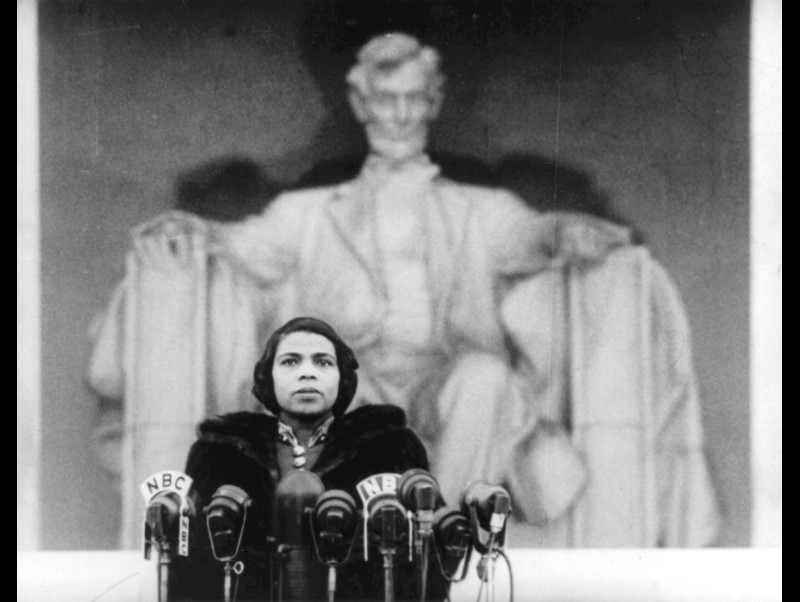
| Marion Anderson www.dvdbeaver.com... |

| John Lewis upload.wikimedia.org... |

| Roy Wilkins www.mnhs.org/library... |

| Daisy Bates libinfo.uark.edu/... |

| A Philip Randolph http://www.jfklibrary.org... |


| James FarmerJames Farmer z.about.com/... |


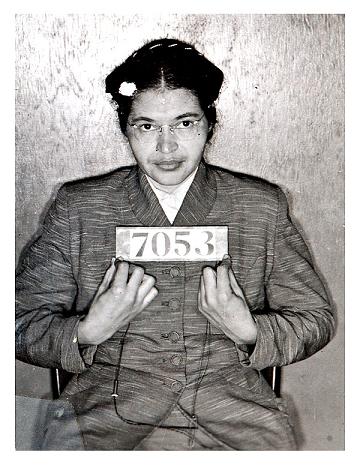
| Rosa Parks http://www.princeton.edu... |
| Dr. Benjamin E. Mays www.bc.edu/offices... |


| Walter Reuther www.medaloffreedom.com... |


| Rabbi Joachim Prinz upload.wikimedia.org... |

| Mahalia Jackson www.ipl.org/images/... |

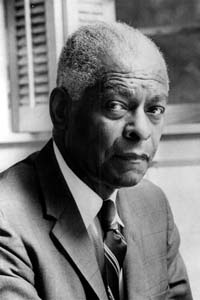
| Whitney J. Young, Jr. media-2.web.britannica... |
