Although standards for film speed varied, Kodachrome was what we'd think of as 8 to
10. By the sunny 16 rule, that's 1/10 second at f16, (so hold really still, and if it's not
sunny, hold reeealllly still). It was available in 4x5 up to 8x10, and in 35mm and 828.
Kodachromes from the 40s are true treasures - it took lots of light and that meant big
multiple flashes [bulbs] or long exposures.
An interesting fact is that he worked for the FSA/OWI during the same period of time
that Dorothea Lange worked there, but the two of them never met in their entire
lifetimes. Karen Kay Bunting
*****
As an English bloke living in Australia, I find it hard to reckon any beer other than those
from my native land (and belgium) to be "Blue Ribbon". But if I was at the South Water
Street freight depot of the Illinois Central Railroad, Chicago, Ill. I suppose I could be
tempted by this sign. The clock suggests the exposure was about six minutes which is
why the bar at the bottom of the sign doesn't read "Blended at 33 to 1"
Mick Reed
*****
I only know this from the photo blog where the picture is posted, otherwise I would
not have a clue. Margaret Waterman
*****
I found an interesting but acrophobic video clip on operation and maintenance of this
sign (it appears to be the same if it was a Chevrolet ad before Pabst took it over) or a
very similar sign. http://www.encyclopedia.chicagohistory.org/pages/410104.html
See www.shorpy.com/node/47?size=_original. I hope that gets you to the interesting
site where I found the video. It has a picture of the sign in the daytime so you can
clearly see the Blended 33 to 1. They think that Chevrolet had the sign first. There also
is some information on what is at the site today. It's a blog that has several entries so
let me know if that address doesn't work. I had fun with this one and will see if I can
find out anything else about the sign. It has to have been enormous.
Carolyn Cornelius
***
There was a question whether it was the largest neon sign of its time. It would be
interesting to know how many kilowatts it took to keep it going. Rex Cornelius
*****
When I looked at the photo from my laptop this morning I did not see the clock, but on
my desktop with a larger display I can see it. Interesting. Margaret Waterman
*****
In searching for info on the photo I found a speculation that this was a time exposure
because the minute hand on the clock was blurred. Duhh! I didn't even think of that.
Since it is blurred for 5 minutes I would guess that the exposure was a 5 minute
exposure. Milene Rawlinson
*****
Interesting quiz this week. I looked at it last Sunday, but (of course) waited until
tonight to tackle it. Back in the 70s, my CB "handle" was Blue Ribbon, due to my
beverage of choice. I enjoyed the quiz. Evan Hindman
*****
I was interested to find that what looks like a simple snapshot a tourist may have taken
and posted on their myspace page (or someone playing with the exposure time on a
new camera or something) was actually taken by Jack Delano, a photographer with the
Farm Security Administration. Teresa Yu
*****
By the way, the Shorpy daytime photo shows the "blended 33 to 1", but you have to
look carefully. The steel framework is painted black so the neon tubes don't show
during the day. Incidentally, Delano took that photo also - it's Library of Congress
number is LC-DIG-fsac-1a34786. The Library of Congress page for this photo gives a
total five download options. Thanks for your test. It introduced me to Shorpy.com and
taught me a lot. George Wright
*****
I am guessing that it is in Chicago. Lived in the inter-city there for 4 years and rode the
trains both in town and around the area. I do not however remember this sign so it
must be older than the '70's. It took about 5 minutes to make the exposure as the
minute hand is blurred between the twelve and one. Kitty Huddleston
10. By the sunny 16 rule, that's 1/10 second at f16, (so hold really still, and if it's not
sunny, hold reeealllly still). It was available in 4x5 up to 8x10, and in 35mm and 828.
Kodachromes from the 40s are true treasures - it took lots of light and that meant big
multiple flashes [bulbs] or long exposures.
An interesting fact is that he worked for the FSA/OWI during the same period of time
that Dorothea Lange worked there, but the two of them never met in their entire
lifetimes. Karen Kay Bunting
*****
As an English bloke living in Australia, I find it hard to reckon any beer other than those
from my native land (and belgium) to be "Blue Ribbon". But if I was at the South Water
Street freight depot of the Illinois Central Railroad, Chicago, Ill. I suppose I could be
tempted by this sign. The clock suggests the exposure was about six minutes which is
why the bar at the bottom of the sign doesn't read "Blended at 33 to 1"
Mick Reed
*****
I only know this from the photo blog where the picture is posted, otherwise I would
not have a clue. Margaret Waterman
*****
I found an interesting but acrophobic video clip on operation and maintenance of this
sign (it appears to be the same if it was a Chevrolet ad before Pabst took it over) or a
very similar sign. http://www.encyclopedia.chicagohistory.org/pages/410104.html
See www.shorpy.com/node/47?size=_original. I hope that gets you to the interesting
site where I found the video. It has a picture of the sign in the daytime so you can
clearly see the Blended 33 to 1. They think that Chevrolet had the sign first. There also
is some information on what is at the site today. It's a blog that has several entries so
let me know if that address doesn't work. I had fun with this one and will see if I can
find out anything else about the sign. It has to have been enormous.
Carolyn Cornelius
***
There was a question whether it was the largest neon sign of its time. It would be
interesting to know how many kilowatts it took to keep it going. Rex Cornelius
*****
When I looked at the photo from my laptop this morning I did not see the clock, but on
my desktop with a larger display I can see it. Interesting. Margaret Waterman
*****
In searching for info on the photo I found a speculation that this was a time exposure
because the minute hand on the clock was blurred. Duhh! I didn't even think of that.
Since it is blurred for 5 minutes I would guess that the exposure was a 5 minute
exposure. Milene Rawlinson
*****
Interesting quiz this week. I looked at it last Sunday, but (of course) waited until
tonight to tackle it. Back in the 70s, my CB "handle" was Blue Ribbon, due to my
beverage of choice. I enjoyed the quiz. Evan Hindman
*****
I was interested to find that what looks like a simple snapshot a tourist may have taken
and posted on their myspace page (or someone playing with the exposure time on a
new camera or something) was actually taken by Jack Delano, a photographer with the
Farm Security Administration. Teresa Yu
*****
By the way, the Shorpy daytime photo shows the "blended 33 to 1", but you have to
look carefully. The steel framework is painted black so the neon tubes don't show
during the day. Incidentally, Delano took that photo also - it's Library of Congress
number is LC-DIG-fsac-1a34786. The Library of Congress page for this photo gives a
total five download options. Thanks for your test. It introduced me to Shorpy.com and
taught me a lot. George Wright
*****
I am guessing that it is in Chicago. Lived in the inter-city there for 4 years and rode the
trains both in town and around the area. I do not however remember this sign so it
must be older than the '70's. It took about 5 minutes to make the exposure as the
minute hand is blurred between the twelve and one. Kitty Huddleston


 |  |  |  |
| If you have a picture you'd like us to feature a picture in a future quiz, please email it to us at CFitzp@aol.com. If we use it, you will receive a free analysis of your picture. You will also receive a free Forensic Genealogy CD or a 10% discount towards the purchase of the Forensic Genealogy book. |
| Quiz #178 Results |


 |  |  |  |
| Answers 1. South Water Street freight terminal, Chicago, IL 2. Five minutes. The hands on the clock are blurred. Note: See http://www.flickr.com/photos/library_of_congress/2179212776/ for an annotated version of this week's photograph. |
| ********** |
| Click here to see results of 5th occasional photoquiz survey. |
| Click here to see results of 5th occasional photoquiz survey. |
| Quiz #178 - October 5, 2008 |
| ********** |
| 1. Where is this sign located? 2. How long was the exposure for this photograph? How do you know? |
| ********** |


| If you enjoy our quizzes, don't forget to order our books! Click here. |

| I found an interesting but acrophobic video clip on operation and maintenance of this sign (it appears to be the same if it was a Chevrolet ad before Pabst took it over) or a very similar sign. www.encyclopedia.chicagohistory.org/pages/410104.html Carolyn Cornelius |
| I found out where company headquarters was by googling ("headquarters of Pabst Blue Ribbon). (Milwaukee up til 1996, then San Antonio (!) til 2007, and since then in Woodbridge, near Chicago. www.siteselection.com/features/2007/mar/il/ en.wikipedia.org/wiki/Pabst_Brewing_Company. But neither tells me where the photo was taken. Spent minutes pondering where the sign might be located and how to figure out the exposure. Hypothesized that since the Railroad's green track light was facing us, yet a train headlight seemed to be coming toward us on the same track (this should never be!), that might indicate about a 5-minute lapse. But I couldn't prove my theory. Stared at the photo some more and finally noticed (duh!) the clock on the sign, whose minute hand had moved! Still I had no sure location. So I (advanced) googled "Pabst" and adding "largest neon" in the exact phrase field. Since the sign is pretty big, I guessed it might have been famous for that reason. Bingo! http://www.shorpy.com/node/46 gives me all, including proof of the exposure time. Zero to Bingo in 5 minutes :) Marjorie Wilser |
| I found this photo by doing a Yahoo search on the keywords "Pabst Blue Ribbon sign". I got a reference to Flikr, which showed thumbnails. After going through about five screens of thumbnails I saw this photo and was able to access the main Flikr file. Jack Delano was an employee or contractor working for the Farm Security Administration (later merged into the Office of War Information). The photographic negative was transferred to the Library of Congress. I dialed into the LC search site http://lcweb2.loc.gov/pp/fsacquery.html#Number and did a search using the following keywords. "delano illinois pabst"Their call numbers are LC-DIG-fsac-1a34791 (digital image) and LC-UCW361-1072 (Color film image). I double-clicked one of them and got to the LC entry. I double-clicked on the thumbnail image on that page and was given the choice of retrieving a high resolution JPEG image (61 KB) or an uncompressed archival TIFF image (136 MBP). I downloaded the TIFF file (it took about a half hour on my DSL connection). Flikr also had a digital uncompressed .tiff image, which I downloaded. I blew up the sign portion of the photo and saw that there were two messages on the sign - the Pabst advertisement and one reading "Blended 33 to 1". Probably they alternatively flashed. As best as I can tell, FLICKR doesn't have any links to archival images. Library of Congress is a good source of images - if they are on file in the Library of Congress photo repository. My search later led me to www.Shorpy.com - I will remember them in the future for other research.They are do professional with their archiving that they even include the non-printing border of the sheet film. George Wright |
| How Marjorie Solved the Puzzle |
| Congratulations to Our Winners! Jessica & Samantha Bailey Jim Kiser Margaret Waterman Delores Martin George Wright Deborah Campisano Joshua Kreitzer Bill Utterback Marjorie Wilser Fred Stuart Sandy Thompson Audrey Speelman Robert E. McKenna Gary Sterne Judy Pfaff Beth Long Rex Cornelius Kitty Huddleston Janessa Roberts Stan Read Carolyn Cornelius Rhonda Hensley Kym Winkler Jim Colvin Dennis Brann Dan Schlesinger Mike Swierczewski Teresa Yu Dave Doucette Justin Campoli Tom Tollefsen Carl Blessing Mick Reed Joy Gough Marilyn Hamill Brian Kemp Cari Thomas Alecsandra Long Milene Rawlinson Tamura Jones Diane Burkett Elaine C. Hebert Kelly Fetherlin Wayne Douglas Zach Chambers Mary South Karen Kay Bunting Lois Carr Pamela Hoffman |
| Comments from Our Readers |

I have attached some JPEG images of the
Pabst sign and clock in the photo used in
weekly quiz #178 - they were cropped
from an uncompressed TIFF image that I
downloaded (it was a huge 7829x6081
pixel image which had excellent
resolution). This TIFF image came from a
Flikr link to the Library of Congress site.
One image shows the two messages on
the sign, which must have flashed
alternatively during the exposure. This
really doesn't show in the 500 x 382 pixel
"standard" image of this photo.
The other shows the clock with the
blurred minute hand.
I have found that, if you wish to analyze a
photograph, it is best to download an
uncompressed TIFF file which can be
viewed in detail using an image programs.
I opened the .tif file using Photoshop, then
cropped the uncompressed TIFF image
(139,478 KB). Then I saved the cropped
images to another folder in JPEG format.
Pabst sign and clock in the photo used in
weekly quiz #178 - they were cropped
from an uncompressed TIFF image that I
downloaded (it was a huge 7829x6081
pixel image which had excellent
resolution). This TIFF image came from a
Flikr link to the Library of Congress site.
One image shows the two messages on
the sign, which must have flashed
alternatively during the exposure. This
really doesn't show in the 500 x 382 pixel
"standard" image of this photo.
The other shows the clock with the
blurred minute hand.
I have found that, if you wish to analyze a
photograph, it is best to download an
uncompressed TIFF file which can be
viewed in detail using an image programs.
I opened the .tif file using Photoshop, then
cropped the uncompressed TIFF image
(139,478 KB). Then I saved the cropped
images to another folder in JPEG format.
| Note from Quizmaster George Wright |

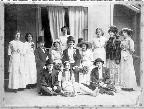
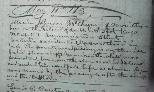
The cropped image sizes (6.34 KB and 58.7 KB) don't require much bandwidth or
excessive download times). Other than cropping, I did not use any other enhancements
or special effects.
excessive download times). Other than cropping, I did not use any other enhancements
or special effects.
| Jack Delano http://en.wikipedia.org/wiki/Jack_Delano, http://musike.cmpr.edu/v001/caban-eng.pdf http://www.antillania.com/JackDelano.htm |

| Click on the thumbnail to see a larger version of page with video on it.. |
The creative life of artist Jack Délano covered many fields which
evolved throughout his life. He was trained as a musician in
composition, violin and viola. As an illustrator he graduated from
the Pennsylvania Academy of Fine Arts; he became a world famous
photographer on his own efforts, and circumstances of life turned
him into a film and documentary maker. As eclectic as his artistry
was, his origins were similarly varied, born in the Ukraine as Jacob
Ovcharov, emigrated with his family to the United States, travels to
Europe, work throughout the southern United States, and finally
settling in Puerto Rico at the end of the 1940’s.
evolved throughout his life. He was trained as a musician in
composition, violin and viola. As an illustrator he graduated from
the Pennsylvania Academy of Fine Arts; he became a world famous
photographer on his own efforts, and circumstances of life turned
him into a film and documentary maker. As eclectic as his artistry
was, his origins were similarly varied, born in the Ukraine as Jacob
Ovcharov, emigrated with his family to the United States, travels to
Europe, work throughout the southern United States, and finally
settling in Puerto Rico at the end of the 1940’s.

Jacob Ovcharov was born in 1914 in a small town called Voroshilovka. The son of a
schoolteacher and a dentist, the family immigrated to America in 1923 and eventually
settled in Philadelphia. He studied music with his father, an amateur violinist, and at the
Settlement Music School in South Philadelphia. After high school graduation he decided
to pursue an arts degree at the Academy of Fine Arts. In 1935 he received a Cresson
Traveling Scholarship that provided for a summer trip to Europe. As a result of this he
was deeply influenced by the Renaissance art of Italy, and the Spanish and Dutch
masters of painting.1 He also discovered contemporary art- cubism, abstract
expressionism, surrealism which inspired in him a sense of rebellion against the
schoolteacher and a dentist, the family immigrated to America in 1923 and eventually
settled in Philadelphia. He studied music with his father, an amateur violinist, and at the
Settlement Music School in South Philadelphia. After high school graduation he decided
to pursue an arts degree at the Academy of Fine Arts. In 1935 he received a Cresson
Traveling Scholarship that provided for a summer trip to Europe. As a result of this he
was deeply influenced by the Renaissance art of Italy, and the Spanish and Dutch
masters of painting.1 He also discovered contemporary art- cubism, abstract
expressionism, surrealism which inspired in him a sense of rebellion against the
| Jack Delano |
| South Water Street freight depot of the Illinois Central Railroad, Chicago. May 1, 1943. 4x5 Kodachrome transparency by Jack Delano. http://www.shorpy.com/node/47 |
| Park Colonnade and Pabst Blue Ribbon Sign, Chicago, Illinois Walker Evans, 1946 http://www.metmuseum.org/works_of_art/collection_database/..... |


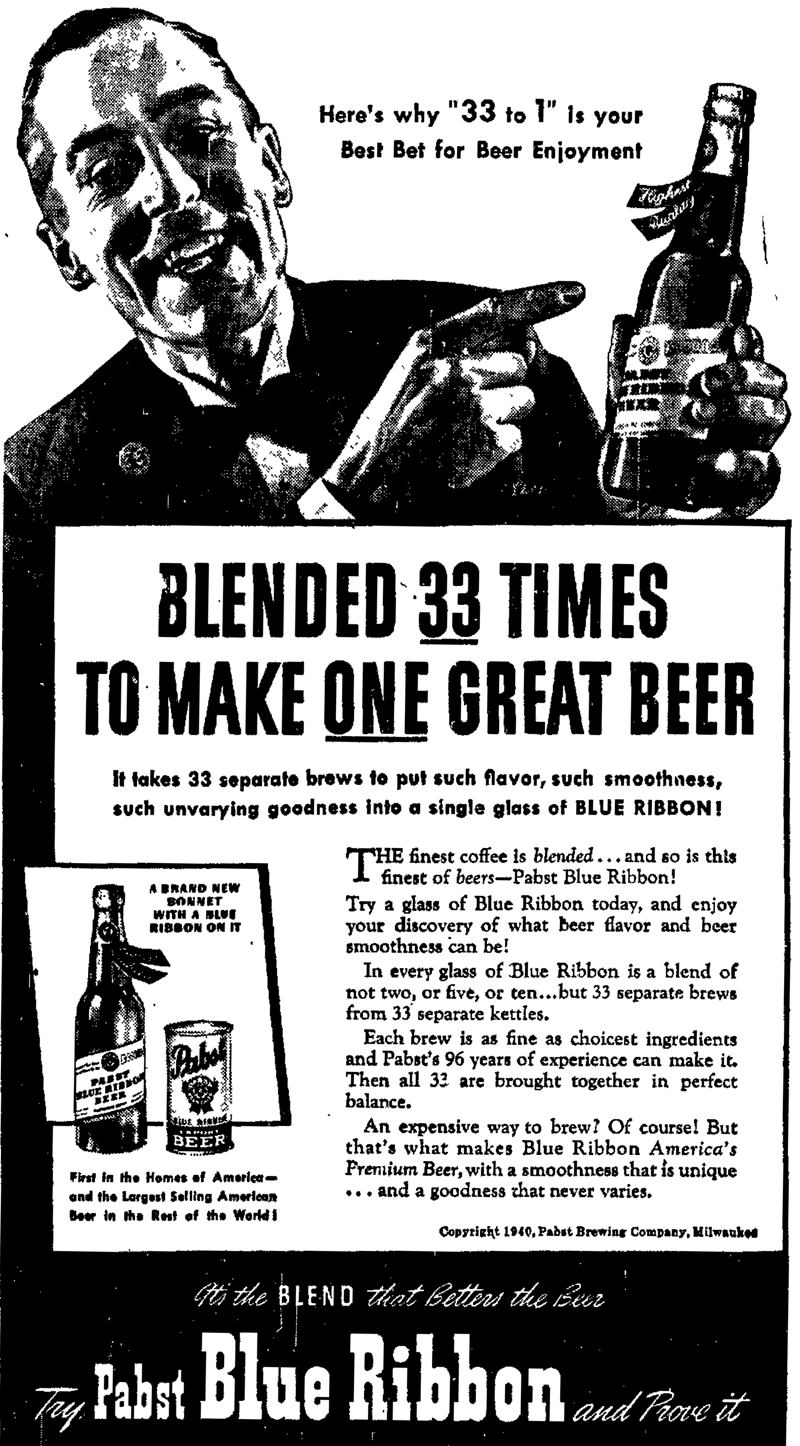
| We pause the quiz for words from our sponsor. www.shorpy.com/images/photos/pabst.gif |
| ********** |
| ********** |
| April 1943. South Water Street Illinois Central Railroad freight terminal, Chicago. 4x5 Kodachrome transparency by Jack Delano for the Office of War Information. http://www.shorpy.com/node/3086?size=_original |


| 1940 |
| Undetermined Date |
Dorothea Lange and Walker Evans, he applied for a job with the historical section of the
FSA (Farm Security Administration) in 1940. For the next years he traveled throughout
the United States, Puerto Rico, and the US Virgin Islands. All through this time Delano’
s primary assignment was to document the social and working conditions of people in
FSA projects.
After serving in the military during WWII, Delano and his wife Irene were living in
New York when he decided to apply for a grant from the Guggenheim Memorial
Foundation. They had visited Puerto Rico in 1941 as part of his work with the FSA and
they had become fascinated by the island and its people. They decided to propose to the
Guggenheim Foundation a book of photographs about the social conditions in the
Island. The proposal was accepted and Délano and Irene arrived in Puerto Rico in the
late 1940’s.
They made friends with the future governor of the Island, Luis Muñóz Marín, and
FSA (Farm Security Administration) in 1940. For the next years he traveled throughout
the United States, Puerto Rico, and the US Virgin Islands. All through this time Delano’
s primary assignment was to document the social and working conditions of people in
FSA projects.
After serving in the military during WWII, Delano and his wife Irene were living in
New York when he decided to apply for a grant from the Guggenheim Memorial
Foundation. They had visited Puerto Rico in 1941 as part of his work with the FSA and
they had become fascinated by the island and its people. They decided to propose to the
Guggenheim Foundation a book of photographs about the social conditions in the
Island. The proposal was accepted and Délano and Irene arrived in Puerto Rico in the
late 1940’s.
They made friends with the future governor of the Island, Luis Muñóz Marín, and
| More Comments from George Wright |
| ********** |
| ********** |

conservative training he received at the
Academy. It was around this time that he
decided to officially change his name from
Jacob Ovcharov to Jack Delano.
After graduating from the Academy, Delano
started working as a freelance photographer
in Philadelphia and New York. He also
developed an interest in films, and together
with his future wife Irene Esser started
making short documentaries. Impressed by
the work of famous photographers like
Academy. It was around this time that he
decided to officially change his name from
Jacob Ovcharov to Jack Delano.
After graduating from the Academy, Delano
started working as a freelance photographer
in Philadelphia and New York. He also
developed an interest in films, and together
with his future wife Irene Esser started
making short documentaries. Impressed by
the work of famous photographers like
| Jack and Irene Delano http://www.munoz-marin.org/ |
| Click here to for a portfolio of Jack and Irene Delano's Christmas card designs on loan to the Luis Muñoz Marín Foundation. |
quickly became involved in the creation of a
government office to combat illiteracy.
Together with Irene and several technicians
from Puerto Rico and the United States, the
Division of Community Education was
born. They started producing films to be
government office to combat illiteracy.
Together with Irene and several technicians
from Puerto Rico and the United States, the
Division of Community Education was
born. They started producing films to be
showed in the open air of distant towns in the island. Altogether, Délano produced
seven films for this division, also composing music for most of them.
Jack Délano’s first compositions emerged then as music for films he produced. After
resigning from the education division, he embarked on several projects that combined
the visual arts with music, immersing himself in the study of Spanish and Puerto Rican
folklore. He started collecting Spanish folksongs from the collection of Federico García
de Onís, a reputed Spanish philologist living in Puerto Rico. In 1955, Pablo Casals, the
famous cellist, moved to Puerto Rico and Délano was hired to make a documentary
film about his visit (Pablo Casals in Puerto Rico). Several of his photographs were later
used as posters for the Casals Festival.
Jack Delano’s career was brilliantly multifaceted. He has been recognized as one of the
great contributors to the Farm Security Administration collection of New Deal social
seven films for this division, also composing music for most of them.
Jack Délano’s first compositions emerged then as music for films he produced. After
resigning from the education division, he embarked on several projects that combined
the visual arts with music, immersing himself in the study of Spanish and Puerto Rican
folklore. He started collecting Spanish folksongs from the collection of Federico García
de Onís, a reputed Spanish philologist living in Puerto Rico. In 1955, Pablo Casals, the
famous cellist, moved to Puerto Rico and Délano was hired to make a documentary
film about his visit (Pablo Casals in Puerto Rico). Several of his photographs were later
used as posters for the Casals Festival.
Jack Delano’s career was brilliantly multifaceted. He has been recognized as one of the
great contributors to the Farm Security Administration collection of New Deal social
| I was interested in people not only as images, but also as human beings. In stories that they would tell me or interviews I had with them. It seemed to be it was an important part of what I was trying to communicate. Jack Delano Far from Main Street |
documents. He is also known
as a chronicler of change in
postwar Puerto Rico, as a
filmmaker, as a composer, and
as an illustrator of children's
books designed in
collaboration with his wife,
Irene. For all their
as a chronicler of change in
postwar Puerto Rico, as a
filmmaker, as a composer, and
as an illustrator of children's
books designed in
collaboration with his wife,
Irene. For all their
diversity, Delano's work consistently manifest his passionate commitment to popular
culture and communication.
Read more about this multi-talented and brilliant man. Click here.
culture and communication.
Read more about this multi-talented and brilliant man. Click here.
| A Town in Puerto Rico December 1941 lcweb2.loc.gov... |
| Farm Auction in Derby CT September 1940 lcweb2.loc.gov... |
| Skating, Vicinity of Brockton, MA December 1940 lcweb2.loc.gov... |
| Connecticut Town on the Sea December 1940 lcweb2.loc.gov/ |
| Southwestern Puerto Rico January 1942 lcweb2.loc.gov... |
| This Won't Hurt a Bit March 1942 www.shorpy.com/node/1843 |