(OED). He devoted most of the remainder of his life to that work.
He proved to be one of the most effective of the volunteers, systematically reading
through his library , and compiling lists of the occurrence of words. These he kept
current with the words needed in the volume being worked on at the time. As his lists
He proved to be one of the most effective of the volunteers, systematically reading
through his library , and compiling lists of the occurrence of words. These he kept
current with the words needed in the volume being worked on at the time. As his lists
terrible casualties suffered. Minor was also given the task of punishing fugitive soldiers
by branding them with a D for "deserter". Some of these men were Irish immigrants,
which would later play a role in Minor's dementia delusions.
After the end of the American Civil War Minor saw duty in New York City. He was
strongly attracted to the fleshpots of the city and devoted much of his off-duty time to
going with prostitutes. By 1867, his behavior had come to the attention of the Army and
he was transferred to a remote post in the Florida Panhandle. By 1868 his condition had
progressed to the point that he was admitted to St. Elizabeths Hospital, a lunatic asylum
in Washington, D.C.. After eighteen months he showed no improvement. He was
allowed to resign his commission and take retirement pay.
In 1871 he went to the UK settling in the slum of Lambeth, in London where once again
he took up a dissolute life. Haunted by his paranoia, he fatally shot a man named George
by branding them with a D for "deserter". Some of these men were Irish immigrants,
which would later play a role in Minor's dementia delusions.
After the end of the American Civil War Minor saw duty in New York City. He was
strongly attracted to the fleshpots of the city and devoted much of his off-duty time to
going with prostitutes. By 1867, his behavior had come to the attention of the Army and
he was transferred to a remote post in the Florida Panhandle. By 1868 his condition had
progressed to the point that he was admitted to St. Elizabeths Hospital, a lunatic asylum
in Washington, D.C.. After eighteen months he showed no improvement. He was
allowed to resign his commission and take retirement pay.
In 1871 he went to the UK settling in the slum of Lambeth, in London where once again
he took up a dissolute life. Haunted by his paranoia, he fatally shot a man named George
William Chester Minor was born on the island of Ceylon (now Sri
Lanka), the son of Congregationalist Church missionaries from New
England. He had numerous half-siblings, among them Thomas T.
Minor, mayor of Seattle, Washington in the late 1880s. At 14 he was
sent back to the United States by steamship, finishing his education
as a surgeon at Yale in New Haven, Connecticut in 1863.
He was accepted by the Union Army as a surgeon and served at the
Battle of the Wilderness in May 1864, which was notable for the
Lanka), the son of Congregationalist Church missionaries from New
England. He had numerous half-siblings, among them Thomas T.
Minor, mayor of Seattle, Washington in the late 1880s. At 14 he was
sent back to the United States by steamship, finishing his education
as a surgeon at Yale in New Haven, Connecticut in 1863.
He was accepted by the Union Army as a surgeon and served at the
Battle of the Wilderness in May 1864, which was notable for the
| Tale of Murder, Madness and the Love of Words http://www.bikwil.com/Vintage14/William-Chester-Minor.html#Article |
Dale is correct that Minor was a contract surgeon
in the Union Army beginning June 25, 1863. He
was commissioned as a Lieutenant in February
1866, after the war ended. In the summer of 1866,
he treated cholera patients on Governor's Island in
New York. This work earned Minor the rank of
Brevet Captain. Dale may be interested to know
that Minor was at the Battle of the Wilderness in
May 1864. Simon Winchester's book "The
Professor and the Madman" reports the branding
story as factual. The Acknowledgments section
lists the people and sources, such as the National
Archives, that Winchester used for information.
At Minor's trial for murder in London there were
detailed accounts from the police that before the
event he had repeatedly reported that Irish men
were plotting to do him harm. His landlady also
testified about Minor's morbid fear of Irish men.
Unfortunately no action was taken that would have
prevented the tragic crime.
Winchester also wrote "The Meaning of
Everything: The Story of the Oxford English
Dictionary". This book is a must read for those
interested in the history of the OED. By
coincidence, the quiz #195 photo of Dr. Minor is
on page # 195 in the book.
A recent book by Ammon Shea, "Reading the
OED: One Man, One Year, 21730 Pages",
is noteworthy. There are 26 chapters from A to Z
that Shea uses to comment on dozens
of rare words from abluvion to zyxt. This
definitely is a book for word lovers.
K.M. Elizabeth Murray's 1977 book "Caught in the
Web of Words - James Murray and
the Oxford English Dictionary" is about her
in the Union Army beginning June 25, 1863. He
was commissioned as a Lieutenant in February
1866, after the war ended. In the summer of 1866,
he treated cholera patients on Governor's Island in
New York. This work earned Minor the rank of
Brevet Captain. Dale may be interested to know
that Minor was at the Battle of the Wilderness in
May 1864. Simon Winchester's book "The
Professor and the Madman" reports the branding
story as factual. The Acknowledgments section
lists the people and sources, such as the National
Archives, that Winchester used for information.
At Minor's trial for murder in London there were
detailed accounts from the police that before the
event he had repeatedly reported that Irish men
were plotting to do him harm. His landlady also
testified about Minor's morbid fear of Irish men.
Unfortunately no action was taken that would have
prevented the tragic crime.
Winchester also wrote "The Meaning of
Everything: The Story of the Oxford English
Dictionary". This book is a must read for those
interested in the history of the OED. By
coincidence, the quiz #195 photo of Dr. Minor is
on page # 195 in the book.
A recent book by Ammon Shea, "Reading the
OED: One Man, One Year, 21730 Pages",
is noteworthy. There are 26 chapters from A to Z
that Shea uses to comment on dozens
of rare words from abluvion to zyxt. This
definitely is a book for word lovers.
K.M. Elizabeth Murray's 1977 book "Caught in the
Web of Words - James Murray and
the Oxford English Dictionary" is about her
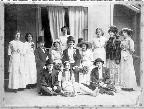
| 1. Who was this American physician, and why was he imprisoned in England's Broadmoor Criminal Lunatic Asylum? 2. What event during the Civil War reputedly caused his schizophrenic dread of Irish men? 3. While imprisoned at Broadmoor, he was a prolific contributor to what major lexicon of the English language? |

 |  |  |  |
| If you have a picture you'd like us to feature a picture in a future quiz, please email it to us at CFitzp@aol.com. If we use it, you will receive a free analysis of your picture. You will also receive a free Forensic Genealogy CD or a 10% discount towards the purchase of the Forensic Genealogy book. |


 |  |  |  |
As for William Chester Minor's service in the Civil
War I can find no evidence he served during the
war as a commissioned Surgeon.
I checked all my Civil War databases for his
service record. I found nothing on him there are a
couple possibilities for enlisted men named William
Minor from New York one being William Minor of
Company D, 51st New York (My G-G-G Uncle
Peter Niesen also served in this regiment) however
the age given at enlistment was 30 in 1861. Wm C
Minor would have been 26 years of age. The
other three did not match in age either and one of
them died during the war. So I believe that the
story he branded a deserter during the war may
just be a myth. It was an authorized form of
punishment but from what I found was a rarely
used.
Here’s a link to the, Official Records of the Union
and Confederate armies: http://cdl.library.cornell.
edu/moa/browse.monographs/waro.html. If
William Chester Minor served in the Union Army
as is stated on so many web sites (same story over
and over) and in books then there should be a
record of him here. If indeed he was a surgeon
given orders to brand a man by a court martial
then there should be a transcript of such an event.
It may be possible Minor was a civilian contract surgeon, this
from the website American Civil War Surgical Antiques on
contract surgeons (See http://www.braceface.
com/medical/Civil_War_Articles/Civil_War_contract_surgeons
.htm), “There is an excellent reference by Dr. Jay Bollet, Civil
War Medicine: Challenges and Triumphs, which is a well
documented book where he makes the point that contract
surgeons were relegated to working in the rear area hospitals
changing dressings and attending to the general health of
patients, not doing complicated, amputations, or field
surgery. The qualified surgeons were admitted to the Union
and Confederate Armies and reviewed for their competence
or lack there of, and eliminated from doing surgery if they did
not pass muster. The point here is contract surgeons were
not in the field or rear hospitals using their surgery kits to
amputate limbs or resect fragments from bullet-fractured
bones. It just didn't happen often if at all.”
I did find however in the book, Historical Register
and Dictionary of the United States Army 1789-
1903 by Heitman, Government Printing Office,
Washington 1903 the following service record of
William Chester Minor.
Minor, William Chester. (Born) East Indies,
(Commissioned from) New York, Assistant
Surgeon 28 Feb 1866; retired with rank of Captain
15 Dec 1870; Brevet Captain 28 Sept 1866 for
meritorious and distinguished service at Fort
Columbus, New York harbor where cholera
prevailed.
As you can see from the Government record
above William Chester Minor was not
commissioned as a Surgeon until a year after the
war ended. He never served outside of Fort
Columbus in New York harbor. Dale Niesen
War I can find no evidence he served during the
war as a commissioned Surgeon.
I checked all my Civil War databases for his
service record. I found nothing on him there are a
couple possibilities for enlisted men named William
Minor from New York one being William Minor of
Company D, 51st New York (My G-G-G Uncle
Peter Niesen also served in this regiment) however
the age given at enlistment was 30 in 1861. Wm C
Minor would have been 26 years of age. The
other three did not match in age either and one of
them died during the war. So I believe that the
story he branded a deserter during the war may
just be a myth. It was an authorized form of
punishment but from what I found was a rarely
used.
Here’s a link to the, Official Records of the Union
and Confederate armies: http://cdl.library.cornell.
edu/moa/browse.monographs/waro.html. If
William Chester Minor served in the Union Army
as is stated on so many web sites (same story over
and over) and in books then there should be a
record of him here. If indeed he was a surgeon
given orders to brand a man by a court martial
then there should be a transcript of such an event.
It may be possible Minor was a civilian contract surgeon, this
from the website American Civil War Surgical Antiques on
contract surgeons (See http://www.braceface.
com/medical/Civil_War_Articles/Civil_War_contract_surgeons
.htm), “There is an excellent reference by Dr. Jay Bollet, Civil
War Medicine: Challenges and Triumphs, which is a well
documented book where he makes the point that contract
surgeons were relegated to working in the rear area hospitals
changing dressings and attending to the general health of
patients, not doing complicated, amputations, or field
surgery. The qualified surgeons were admitted to the Union
and Confederate Armies and reviewed for their competence
or lack there of, and eliminated from doing surgery if they did
not pass muster. The point here is contract surgeons were
not in the field or rear hospitals using their surgery kits to
amputate limbs or resect fragments from bullet-fractured
bones. It just didn't happen often if at all.”
I did find however in the book, Historical Register
and Dictionary of the United States Army 1789-
1903 by Heitman, Government Printing Office,
Washington 1903 the following service record of
William Chester Minor.
Minor, William Chester. (Born) East Indies,
(Commissioned from) New York, Assistant
Surgeon 28 Feb 1866; retired with rank of Captain
15 Dec 1870; Brevet Captain 28 Sept 1866 for
meritorious and distinguished service at Fort
Columbus, New York harbor where cholera
prevailed.
As you can see from the Government record
above William Chester Minor was not
commissioned as a Surgeon until a year after the
war ended. He never served outside of Fort
Columbus in New York harbor. Dale Niesen
| A Discussion about William Chester Minor's Civil War Military Service |
| Click here to see results of 5th occasional photoquiz survey. |
| Answer to Quiz #195 - February 1, 2009 |
| ********** |
| ********** |


| If you enjoy our quizzes, don't forget to order our books! Click here. |

| Quiz #195 Results |
| Visit our blog at www.forensicgenealogy.info/blog. |
| This quiz was submitted by Stan Read. |

| Comments from Our Readers |
If he had died recently I would not have been surprised to hear that his cause of death
was Syphilis. Once he left the Army he took advantage of many prostitutes and could
have easily picked up the infection. If the spirochetes make it to the brain it can cause
insanity. Sharon Martin
*****
Not sure what is with the beard and the skullcap!! I have found photos of James
Murray and see the same thing. Was it the style then? Was Minor trying to look like
Murray? Murray had the better beard of the two. :)
Very interesting topic!! One site I found said that if Minor was treated for his ailments
now, he probably would not have devoted his time and energy with the lexicon work.
The lexicon hisotry is of great interest as well. I enjoyed reading about the other
contributors. Angie McLaughlin
*****
I was so intrigued by his story that I ordered the book "The professor and the madman:
a tale of murder, insanity, and the making of the Oxford English dictionary". I can't
wait to get it. Mike Swierczewski
*****
My years as a bookstore manager helped with this one, as I was familiar with the book
"The Professor and the Madman" (1998), which tells the story of Minor's contribution
to the OED. Joe Ruffner
*****
Dalton Photo of William probably taken with him holding a copy of the edition, before
he was allowed to return to the US. Mike Dalton
*****
What no question about the self-mutilation? Betty Chambers
*****
Good quiz & interesting fellow! Yeah thought that was a bit strange myself. Wonder if
he has any living descendents...... Debbie Sterbinsky
N.B. I wonder if he has any living descendants who would admit who they are.
*****
Now, I know what the terms penectomy and autopeotomy means -- thanks, Colleen.
Judy Pfaff
*****
This was a very interesting learning experience for me as I had not been aware of Dr.
Minor's contribution the the dictionary. Several years ago I toured the site of the Battle
at Gettysburg. There were hills and rocks for to hide behind until the order was given
to "Charge". If there is a perfect place for hand-to-hand combat with rifles and
bayonets, this has to be it. The injuries had to be horrific and mentally draining for a
doctor to treat. Don Draper
*****
Good quiz! I'm going to get the book The Professor and the Mandman by Simon
Winchester. Sounds fascinating. Nancy Lear
*****
The IRA wasn't formed until 1916, so why would they be after him if the guys or guy
he branded were around in 1864? A curious mix of Irishmen and military were in his
head, yet he went to England, where his chances of running into both were greater than
in the US.
Overwhelmingly, response to Winchester’s biography has been positive. In America
and Australia particularly it has been remarkable best-seller. So much so, that there is
even talk of a movie, perhaps to star Mel Gibson and Robin Williams. I wonder which
part each will get. Marilyn Hamill
*****
I would have to say that there are a few people I’ve known for a while who, if I found
out much later are clinically insane, wouldn’t really surprise me all that much... ; )
Joe Ruffner
*****
In re: insanity and its definition, I spent a little time in one of my careers working in a
mental hospital. A few of the schizophrenic inmates seemed perfectly normal -- until
you hit upon the area of their particular madness. Then they were off into the
stratosphere and clearly not of this world. It made a lasting impression on me. Surely
the story about the "trigger" for his insanity deserves careful examination. I would
certainly question it... As with most things, there is much more here than meets the eye.
Christina Gregg
*****
Everything about our past affects our future. I have letters from my g-g-g-grandfather
during the Civil War and he tells his wife how they brought a young man back who had
deserted in their unit. To discourage any further deserters, they made everyone watch
while they forced him to dig his own grave and shot him by firing squad. War is hell
and not everyone is strong enough to leave all you have seen behind. I know my father
never got over WWII completely. Betty Chambers
was Syphilis. Once he left the Army he took advantage of many prostitutes and could
have easily picked up the infection. If the spirochetes make it to the brain it can cause
insanity. Sharon Martin
*****
Not sure what is with the beard and the skullcap!! I have found photos of James
Murray and see the same thing. Was it the style then? Was Minor trying to look like
Murray? Murray had the better beard of the two. :)
Very interesting topic!! One site I found said that if Minor was treated for his ailments
now, he probably would not have devoted his time and energy with the lexicon work.
The lexicon hisotry is of great interest as well. I enjoyed reading about the other
contributors. Angie McLaughlin
*****
I was so intrigued by his story that I ordered the book "The professor and the madman:
a tale of murder, insanity, and the making of the Oxford English dictionary". I can't
wait to get it. Mike Swierczewski
*****
My years as a bookstore manager helped with this one, as I was familiar with the book
"The Professor and the Madman" (1998), which tells the story of Minor's contribution
to the OED. Joe Ruffner
*****
Dalton Photo of William probably taken with him holding a copy of the edition, before
he was allowed to return to the US. Mike Dalton
*****
What no question about the self-mutilation? Betty Chambers
*****
Good quiz & interesting fellow! Yeah thought that was a bit strange myself. Wonder if
he has any living descendents...... Debbie Sterbinsky
N.B. I wonder if he has any living descendants who would admit who they are.
*****
Now, I know what the terms penectomy and autopeotomy means -- thanks, Colleen.
Judy Pfaff
*****
This was a very interesting learning experience for me as I had not been aware of Dr.
Minor's contribution the the dictionary. Several years ago I toured the site of the Battle
at Gettysburg. There were hills and rocks for to hide behind until the order was given
to "Charge". If there is a perfect place for hand-to-hand combat with rifles and
bayonets, this has to be it. The injuries had to be horrific and mentally draining for a
doctor to treat. Don Draper
*****
Good quiz! I'm going to get the book The Professor and the Mandman by Simon
Winchester. Sounds fascinating. Nancy Lear
*****
The IRA wasn't formed until 1916, so why would they be after him if the guys or guy
he branded were around in 1864? A curious mix of Irishmen and military were in his
head, yet he went to England, where his chances of running into both were greater than
in the US.
Overwhelmingly, response to Winchester’s biography has been positive. In America
and Australia particularly it has been remarkable best-seller. So much so, that there is
even talk of a movie, perhaps to star Mel Gibson and Robin Williams. I wonder which
part each will get. Marilyn Hamill
*****
I would have to say that there are a few people I’ve known for a while who, if I found
out much later are clinically insane, wouldn’t really surprise me all that much... ; )
Joe Ruffner
*****
In re: insanity and its definition, I spent a little time in one of my careers working in a
mental hospital. A few of the schizophrenic inmates seemed perfectly normal -- until
you hit upon the area of their particular madness. Then they were off into the
stratosphere and clearly not of this world. It made a lasting impression on me. Surely
the story about the "trigger" for his insanity deserves careful examination. I would
certainly question it... As with most things, there is much more here than meets the eye.
Christina Gregg
*****
Everything about our past affects our future. I have letters from my g-g-g-grandfather
during the Civil War and he tells his wife how they brought a young man back who had
deserted in their unit. To discourage any further deserters, they made everyone watch
while they forced him to dig his own grave and shot him by firing squad. War is hell
and not everyone is strong enough to leave all you have seen behind. I know my father
never got over WWII completely. Betty Chambers
| The Meaning of Everything http://search.barnesandnoble.com/The-Meaning-of-Everything/Simon-Winchester/e/9780641739064#TABS |
| Answers: 1. William Chester Minor 2. Legend has it that he was forced to brand the cheek of an Irishman with the letter D (for deserter). 3. The Oxford English Dictionary |
| ********** |
| Congratulations to Our Winners! Mr. Rick and His Quiz Angel Jina Yi. Watta quiz team! Ted McChesney Paula Harris Doug Smith Dale Niesen Beverly Johns FootNoteMaven Beth Long Carolyn Cornelius Gary Sterne Sheri Fenley Lisa Thaler Margaret Waterman Jim Kiser Christina Gregg Jozlyn Thayer Dennis Brann Tamura Jones Karen Kay Bunting Dave Doucette Mike Swierczewski Eric Goforth Carl Blessing Wayne Douglas Mary Osmar Robin Depietro Sharon Martin Elaine C. Hebert Anna Farris Mike Dalton Bill Utterback Diane Burkett Betty Chambers Debbie Sterbinsky Joe Ruffner Delores Martin Joshua Kreitzer Tina Kowis Judy Pfaff Angie McLaughlin Dave Town Brian Kemp Norm Smith Milene Rawlinson Don Draper Nancy Lear Dale Cheetham Evan Hindman Pat Crosley Sandra McConathy Chris Pisa Teresa Yu Dan Schlesinger Marilyn Hamill Tim Lonis Michelle Mounts John Sims Barbara Battles Maureen O'Connor Gina Hudson Lexie Condit Charlie Wayne Gina Ortega Robert Edward McKenna, QPL |
| How Norm Worked from Both Ends into the Middle |
| I solved this week’s quiz by concentrating on the clues provided. I first of all googled “Broadmoore Criminal Lunatic Asylum” where I ran across the link to Dr Minor being an inmate there. Once I ascertained that the person at the center of this week’s quiz was Dr. Minor, I then googled his name and was able to obtain information about him that helped me flesh out my response. Norm Smith |
| A SCHIZOPHRENIC SCHOLAR William Chester Minor, killed a man in London, Found "Guilty by Reason of Insanity," Spent all of his remaining life, Locked away from all humanity. Serving as a surgeon in the Civil War, Punishing mainly Irish Soldiers in the strife, Branding them with "D" for deserting, Causing dementia delusions later in life. Volunteering while in Mental facilities, Compiling occurrence of words and what they meant, Was able to supply quotations on demand, Contributing to the Oxford English Dictionary content. Robert Edward McKenna Quiz Poet Laureate ***** As for Minor and his Irish fears I don't know what to say, I've known the Irish all my life And they ain't scared me away! Colleen Fitzpatrick Understudy to Robert Edward McKenna Quiz Poet Laureate |
| The Professor and the Madman: A Tale of Murder, Insanity, and the Making of the Oxford English Dictionary http://search.barnesandnoble.com/booksearch/isbnInquiry.asp?isbn=0198611862 |
The dictionary was completed in 1928, but neither Minor nor Murray lived to see it.
Murray, knighted in 1908, died seven years later, at age 78. Minor passed away at age
85, in 1920. He had been increasingly ill and ill-tempered since the morning in 1902
when he sharpened a knife on a whetstone, performed an unspeakable act of surgery
and shouted to officials that he had "injured" himself.
"I was on a train from Oxford to London with two elderly women, lexicographers with
the Oxford University Press, and I was talking about what Minor had done,"
Winchester said.
"Everybody else in the railway carriage was listening to this conversation. When I got
to the bit about what he had done to himself, everyone was amazed and gasped, except
for these two women. They both said, in unison, `autopeotomy.'
"They knew about `peotomy,' which is the word for when someone else performs that
procedure, and they came up with a new word. One of them said to me,
"`Autopeotomy"' doesn't exist, but it will if you write it in your book."'
The word appears on page 193.
Murray, knighted in 1908, died seven years later, at age 78. Minor passed away at age
85, in 1920. He had been increasingly ill and ill-tempered since the morning in 1902
when he sharpened a knife on a whetstone, performed an unspeakable act of surgery
and shouted to officials that he had "injured" himself.
"I was on a train from Oxford to London with two elderly women, lexicographers with
the Oxford University Press, and I was talking about what Minor had done,"
Winchester said.
"Everybody else in the railway carriage was listening to this conversation. When I got
to the bit about what he had done to himself, everyone was amazed and gasped, except
for these two women. They both said, in unison, `autopeotomy.'
"They knew about `peotomy,' which is the word for when someone else performs that
procedure, and they came up with a new word. One of them said to me,
"`Autopeotomy"' doesn't exist, but it will if you write it in your book."'
The word appears on page 193.
| ********** |
| ********** |


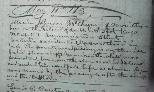
William Minor's original medical
reports from the Natl Museum of
Health and Medicine
reports from the Natl Museum of
Health and Medicine


sees here the redemptive potential of work and love in even the most deeply,
“hopelessly”, “psychotic”.
-Dr. Oliver Sacks, whose neurological cases have formed the basis of such
well-known movies as Awakenings and At First Sight
“hopelessly”, “psychotic”.
-Dr. Oliver Sacks, whose neurological cases have formed the basis of such
well-known movies as Awakenings and At First Sight
| ********** |
grandfather and the monumental task of compiling the dictionary. This classic book is
now available in paperback. "Betty" Murray died in 1998 and a biography with her
memorial address is on the following web site.
http://oed.hertford.ox.ac.uk/main/content/view/262/345 Stan Read
now available in paperback. "Betty" Murray died in 1998 and a biography with her
memorial address is on the following web site.
http://oed.hertford.ox.ac.uk/main/content/view/262/345 Stan Read
| ********** |
Simon Winchester’s “Tale of Murder, Madness and the
Love of Words” is as much about the creation of the
greatest of dictionaries as of Minor’s part in creating it.
Today’s lexicographers could do a better job in one 20th
the time, manipulating the immense computerised corpuses
of language now available. That story, however, wouldn’t
be even one hundredth as fascinating.
-Gordon Bilney, Sydney Morning Herald
6/2/99
I found The Professor and the Madman both enthralling
and moving, in its brilliant reconstruction of a most
improbable event: the major contributions made to the great
Oxford English Dictionary by a deeply delusional,
incarcerated “madman”, and the development of a true
friendship between him and the editor of the OED. One
Love of Words” is as much about the creation of the
greatest of dictionaries as of Minor’s part in creating it.
Today’s lexicographers could do a better job in one 20th
the time, manipulating the immense computerised corpuses
of language now available. That story, however, wouldn’t
be even one hundredth as fascinating.
-Gordon Bilney, Sydney Morning Herald
6/2/99
I found The Professor and the Madman both enthralling
and moving, in its brilliant reconstruction of a most
improbable event: the major contributions made to the great
Oxford English Dictionary by a deeply delusional,
incarcerated “madman”, and the development of a true
friendship between him and the editor of the OED. One

| Buy Now! Click Here. |
| ********** |

| Buy Now! Click Here. |

definitions of a word but also, in effect, that word's biography, chronicling its various
uses from its origin to the present. No one had any idea the project would take nearly
seven decades to complete.
Steve Forbes
Forbes Magazine
16 Feb 2004
uses from its origin to the present. No one had any idea the project would take nearly
seven decades to complete.
Steve Forbes
Forbes Magazine
16 Feb 2004
Simon Winchester's The Meaning of Everything tells the
story of the Oxford English Dictionary. It is teeming with
knowledge and alive with insights. Winchester handles
humor and awe with modesty and cunning. His devotion
to the story is the more eloquent for the cool-handedness
of its telling. His prose is supremely readable, admirable in
its lucid handling of lexicographical mire.
William F. Buckley
Who would have thought the story of a dictionary could
be so absorbing? But this is no ordinary dictionary--and, as
this book makes clear, English is no ordinary language.
The epic idea of the Oxford English Dictionary--to find
every word in the English language--was typical of the
Victorian era, a time when dazzling inventions and
seemingly impossible projects were pursued. No other
dictionary, not even Samuel Johnson's famous one, had
ever come close. The goal was to give not only the
story of the Oxford English Dictionary. It is teeming with
knowledge and alive with insights. Winchester handles
humor and awe with modesty and cunning. His devotion
to the story is the more eloquent for the cool-handedness
of its telling. His prose is supremely readable, admirable in
its lucid handling of lexicographical mire.
William F. Buckley
Who would have thought the story of a dictionary could
be so absorbing? But this is no ordinary dictionary--and, as
this book makes clear, English is no ordinary language.
The epic idea of the Oxford English Dictionary--to find
every word in the English language--was typical of the
Victorian era, a time when dazzling inventions and
seemingly impossible projects were pursued. No other
dictionary, not even Samuel Johnson's famous one, had
ever come close. The goal was to give not only the
| Buy Now! Click Here. |
| ********** |
The Oxford English Dictionary used 1,827,306 quotations
to help define its 414,825 words. Tens of thousands of
those used in the first edition came from the erudite,
moneyed American Civil War veteran Dr. W.C. Minor -- all
from a cell at the Broadmoor Criminal Lunatic Asylum.
Vanity Fair contributor Winchester (River at the Center of
the World) has told his story in an imaginative if somewhat
superficial work of historical journalism. Sketching Minor's
childhood as a missionary's son and his travails as a young
field surgeon, Winchester speculates on what may have
triggered the prodigious paranoia that led Minor to seek
respite in England in 1871 and, once there, to kill an
innocent man. Pronounced insane and confined at
Broadmoor with his collection of rare books, Minor
happened upon a call for OED volunteers in the early 1880s.
Here on more solid ground, Winchester enthusiastically
to help define its 414,825 words. Tens of thousands of
those used in the first edition came from the erudite,
moneyed American Civil War veteran Dr. W.C. Minor -- all
from a cell at the Broadmoor Criminal Lunatic Asylum.
Vanity Fair contributor Winchester (River at the Center of
the World) has told his story in an imaginative if somewhat
superficial work of historical journalism. Sketching Minor's
childhood as a missionary's son and his travails as a young
field surgeon, Winchester speculates on what may have
triggered the prodigious paranoia that led Minor to seek
respite in England in 1871 and, once there, to kill an
innocent man. Pronounced insane and confined at
Broadmoor with his collection of rare books, Minor
happened upon a call for OED volunteers in the early 1880s.
Here on more solid ground, Winchester enthusiastically
chronicles Minor's subsequent correspondence with editor Dr. J.A.H. Murray, who, as
Winchester shows, understood that Minor's endless scavenging for the first or best
uses of words became his saving raison d'etre, and looked out for the increasingly frail
man's well-being. Winchester fills out the story with a well-researched mini-history of
the OED, a wonderful demonstration of the lexicography of the word 'art' and a
sympathetic account of Victorian attitudes toward insanity. With his cheeky way with a
tale ('It is a brave and foolhardy and desperate man who will perform an autopeotomy'
he writes of Minor's self-mutilation), Winchester celebrates a gloomy life brightened by
devotion to a quietly noble, nearly anonymous task.
Publisher's Weekly
Winchester shows, understood that Minor's endless scavenging for the first or best
uses of words became his saving raison d'etre, and looked out for the increasingly frail
man's well-being. Winchester fills out the story with a well-researched mini-history of
the OED, a wonderful demonstration of the lexicography of the word 'art' and a
sympathetic account of Victorian attitudes toward insanity. With his cheeky way with a
tale ('It is a brave and foolhardy and desperate man who will perform an autopeotomy'
he writes of Minor's self-mutilation), Winchester celebrates a gloomy life brightened by
devotion to a quietly noble, nearly anonymous task.
Publisher's Weekly

| The Broadmoor 'criminal lunatic asylum', as it was called, was opened in 1863 with 95 female patients. A block for male patients followed a year later. The hospital was built after the passing of the Criminal Lunatics Act of 1860 - also called the Broadmoor Act. It drew attention to the poor conditions in British asylums such as Bethlehem Hospital, which was known as 'Bedlam'. It also followed the setting up of the McNaughton Rules, a series of questions which determined whether a person was too insane to be charged with a criminal offence. The site covered 290 acres (116 hectares) on the edge of the Berkshire moors some 32 miles from London. The asylum was "intended for the reception, safe custody and treatment of persons who had committed crimes while actually insane or who became insane whilst undergoing sentence of punishment". 'Security was reported to be very lax during the asylum's early years. The first Physician Superintendent, Dr John Meyer, was attacked by a patient while attending a service at the asylum's chapel soon after it opened. Security improved after Dr Orange took over as the second head of the asylum a few years later. The asylum hosted some of the British Empire's most notorious criminals. Roderick MacLean, who shot at Queen Victoria at Windsor Station, was sent here in 1882 after being found "not guilty by reason of insanity". Possibly the most famous, though, was Dr William Chester Minor, the former US Army physician who spent 38 years in the hospital after killing a man outside his house in London after going insane. While staying in Broadmoor, Dr Minor, a learned scholar with an enormous library, sent thousands of citations and quotations to the first Oxford English Dictionary. Broadmoor changed from institution to hospital after the 1948 Criminal Justice Act. In 1952 security was stepped up after a patient, J.T Straffe, escaped and killed a young girl while he was at large. Now there is a siren at the hospital - if it sounds, local schools and institutions have to lock their doors. A cordon is also set up around the nearby village of Crowthorne and each car checked by the police. In recent decades, the hospital's inmates have come to include Peter Sutcliffe, the 'Yorkshire Ripper' jailed for murdering prostitutes in the north of England in the 1970s. It also houses some of the country's most serious sex offenders. More recently, the hospital has been dogged by accusations of high levels of sexual abuse suffered by female patients. It has been claimed a woman tried to hang herself last year after alleging she had been raped on a sports field by a fellow patient. http://flickr.com/photos/24-7/2419712676/ See also http://www.bbc.co.uk/berkshire/content/articles/2008/11/20/broadmoor_feature.shtml |
| Broadmoor Asylum for the Criminially Insane |
| ********** |
| James A. Murray c. 1880 http://www.trutv.com/lib... |


Merrett, who Minor believed had broken into his room, on
February 17, 1872. Merrett had been on his way to work to
support his family of six children, himself, and his pregnant
wife, Eliza. After a pre-trial period spent in London's
Horsemonger Lane Gaol, Minor was found not guilty by
reason of insanity and incarcerated in the asylum at
Broadmoor in the village of Crowthorne, Berkshire. As he
had his army pension and was not judged dangerous, he was
given rather comfortable quarters and was able to buy and
read books.
It was probably through his correspondence with the
London booksellers that he heard of the call for volunteers
from what was to become the Oxford English Dictionary
February 17, 1872. Merrett had been on his way to work to
support his family of six children, himself, and his pregnant
wife, Eliza. After a pre-trial period spent in London's
Horsemonger Lane Gaol, Minor was found not guilty by
reason of insanity and incarcerated in the asylum at
Broadmoor in the village of Crowthorne, Berkshire. As he
had his army pension and was not judged dangerous, he was
given rather comfortable quarters and was able to buy and
read books.
It was probably through his correspondence with the
London booksellers that he heard of the call for volunteers
from what was to become the Oxford English Dictionary
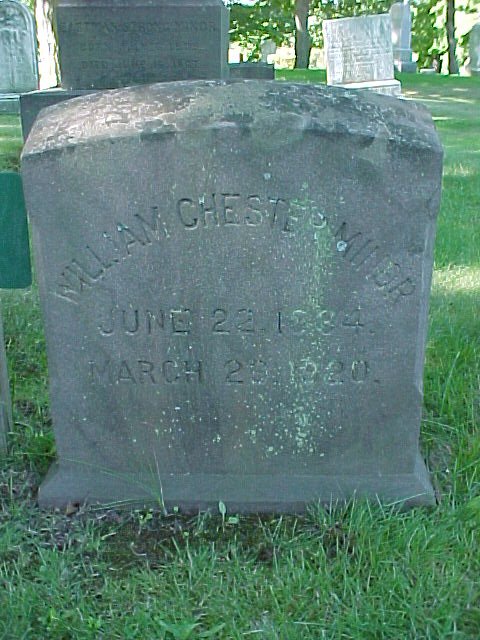
| Evergreen Cemetery New Haven New Haven County Connecticut, USA http://www.findagrave.. |
grew, he was able to supply quotations on demand for a
particular word. Eventually he became well acquainted with the
editor of the OED, Dr. James Murray, who visited him at the
asylum and befriended him.
Minor's condition deteriorated and in 1902 he cut off his own
penis. His health failed and he was permitted to return to the
United States and St. Elizabeths Hospital. The science of
psychiatry had progressed in the meantime and Dr. Minor was
diagnosed as suffering from dementia praecox or schizophrenia.
He died in 1920 in New Haven, Connecticut.
For a more complete biography of William Chester Minor, see
www.trutv.com/library/crime/notorious_murders/classics/william_minor/index.html
particular word. Eventually he became well acquainted with the
editor of the OED, Dr. James Murray, who visited him at the
asylum and befriended him.
Minor's condition deteriorated and in 1902 he cut off his own
penis. His health failed and he was permitted to return to the
United States and St. Elizabeths Hospital. The science of
psychiatry had progressed in the meantime and Dr. Minor was
diagnosed as suffering from dementia praecox or schizophrenia.
He died in 1920 in New Haven, Connecticut.
For a more complete biography of William Chester Minor, see
www.trutv.com/library/crime/notorious_murders/classics/william_minor/index.html
| ********** |
| William Chester Minor http://en.wikipedia.org/wiki/William_Chester_Minor |