the possibility to produce great returns for the holders, but it proved to be quite costly
for the governments (not unlike modern day "pay-as-you-go" pension schemes). As a
result, the tontine scheme was eventually abandoned, and as of the mid-1850s, the
tontines had been replaced by other investment vehicles such as "penny policies", a
predecessor to the 20th century invention of the pension scheme.
Tontines became associated with life-insurance in the United States in 1868 when
Henry Baldwin Hyde of the Equitable Life Assurance Society introduced tontines as a
means to sell more life insurance, and meet the demands of competition.
While once very popular in France, Britain, and the United States, tontines have been
banned in Britain and the United States, because many of these schemes were little
more than swindles. Geneva, in Switzerland, was known for its active market in
tontines in the 17th and 18th centuries. Nevertheless, there are underground
organizations in the US that still use the tontine.
A tontine also may refer to a bottle of liquor a group of individuals keeps for the last of
the group to drink when the others have died. A reverse tontine may refer to a bottle of
liquor kept by a group of individuals to drink when the first of its members passes
away.
for the governments (not unlike modern day "pay-as-you-go" pension schemes). As a
result, the tontine scheme was eventually abandoned, and as of the mid-1850s, the
tontines had been replaced by other investment vehicles such as "penny policies", a
predecessor to the 20th century invention of the pension scheme.
Tontines became associated with life-insurance in the United States in 1868 when
Henry Baldwin Hyde of the Equitable Life Assurance Society introduced tontines as a
means to sell more life insurance, and meet the demands of competition.
While once very popular in France, Britain, and the United States, tontines have been
banned in Britain and the United States, because many of these schemes were little
more than swindles. Geneva, in Switzerland, was known for its active market in
tontines in the 17th and 18th centuries. Nevertheless, there are underground
organizations in the US that still use the tontine.
A tontine also may refer to a bottle of liquor a group of individuals keeps for the last of
the group to drink when the others have died. A reverse tontine may refer to a bottle of
liquor kept by a group of individuals to drink when the first of its members passes
away.
Through the centuries, the fascination of "'last man's
clubs" had evolved from the concept of "tontines,"
speculative groups based on mankind's mortality in
which each participant deposited a sum with the
assurance that during his lifetime he would receive
interest income. Investors were divided into age
brackets, often in seven-year spans, e.g., 22 to 28. At
death, heirs received nothing from the fund; the
surviving members of the bracket shared in the
interest payments formerly made to the deceased. The
last survivor received all of the interest originally
shared by his group's members. At his death, the
principal passed to the government which established
that "tontine." The groups were named for Lorenzo
Tonti who proposed the plan to the French
government in the 17th century.(Webster's New
International Dictionary of the English Language, 2nd
ed., unabridged.)
Recognizing their vulnerability and helping, to relieve
the stress of the battle field, soldiers organized, "last
man's clubs." These pacts usually included the
clubs" had evolved from the concept of "tontines,"
speculative groups based on mankind's mortality in
which each participant deposited a sum with the
assurance that during his lifetime he would receive
interest income. Investors were divided into age
brackets, often in seven-year spans, e.g., 22 to 28. At
death, heirs received nothing from the fund; the
surviving members of the bracket shared in the
interest payments formerly made to the deceased. The
last survivor received all of the interest originally
shared by his group's members. At his death, the
principal passed to the government which established
that "tontine." The groups were named for Lorenzo
Tonti who proposed the plan to the French
government in the 17th century.(Webster's New
International Dictionary of the English Language, 2nd
ed., unabridged.)
Recognizing their vulnerability and helping, to relieve
the stress of the battle field, soldiers organized, "last
man's clubs." These pacts usually included the
A motion of Mr. Andrews "to have our Constitution printed and that each member have
a copy thereof, was carried. Mr. Andrews moved "that the members be assessed one
dollar to defray expenses of a banquet to be held in October 1886." Carried.
The following are the names, addresses, occupations and family record of the
members.
a copy thereof, was carried. Mr. Andrews moved "that the members be assessed one
dollar to defray expenses of a banquet to be held in October 1886." Carried.
The following are the names, addresses, occupations and family record of the
members.
| Reuchlin |


 |  |  |  |
| If you have a picture you'd like us to feature a picture in a future quiz, please email it to us at CFitzp@aol.com. If we use it, you will receive a free analysis of your picture. You will also receive a free Forensic Genealogy CD or a 10% discount towards the purchase of the Forensic Genealogy book. |


 |  |  |  |
| Click here to see results of 5th occasional photoquiz survey. |
| Answer to Quiz #207 - May 3, 2009 |
| ********** |


| If you enjoy our quizzes, don't forget to order our books! Click here. |

| Quiz #207 Results |
| Visit our blog at www.forensicgenealogy.info/blog. |
| 1. What do the first three men have in common that the fourth one does not? 2. What does it have to do with a 17th century French banker? |

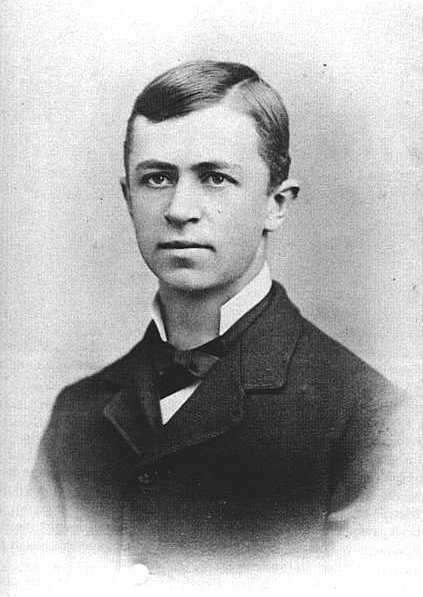
| Wilbur |
| Lorin |
| Orville |

| Answers: 1. They were members of a last man's club called The Annual Club of Ten Dayton Boys. 2. A last man's club is also known as a "tontine", named after Lorenzo Toni, a 17th century French banker who invented it as a type of investment club. |
| Comments from Our Readers |
| Congratulations to Our Winners! Charlie Wayne Judy Pfaff Alan Cullinan Jim Baker David Doucette Mike Dalton Carl Blessing Kathy Henderson Carl Darrow Claudia Miemec Marilyn Hamill Larry Slavens Edee Scott Brian Kemp Dennis Brann Fred Stuart Bill Utterback Diane Burkett Karen Kay Bunting Deborah Campisano Kitty Huddleston Lisa Thayer Tamura Jones Don Draper Gina Hudson Jocelyn Thayer Milene Rawlinson Anne Alves Robert Edward McKenna, QPL |
| Five alive: Memories flow for WWII veterans club, but whiskey stays corked The Bay City Times June 9, 2008 To read article, click here. |
| ********** |
| The Annual Club of the Ten Dayton Boys |
There's a whole generation whose main exposure to a tontine comes from an episode of
The Simpsons, where Grandpa and Mr. Burns are the last survivors of the Fighting
Hellfish. Larry Slavens
*****
Great quiz, Colleen. And I'm very interested in early aviation, as Sacha [Kolin]'s father
was a pioneer in the field. Thank you also for introducing me to so many new topics
such as the Last Man Clubs! Lisa Thaler
The Simpsons, where Grandpa and Mr. Burns are the last survivors of the Fighting
Hellfish. Larry Slavens
*****
Great quiz, Colleen. And I'm very interested in early aviation, as Sacha [Kolin]'s father
was a pioneer in the field. Thank you also for introducing me to so many new topics
such as the Last Man Clubs! Lisa Thaler
| Lorin, Wilber and Rouchlin of Wright family fame, Joined the "Ten Dayton Boy's" investment club. Although brother Orville was too young to join, His rejection never a cause for any family rub. Italian Banker Lorenzo Tonti ,in about 1653, Designed this investor plan of survival rights. This worked well until tax people objected. When all investors die, who turns out the lights? Robert Edward McKenna Quiz Poet Laureate |
| How Don Solved the Puzzle |
| The second part of this quiz had me stumped for awhile. I read about the Dayton Boys Club, the older Wright brothers belonged to, but read somewhere that their main focus had to do with music and singing. This hardly had any connection to a 17th Century French banker. I think the older brothers were born in Indiana and Orville was born in Dayton Ohio. Was this possibly a genealogical question where all brothers’ roots went back to 17th Century France. I found no connection. Did old money from investments in the 17th Century help finance the development of airplanes. There was no evidence of this. Orville and Wilbur had a successful bicycle business which I think was sufficient help pay their expenses. Upon fully exploring the nature of the Dayton Boys Club the answer evolved. It was a learning experience! Don Draper |
| The Tontine http://en.wikipedia.org/wiki/Tontine |
The scheme is named after Neapolitan banker Lorenzo de
Tonti, who is generally credited with inventing it in France
in 1653. Some sources claim that similar schemes already
existed in Italy, but there is no dispute that the popularity
of the form was due to Tonti.
The basic concept is simple. Each investor pays a sum
into the tontine. Each investor then receives annual
dividends on his capital. As each investor dies, his or her
share is reallocated amongst the surviving investors. This
process continues until only one investor survives. Each
subscriber receives only dividends; the capital is never
paid back. The proceeds of the subscription were used to
fund various private or public works projects. These
sometimes contained the word "tontine" in their name, as
did the Tontine Coffee House on Wall Street in New York
City. Built in 1792, it was the first home of the New York
Stock Exchange. In a later variation, the capital would
devolve upon the last survivor, effectively dissolving the
trust and usually making the survivor very wealthy; it is
this version that has often been the plot device for
mysteries and detective stories.
Louis XIV first made use of Tontines in 1689 (after
Tonti's death) to fund military operations when he could
not otherwise raise the money. The initial suscribers each
put in 300 livres, and, unlike most later schemes, this one
was run honestly; the last survivor, the widow, Charlotte
Barbier, who died in 1726 at the age of 96, received
73,000 livres in her last payment. The British government
first issued tontines in 1693 to fund a war against France.
However, tontines soon caused problems for their issuing
governments, as they would increasingly underestimate
the longevity of the population. At first, tontine holders
included men and women of all ages. However, by the
mid-18th century, investors had caught on how to play
the system, and it became increasingly common to buy
tontines for young children, especially for girls around the
age of 5 (since girls lived longer than boys, and by which
age they were less at risk of infant mortality). This created
Tonti, who is generally credited with inventing it in France
in 1653. Some sources claim that similar schemes already
existed in Italy, but there is no dispute that the popularity
of the form was due to Tonti.
The basic concept is simple. Each investor pays a sum
into the tontine. Each investor then receives annual
dividends on his capital. As each investor dies, his or her
share is reallocated amongst the surviving investors. This
process continues until only one investor survives. Each
subscriber receives only dividends; the capital is never
paid back. The proceeds of the subscription were used to
fund various private or public works projects. These
sometimes contained the word "tontine" in their name, as
did the Tontine Coffee House on Wall Street in New York
City. Built in 1792, it was the first home of the New York
Stock Exchange. In a later variation, the capital would
devolve upon the last survivor, effectively dissolving the
trust and usually making the survivor very wealthy; it is
this version that has often been the plot device for
mysteries and detective stories.
Louis XIV first made use of Tontines in 1689 (after
Tonti's death) to fund military operations when he could
not otherwise raise the money. The initial suscribers each
put in 300 livres, and, unlike most later schemes, this one
was run honestly; the last survivor, the widow, Charlotte
Barbier, who died in 1726 at the age of 96, received
73,000 livres in her last payment. The British government
first issued tontines in 1693 to fund a war against France.
However, tontines soon caused problems for their issuing
governments, as they would increasingly underestimate
the longevity of the population. At first, tontine holders
included men and women of all ages. However, by the
mid-18th century, investors had caught on how to play
the system, and it became increasingly common to buy
tontines for young children, especially for girls around the
age of 5 (since girls lived longer than boys, and by which
age they were less at risk of infant mortality). This created
| ********** |
| A Brief History of Last Man Clubs http://www.centennialofflight.gov/wbh/brunsman/last_mans_club.htm |
Three Wright brothers, Reuchlin, Lorin,
and Wilbur have a place...thanks to their
friend, Edgar W. Ellis.
Recalling stories of "last man's clubs"
formed by Civil War soldiers, Ellis, a 22
year old soap maker and traveling
salesman, in 1886 approached Joseph
Boyd, a salesman, with the idea of
forming such a group. Both lived near
Bishop Milton Wright's family in the
western part of Dayton, Ohio. Reuchlin,
Lorin and Wilbur Wright were invited to
join. Had Orville, who was then 15,
been older he likely would have been
included.
The first meeting of the new
organization was held on October 9,
1886 at the residence of Reuchlin
Wright, the eldest of the Wright
children. The Constitution provided the
name, "The Annual Club of Ten Dayton
and Wilbur have a place...thanks to their
friend, Edgar W. Ellis.
Recalling stories of "last man's clubs"
formed by Civil War soldiers, Ellis, a 22
year old soap maker and traveling
salesman, in 1886 approached Joseph
Boyd, a salesman, with the idea of
forming such a group. Both lived near
Bishop Milton Wright's family in the
western part of Dayton, Ohio. Reuchlin,
Lorin and Wilbur Wright were invited to
join. Had Orville, who was then 15,
been older he likely would have been
included.
The first meeting of the new
organization was held on October 9,
1886 at the residence of Reuchlin
Wright, the eldest of the Wright
children. The Constitution provided the
name, "The Annual Club of Ten Dayton
The following officers were elected for the coming year.
President: Reuchlin Wright.
Vice President: William Andrews.
Secretary: Edgar W. Ellis.
Treasurer: Wilbur E. Landis.
President: Reuchlin Wright.
Vice President: William Andrews.
Secretary: Edgar W. Ellis.
Treasurer: Wilbur E. Landis.

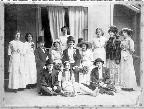
| This is the Ten Dayton Boys Club, taken on October 30, 1886; members are, from left to right Front Row: Frank J. Gilbert, Irvin G. Koogle, William Andres, Joseph Boyd, and Lorin Wright; Back Row: Wilbur E. Landis, Reuchlin Wright, Wilbur Wright, Charles W. Olinger, and Edgar W. Ellis. home.dayton.lib.oh.us... |
Boys." Reuchlin was elected president. Edgar W. Ellis, secretary.
The 65 detailed minutes of the meetings of the "Annual Club of Ten Dayton Boys,"
beginning with the organizing meeting and ending with a time line of each of the ten
original members, fill 207 pages of a 512 page leather-bound journal. The last entry, by
an unknown recorder reads, "Edgar W. Ellis died Jan 29, 1951, the 10th (to die).
The journal was given to The Dayton and Montgomery County (Ohio) Public Library
by Ellis' widow and is preserved, together with a framed photograph of the group
arranged by member Frank J. Gilbert on October 30, 1886.
Ellis' sustained interest in the Club is evidenced by his writing 60 of the 65 minutes. He
served as president in 1890 and was the last survivor. The 1890 minutes record that
"Mr. E. W. Ellis, founder of the Club presented the Club with a handsome gavel made
of ten different kinds of wood to represent the ten members of the Club." That
memento is owned by Marianne Boyd Myers (Mrs. C. William) of Cincinnati, Ohio. She
is the granddaughter of the second member of the group, Joseph Boyd.
October 9, 1886
The Annual Club of Ten Dayton Boys
[Minutes and constitution]
Dayton Ohio Oct. 9 - 1886.
The 65 detailed minutes of the meetings of the "Annual Club of Ten Dayton Boys,"
beginning with the organizing meeting and ending with a time line of each of the ten
original members, fill 207 pages of a 512 page leather-bound journal. The last entry, by
an unknown recorder reads, "Edgar W. Ellis died Jan 29, 1951, the 10th (to die).
The journal was given to The Dayton and Montgomery County (Ohio) Public Library
by Ellis' widow and is preserved, together with a framed photograph of the group
arranged by member Frank J. Gilbert on October 30, 1886.
Ellis' sustained interest in the Club is evidenced by his writing 60 of the 65 minutes. He
served as president in 1890 and was the last survivor. The 1890 minutes record that
"Mr. E. W. Ellis, founder of the Club presented the Club with a handsome gavel made
of ten different kinds of wood to represent the ten members of the Club." That
memento is owned by Marianne Boyd Myers (Mrs. C. William) of Cincinnati, Ohio. She
is the granddaughter of the second member of the group, Joseph Boyd.
October 9, 1886
The Annual Club of Ten Dayton Boys
[Minutes and constitution]
Dayton Ohio Oct. 9 - 1886.
| Wm. Andrews 435 Home Avenue. Dayton OH Traveling salesman for Mull Underwood, Wholesale Confectioners Age 34 Charles W. Olinger West Fifth Street. Dayton OH Machinist at National Cash Register Co. Age twenty-eight years, married and one child Joseph Boyd Corner of Third and roadway, Dayton, OH Going West as salesman Age 26. Married. No children Irvin G. Koogle Wolf Creek Pike, Dayton, OH Carriage painter and partner in the firm of H.V. Koogle & Son Age 24 years. Unmarried Wilbur E. Landis West Third St. Dayton, OH Printer at the Christian Pub House Age 24. Unmarried. Reuchlin Wright 1533 W. Second St. Dayton OH Clerk at E. Wright and Son's lumber yard Age 25. Married. No children. Edgar W. Ellis 1615 W. Fifth St. Dayton, OH Soap-maker and traveling salesman for L.M. Brown's Tar Soap Works. Age 22, and married. One child. Lorin Wright No. 7. Hawthorne St., Dayton, OH Book-keeper at Farmer's Friend M'fg. Co. Age 23. Unmarried. Frank J. Gilbe West Third St. Dayton, OH Photographer at M. Wolfe's Age 20 years. Unmarried. Wilbur Wright No. 7. Hawthorne St. Dayton, OH. Clerk in J. I. Hoffman's Grocery Age 19. Unmarried. |

On Saturday October 9th 1886 there assembled at the residence of
Reuchlin Wright~, 1533 W. Second St. -- Dayton, Ohio several
young men for the purpose of organizing an annual social club.
Order was called by W. E. Landis and on motion Reuchlin Wright
was chosen temporary chairman and E W (sic) Ellis temporary
secretary. A committee composed (sic) of Jos. Boyd, W. E.
Landis, I. G. Koogle, and R. Wright was appointed to draft a
constitution. The constitution was adopted.
Reuchlin Wright~, 1533 W. Second St. -- Dayton, Ohio several
young men for the purpose of organizing an annual social club.
Order was called by W. E. Landis and on motion Reuchlin Wright
was chosen temporary chairman and E W (sic) Ellis temporary
secretary. A committee composed (sic) of Jos. Boyd, W. E.
Landis, I. G. Koogle, and R. Wright was appointed to draft a
constitution. The constitution was adopted.
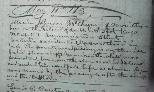
| Minute book of the The Annual Club of the Ten Dayton Boys 1886-1939, Dayton and Montgomery County Public Library |
| ********** |
Oct. 4, 1939
It had been planned to hold the meeting this year on October 14th at the home of the
secretary, E. W. Ellis, in Columbus, but illness of both Lorin Wright and Netta made
this impossible, so on Wednesday, Oct. 4. E. W. Ellis and wife went to Dayton and a
short meeting of the two surviving members of the club, Lorin Wright and E. W. Ellis
was held with Lorin in bed.
Lorin Wright died Dec. 1, 1939. Aged 77 years.
There will be no more club minutes.
E. W. Ellis Last member.
*****
Edgar W. Ellis, the last survivor of the Annual Club of Ten Dayton Boys, died on his
87th birthday, January 29, 1951.
It had been planned to hold the meeting this year on October 14th at the home of the
secretary, E. W. Ellis, in Columbus, but illness of both Lorin Wright and Netta made
this impossible, so on Wednesday, Oct. 4. E. W. Ellis and wife went to Dayton and a
short meeting of the two surviving members of the club, Lorin Wright and E. W. Ellis
was held with Lorin in bed.
Lorin Wright died Dec. 1, 1939. Aged 77 years.
There will be no more club minutes.
E. W. Ellis Last member.
*****
Edgar W. Ellis, the last survivor of the Annual Club of Ten Dayton Boys, died on his
87th birthday, January 29, 1951.
| The Last Meeting of The Annual Club of the Ten Boys of Dayton |
| ********** |
| Ages and Dates of Death of The Members of The Annual Club of the Ten Boys of Dayton Club |
| |||||||||||||||||||||||||||||||||||||||||||||||||||||||||||||||||||||||||||||||||||||||||||||
Read more about The Annual Club of the Ten Boys of Dayton, including the minutes of
each meeting of the club. Click here.
each meeting of the club. Click here.
| ********** |

| The Ten Dayton Boys Club Minutes Dayton, Ohio Oct. 12, 1912 This is the poem that Frank J. Gilbert, president of the Board of the "Ten Dayton Boys Club" wrote for Wilbur Wright's funeral. |
| ********** |

obligation for the survivors to maintain contact (sometimes through annual reunions), to
furnish reports of their status and location, and often involved an alcoholic beverage. A
favorite was a bottle of champagne, with its label autographed by the founding
members, to be consumed by the last survivor.
One of the "last man's clubs," a vestige of the Civil War, had its final meeting in
Stillwater, Minnesota on July 21, 1930. When he drank a toast from a bottle of sour
wine, Charles Lockwood, 87, of Chamberlain, South Dakota, fulfilled a pledge made on
July 25, 1885 at a reunion of 34 Civil War survivors. Meeting as the last members of
Company B, First Minnesota Volunteer Infantry they resolved to form the club. Annual
meetings were held.
An autographed bottle of wine from the 1885 reunion was reserved for the "last man"
and was taken from its vault to stand on the table at each annual banquet. The empty
bottle was presented to the Washington County Historical Museum in Stillwater. Several
years before the final meeting a curious member "tested" the wine and found it had
turned to vinegar.
Read more....
furnish reports of their status and location, and often involved an alcoholic beverage. A
favorite was a bottle of champagne, with its label autographed by the founding
members, to be consumed by the last survivor.
One of the "last man's clubs," a vestige of the Civil War, had its final meeting in
Stillwater, Minnesota on July 21, 1930. When he drank a toast from a bottle of sour
wine, Charles Lockwood, 87, of Chamberlain, South Dakota, fulfilled a pledge made on
July 25, 1885 at a reunion of 34 Civil War survivors. Meeting as the last members of
Company B, First Minnesota Volunteer Infantry they resolved to form the club. Annual
meetings were held.
An autographed bottle of wine from the 1885 reunion was reserved for the "last man"
and was taken from its vault to stand on the table at each annual banquet. The empty
bottle was presented to the Washington County Historical Museum in Stillwater. Several
years before the final meeting a curious member "tested" the wine and found it had
turned to vinegar.
Read more....
| ********** |
| Famous Tontines |

| by Robert Louis Stevenson en.wikipedia.org/wiki/. and www.imdb.com/title/tt0061204/ |

| by Agatha Christie en.wikipedia.org/wiki/... www.imdb.com/... |
| ********** |
| ********** |