| XXX |
| Read More |
| XXXX |
| The Vidocq Society |
| xxx |
| xxx |
Philadelphia forensic sculptor Frank
Bender has spent a lifetime helping police
solve unspeakable crimes, contouring in
clay the faces of murder victims -- those
without identities, whose families have
never come to claim or weep for them.
His meticulously painted busts have led to
the prosecution of fugitive killers for the
Bender has spent a lifetime helping police
solve unspeakable crimes, contouring in
clay the faces of murder victims -- those
without identities, whose families have
never come to claim or weep for them.
His meticulously painted busts have led to
the prosecution of fugitive killers for the
With William Fleisher and Richard Walter, Mr. Bender founded the Vidocq Society in
1990. Based in Philadelphia, the group comprises forensic scientists, law enforcement
officers and other professionals who convene to investigate unsolved murders.
Mr. Bender was also a subject of “The Murder Room,” a book about the society by
Michael Capuzzo. A documentary film about Mr. Bender, “The Recomposer of the
Decomposed,” is scheduled to be released next year.
“He’s a fighter for justice,” Ted Botha, the author of a book about Mr. Bender, said in
an interview shortly before Mr. Bender’s death. “He’s almost like a little Captain
America or something.”
Mr. Botha’s book, “The Girl With the Crooked Nose,” chronicles Mr. Bender’s work in
Ciudad Juárez, Mexico, where he was asked to reconstruct the faces of women killed
in a series of murders. Of the eight heads he made there, three led to identifications,
Mr. Botha said.
It is impossible to gauge precisely Mr. Bender’s career success rate, where “success”
means identifying a victim or catching a fugitive. Mr. Bender — who, as associates
attest, was a larger-than-life character with no small awareness of his own news value
— sometimes put the figure at 85 percent.
The correct figure, his associates say, is probably closer to 40 percent. “Not even he
knows, because nobody actually tells him,” Mr. Botha said. “The police departments
don’t always come back to him afterwards; that’s one of the kind of bittersweet things
about what he does.”
Francis Augustus Bender Jr. was born in Philadelphia on June 16, 1941, and grew up in
a blue-collar neighborhood. After serving in the Navy, he embarked on a photography
career.
In the 1970s, Mr. Bender took night classes in painting at the Pennsylvania Academy of
the Fine Arts in Philadelphia. The academy offered no anatomy classes at night, so in
1977 he took it upon himself to visit the morgue.
There, he saw the body of a woman, shot in the head and unrecognizable.
“I know what she looks like,” Mr. Bender was surprised to hear himself say.
“Do you know anything about forensics?” a medical examiner asked him.
“I don’t even know what the word means,” he said.
Galvanized, Mr. Bender set to work, producing a bust of a woman with a long nose and
cleft chin.
After a photograph of it appeared in newspapers, she was identified as Anna Duval, a
Phoenix woman who had flown East to recoup money from a swindler and wound up
dead. Her killer was later identified as a mob hit man, already imprisoned for other
crimes.
Mr. Bender’s gift for waking the dead impressed the authorities, and more cases
followed. At first he layered clay onto the skulls, consulting tissue-thickness charts to
determine its depth at crucial points on the face.
Later on — for prosecutors were loath to see potential evidence trapped for eternity
inside a sculpture — he used the skulls to make molds, from which he cast plaster
heads.
an interview shortly before Mr. Bender’s death. “He’s almost like a little Captain
America or something.”
Mr. Botha’s book, “The Girl With the Crooked Nose,” chronicles Mr. Bender’s work in
Ciudad Juárez, Mexico, where he was asked to reconstruct the faces of women killed
in a series of murders. Of the eight heads he made there, three led to identifications,
Mr. Botha said.
It is impossible to gauge precisely Mr. Bender’s career success rate, where “success”
means identifying a victim or catching a fugitive. Mr. Bender — who, as associates
attest, was a larger-than-life character with no small awareness of his own news value
— sometimes put the figure at 85 percent.
The correct figure, his associates say, is probably closer to 40 percent. “Not even he
knows, because nobody actually tells him,” Mr. Botha said. “The police departments
don’t always come back to him afterwards; that’s one of the kind of bittersweet things
about what he does.”
Francis Augustus Bender Jr. was born in Philadelphia on June 16, 1941, and grew up in
a blue-collar neighborhood. After serving in the Navy, he embarked on a photography
career.
In the 1970s, Mr. Bender took night classes in painting at the Pennsylvania Academy of
the Fine Arts in Philadelphia. The academy offered no anatomy classes at night, so in
1977 he took it upon himself to visit the morgue.
There, he saw the body of a woman, shot in the head and unrecognizable.
“I know what she looks like,” Mr. Bender was surprised to hear himself say.
“Do you know anything about forensics?” a medical examiner asked him.
“I don’t even know what the word means,” he said.
Galvanized, Mr. Bender set to work, producing a bust of a woman with a long nose and
cleft chin.
After a photograph of it appeared in newspapers, she was identified as Anna Duval, a
Phoenix woman who had flown East to recoup money from a swindler and wound up
dead. Her killer was later identified as a mob hit man, already imprisoned for other
crimes.
Mr. Bender’s gift for waking the dead impressed the authorities, and more cases
followed. At first he layered clay onto the skulls, consulting tissue-thickness charts to
determine its depth at crucial points on the face.
Later on — for prosecutors were loath to see potential evidence trapped for eternity
inside a sculpture — he used the skulls to make molds, from which he cast plaster
heads.

cum-studio occasionally arrived to find one bubbling away in a pot on the stove.)
A former professional photographer, Mr. Bender found his calling by chance in the late
1970s, on a trip to the Philadelphia morgue. After that he was consulted by police
departments across the country and abroad, and by the Federal Bureau of Investigation.
Of the 40 or so heads he sculptured over the years, most were designed to identify
murder victims for whom DNA, dental records and fingerprints had come up empty.
In these cases, Mr. Bender endeavored to turn back time, using victims’ skulls to
render their faces as they might have looked in life. A “recomposer of the decomposed”
is what he called himself — quite cheerily — on his answering machine.
For fugitives, Mr. Bender coaxed time forward, using photographs and other
information to sculpture malefactors as they might look 10 or 20 years on. It was in
one such case that he scored his most spectacular success: a role in capturing one of
the most notorious murderers in America.
A conjurer in clay, Mr. Bender was, he often said, as much psychologist as sculptor,
divining — or so it seemed — features that skulls alone could not tell him: hair color,
characteristic expressions or precise skin color, which he painted onto the finished
sculpture.
His methods could yield striking likenesses. In the 1980s, for instance, the Philadelphia
police asked him to help identify the remains of a woman found murdered in a down-at-
the-heels area.
“She was wearing a Ship ’n Shore blouse — a nicely pleated blouse, not a blouse
someone her age would wear in that neighborhood,” Mr. Bender told The Toronto Star
in 2001. “To me, it told me she was looking for a way out, she was looking for a better
life, so I had her looking up for hope.”
A few years later, a local woman identified the bust as her niece, Rosella Marie
A former professional photographer, Mr. Bender found his calling by chance in the late
1970s, on a trip to the Philadelphia morgue. After that he was consulted by police
departments across the country and abroad, and by the Federal Bureau of Investigation.
Of the 40 or so heads he sculptured over the years, most were designed to identify
murder victims for whom DNA, dental records and fingerprints had come up empty.
In these cases, Mr. Bender endeavored to turn back time, using victims’ skulls to
render their faces as they might have looked in life. A “recomposer of the decomposed”
is what he called himself — quite cheerily — on his answering machine.
For fugitives, Mr. Bender coaxed time forward, using photographs and other
information to sculpture malefactors as they might look 10 or 20 years on. It was in
one such case that he scored his most spectacular success: a role in capturing one of
the most notorious murderers in America.
A conjurer in clay, Mr. Bender was, he often said, as much psychologist as sculptor,
divining — or so it seemed — features that skulls alone could not tell him: hair color,
characteristic expressions or precise skin color, which he painted onto the finished
sculpture.
His methods could yield striking likenesses. In the 1980s, for instance, the Philadelphia
police asked him to help identify the remains of a woman found murdered in a down-at-
the-heels area.
“She was wearing a Ship ’n Shore blouse — a nicely pleated blouse, not a blouse
someone her age would wear in that neighborhood,” Mr. Bender told The Toronto Star
in 2001. “To me, it told me she was looking for a way out, she was looking for a better
life, so I had her looking up for hope.”
A few years later, a local woman identified the bust as her niece, Rosella Marie
| XXXXX |
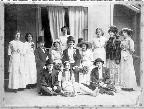
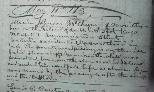
How Ida Solved the Puzzle |

 |  |  |  |


 |  |  |  |
| Quiz #432 Results |

| Answers to Quiz #432 - March 9, 2014 |
| ********** |
|
| ********** |


| ********** |
|
| If you have a picture you'd like us to feature a picture in a future quiz, please email it to us at CFitzp@aol.com. If we use it, you will receive a free analysis of your picture. You will also receive a free Forensic Genealogy CD or a 10% discount towards the purchase of the Forensic Genealogy book. |

| If you enjoy our quizzes, don't forget to order our books! Click here. |
!-- Start Quantcast tag -->

|
| Congratulations to Our Winners! Marcelle Comeau Arthur Hartwell Tynan Peterson Carol Stansell Mike Dalton Kim Richardson Cynthia Costigan Judy Pfaff Sharon Levy Nelsen Spickard Edna Cardinal Timothy Fitzpatrick Ida Sanchez Beth Long Dianne Abbott Emily Aulicino Sherry Taylor Michelle Taggart Marsha Rice Harold Atchinson Grace Hertz and Mary Turner Team Fletcher |
| ********** |
| ********** |
| ********** |


| The Girl with the Crooked Nose Someone is killing the young women of Juárez. Since 1993, the decomposing bodies of as many as four hundred victims, known as feminicidios, have been found in the desert surrounding this gritty Mexican border town. Prodded by local political pressure and international attention, the Mexican authorities turn to the United States to help solve these horrific crimes. The man they turn to is Bender. Through breathtakingly realistic |
| Few people know about the Vidocq Society, a real-life crime-solving contingent that helps local law enforcement agencies crack cold cases. Michael Capuzzo profiles the society in his new book, The Murder Room: The Heirs of Sherlock Holmes Gather to Solve the World's Most Perplexing Cold Cases (Gotham, $26, on sale Tuesday). Capuzzo spoke with USA TODAY Q: What is the Vidocq Society? A: The group, founded in 1990, is made up of the world's great detectives and forensic specialists. They meet once a month over lunch in a Victorian dining room in Philadelphia to examine cold case murders. They spend years, pro bono, bringing killers to justice in cases where the cops just can't figure it out. Q: Who are they? A: They come from 19 states, 12 different countries. They include a captain in the Egyptian army, agents from Scotland Yard and INTERPOL, FBI agents, CIA agents, private eyes, a county sheriff from California. They have a range of specialties, from Mob busters to tax experts to chemists to poison experts and experts on terrorism. I think of it as CSI to the 10th power, except real. Q: Who is it named for? A. Eugene Francois Vidocq, the legendary father of forensic science in Napoleonic Paris. He pioneered the roots of the FBI and Scotland Yard and other investigative bureaus as well as private detective agencies and the detective novel. Q: Does he have another claim to fame? A: He was friends with Victor Hugo, who used him as the model for the two main characters in Les Misérables: Javert, the relentless detective, and Jean Valjean, who was imprisoned for stealing bread to feed his family. Q: Tell me about the Vidocq Society's most famous members, starting with Frank Bender. A: Bender is the foremost forensic sculptor. He's almost an idiot savant kind of guy who was able to put a half-dozen most-wanted criminals behind bars — including mass murderer John List, who was on the run for 18 years — based on these psychic visions he has and then applies to his facial reconstructions. Q: And Richard Walter? A: Walter is the living Sherlock Holmes. He even looks and sounds like him. He's brooding and analytical. He's considered by some to be the world's foremost authority on the world's darkest evil. He's consulted with Scotland Yard and the Hong Kong police on major cases. Q: What about William Fleischer, the group's founder? A: He was a federal agent for many years and then a private eye. When he was in his 40s and was looking to do something more significant with his life than bust drug smugglers for the first George Bush, he found Bender and Walter, these two amazing geniuses who represent two different sides of human nature, and all three of them together is an amalgam of the great American detective. Q: What's one of the biggest cases they cracked? A: The Texas case of Leisha Hamilton and the killing of Scott Dunn in 1991 is pretty iconic. The society spent six years, and Richard spent 6,000 pro bono hours, tracking down Hamilton and convincing the cops that this slight, attractive woman could be a psychopathic killer. Q: Is there a case they haven't cracked? A: The greatest heartache is the case of the "Boy in the Box," who was found brutally murdered in a field outside Philadelphia in 1957. A half-century later, a couple of cops who were on the scene are now retired but still working it. They are part of the Vidocq Society. After 50 years, they haven't given up. Q: What drives the society's members to work these cases? A: They share a deep sense of outrage at the world gone mad because of the skyrocketing crime rates and murder rates and have a passion to set it right. usatoday30.usatoday.com/life/books/news/2010-08-05-capuzzo05_ST_N.htm?csp=34 |
| Recomposing Life’s Details From Scraps LAST CASE Frank Bender in Philadelphia with his bust of a missing woman. By DAVID STOUT Published: June 20, 2011 Obituary: Frank Bender, 70, 'recomposer' of the dead By Robert Moran, INQUIRER STAFF WRITER POSTED: July 28, 2011 Frank Bender - Wikipedia The Vidocq Society Homepage |
| Ironically, it was the 2nd question with a lowercase "list" what helped me get the answer. Well, in fact, both 2 and 3 gave it away. After going through the "serial killers" list and "fbi mos wanted" list without success, I googled fbi "most wanted list" society "he cofounded" and the first article that came up gave me our protagonist du semaine: articles.philly.com/2009-11-08/news/24987958_1_fbi-agents-frank-bender-bust Once I knew the name and googled it, found this picture on his obituary: www.obitoftheday.com/post/8213295383/frankbender So, although question number 2 was refering specifically to John List and his capture, I can say that Frank was indeed associated with the "most wanted list", just not in the way I had initially thought. Ida Sanchez |


Frank Bender, a forensic sculptor whose work —
haunting, three-dimensional faces in clay — helped
identify the forgotten dead and apprehend the fugitive
living, died on Thursday at his home in Philadelphia. He
was 70.
The cause was pleural mesothelioma, a rare cancer that
attacks the outer lining of the lungs, his daughter Vanessa
said.
An elfin man whose bald head, fierce gaze and Vandyke
made him look like a pocket Mephistopheles, Mr. Bender
was among the best known of the country’s handful of
forensic sculptors — an unusual craft that stands at the
nexus of art, crime, science and intuition.
Mr. Bender was almost entirely self-taught, for he never
anticipated a career in forensic sculpture. Who, after all,
envisions a life in which skulls, sent by hopeful law
enforcement agencies, arrive periodically in the mail?
(Usually the skulls had been denuded and cleaned, though
not always, and luncheon visitors to Mr. Bender’s home-
haunting, three-dimensional faces in clay — helped
identify the forgotten dead and apprehend the fugitive
living, died on Thursday at his home in Philadelphia. He
was 70.
The cause was pleural mesothelioma, a rare cancer that
attacks the outer lining of the lungs, his daughter Vanessa
said.
An elfin man whose bald head, fierce gaze and Vandyke
made him look like a pocket Mephistopheles, Mr. Bender
was among the best known of the country’s handful of
forensic sculptors — an unusual craft that stands at the
nexus of art, crime, science and intuition.
Mr. Bender was almost entirely self-taught, for he never
anticipated a career in forensic sculpture. Who, after all,
envisions a life in which skulls, sent by hopeful law
enforcement agencies, arrive periodically in the mail?
(Usually the skulls had been denuded and cleaned, though
not always, and luncheon visitors to Mr. Bender’s home-
| Frank Bender, ‘Recomposer’ of Faces of the Dead, Dies at 70 By MARGALIT FOX Published: July 30, 2011 www.nytimes.com/2011/07/31/us/31bender.html?pagewanted=all |
Frank Bender, a
forensic sculptor, with a
bust he constructed in
the 1980s of a homicide
victim, Rosella Marie
Atkinson.
Matt Rourke/Associated Press
forensic sculptor, with a
bust he constructed in
the 1980s of a homicide
victim, Rosella Marie
Atkinson.
Matt Rourke/Associated Press
Atkinson, 18, who had disappeared in 1987. Rosella, she said,
held her head up in just that way. In 2005, the killer confessed
and was sent to prison.
It was not the money that spurred Mr. Bender: he charged about
$1,700 for a sculptured head, and typically made only a few a
year. Between assignments, he worked as a fine-art painter and
sculptor and held various jobs, including working on a tugboat.
What drove him, those who knew him say, was a constitutional
pugnacity.
held her head up in just that way. In 2005, the killer confessed
and was sent to prison.
It was not the money that spurred Mr. Bender: he charged about
$1,700 for a sculptured head, and typically made only a few a
year. Between assignments, he worked as a fine-art painter and
sculptor and held various jobs, including working on a tugboat.
What drove him, those who knew him say, was a constitutional
pugnacity.
| Rosella Marie Atkinson |
His greatest triumph came in 1989, in the case of
John Emil List. In 1971, Mr. List, a seemingly mild-
mannered accountant, murdered his mother, wife
and three children in their Westfield, N.J., home.
Then he vanished.
Eighteen years later, the television show “America’s
Most Wanted” commissioned a bust from Mr.
Bender for a segment on Mr. List. Working from an
old photograph, he created a balding, jowly figure.
In a stroke of inspiration — or perhaps luck — Mr.
Bender added glasses with thick black rims, the kind
he felt a strait-laced man like Mr. List would wear.
On May 21, 1989, a woman in Virginia watching the
broadcast thought she recognized her neighbor, a
balding, jowly accountant with thick black glasses
named Robert Clark. On June 1, Mr. Clark was
arrested. Fingerprints confirmed his identity as John
List. Convicted and sentenced to five life terms, he
died in 2008.
Mr. Bender’s wife, the former Janice Lynn Proctor,
died of cancer last year. Besides his daughter
Vanessa, he is survived by another daughter, Lisa
Brawner; a sister, Sara Thurston; and three
grandchildren.
The real John Emil List (top)
and the aged-progressed
sculpture created by Frank
Bender (bottom).
and the aged-progressed
sculpture created by Frank
Bender (bottom).
Interviewers often asked Mr. Bender
whether his life among the dead gave him
nightmares. Yes, he replied, but not in the
way you think. For years, he explained,
his dreams had been peopled by the dead,
and by sinister men.
The sinister men invariably attacked him,
Mr. Bender said, and whenever they did,
the unnamed dead rose up in his defense.
whether his life among the dead gave him
nightmares. Yes, he replied, but not in the
way you think. For years, he explained,
his dreams had been peopled by the dead,
and by sinister men.
The sinister men invariably attacked him,
Mr. Bender said, and whenever they did,
the unnamed dead rose up in his defense.
| ********** |
| Sculptor Puts Face to Murdered N.C. Child Feb. 11, 2010 By SUSAN DONALDSON JAMES Digital Reporter abcnews.go.com/Health/frank-bender-dying-philadelphia-forensic... |

| sculptures, Frank Bender has made it his career to reconstruct the faces of unknown murder victims and of fugitives whose appearances are certain to have changed over years on the run. The busts are based in part on the painstaking application of forensic science and art to fleshless human skulls and in part on deep intuition, an uncanny ability to discern not only a missing face but the personality behind it. Arriving in Mexico, Bender works in secrecy, in a culture of corruption and casual violence, braving anonymous threats and sinister coincidences to give eight skulls back their faces and, hopefully, their histories. Drawn to one skull in particular – ‘the Girl with the Crooked Nose’ – Bender gradually comes to suspect that perhaps he is not meant to succeed, and that the true solution to the mystery of the feminicidios is far more terrible than anyone has dared to imagine. Ted Botha brilliantly weaves Bender’s story – the cases he has solved, the intricacies of his art, the colorful characters he encounters, and the personal cost of his strange obsession – with the chilling story of the Juárez investigation. The Girl with the Crooked Nose will haunt readers long after the last page is turned. www.tedbotha.com/books.html |
FBI, Scotland Yard, and even the television crime show "America's Most Wanted." He
helped nail Colombia crime lord Alphonse Perisco and Warlocks motorcycle chieftain
Robert Nauss.
But to Bender, children "are a different ball game," he told ABCNews.com.
He has just unveiled his last sculpture -- a 10-year-old boy whose skeletal remains were
found dumped in the tall grass over a North Carolina highway in 1998.
"A child is so innocent. They have a whole life ahead, and it's taken away," he told the
Greensboro News-Record. "It all bothers me, but they bother me the most."
Bender, known for his intuition as much as his forensic skills, has an 85 percent
success rate, but he likely won't know the outcome of the case of John Doe 98-21372.
After a career launched from the city morgue and 30 years of handling skulls and
mummified remains, Bender faces a swift-moving cancer -- pleural mesothelioma linked
to asbestos exposure during his days in the Navy.
"I am used to being surrounded by death," said Bender, 68, who doesn't expect to live
helped nail Colombia crime lord Alphonse Perisco and Warlocks motorcycle chieftain
Robert Nauss.
But to Bender, children "are a different ball game," he told ABCNews.com.
He has just unveiled his last sculpture -- a 10-year-old boy whose skeletal remains were
found dumped in the tall grass over a North Carolina highway in 1998.
"A child is so innocent. They have a whole life ahead, and it's taken away," he told the
Greensboro News-Record. "It all bothers me, but they bother me the most."
Bender, known for his intuition as much as his forensic skills, has an 85 percent
success rate, but he likely won't know the outcome of the case of John Doe 98-21372.
After a career launched from the city morgue and 30 years of handling skulls and
mummified remains, Bender faces a swift-moving cancer -- pleural mesothelioma linked
to asbestos exposure during his days in the Navy.
"I am used to being surrounded by death," said Bender, 68, who doesn't expect to live

past June. "I have done everything I ever wanted to
do. I drove a race car, I have sky-dived and I helped
identify a lot of people, including fugitives on the most
wanted list."
"The only thing I didn't do was make financial gain,"
said. "I got by."
In hospice, Bender now struggles on $2,800 a month
on full disability as a veteran. Though he never had
wealth, he has earned mountains of respect.
Bender was recently honored for a lifetime of good
deeds by NC Smart, a nonprofit organization that
works to resolve missing person cases. The group
do. I drove a race car, I have sky-dived and I helped
identify a lot of people, including fugitives on the most
wanted list."
"The only thing I didn't do was make financial gain,"
said. "I got by."
In hospice, Bender now struggles on $2,800 a month
on full disability as a veteran. Though he never had
wealth, he has earned mountains of respect.
Bender was recently honored for a lifetime of good
deeds by NC Smart, a nonprofit organization that
works to resolve missing person cases. The group
raised $1,700 to hire Bender to find out the identity of little John Doe.
"There will be a line waiting in heaven -- all the people he has helped," said Leslie
Denton, who organized the unveiling of the boy's bust for Guardian Digital Forensics,
which works with NC Smart.
"They will welcome him with open arms."
Bender, who never went to college or studied forensics, says he goes by his gut to give
a real face to lost souls.
The first child he ever reconstructed -- a Philadelphia girl whose body was found under
a bridge -- was an impossible case until, Bender says, the pig-tailed girl came to him in
a dream.
"She looked at me and smiled," he said. "Five years later her real father saw the flyer.
He came to me in court and said, 'I don't know how you did it so accurately. The skin
color and details are right.'"
Bender said he hopes John Doe's killer can also be apprehended.
On Sept. 25, 1998, a groundskeeper mowing the grass found the child's scattered
"There will be a line waiting in heaven -- all the people he has helped," said Leslie
Denton, who organized the unveiling of the boy's bust for Guardian Digital Forensics,
which works with NC Smart.
"They will welcome him with open arms."
Bender, who never went to college or studied forensics, says he goes by his gut to give
a real face to lost souls.
The first child he ever reconstructed -- a Philadelphia girl whose body was found under
a bridge -- was an impossible case until, Bender says, the pig-tailed girl came to him in
a dream.
"She looked at me and smiled," he said. "Five years later her real father saw the flyer.
He came to me in court and said, 'I don't know how you did it so accurately. The skin
color and details are right.'"
Bender said he hopes John Doe's killer can also be apprehended.
On Sept. 25, 1998, a groundskeeper mowing the grass found the child's scattered

bones and decomposed remains under a
billboard in Mebane, N.C. Only a few
clues pointed to the identity of the boy: He
wore tube socks and new size-three
sneakers. Folded inside his pocket were
two $20 bills and a $10.
Police ruled the death a homicide, and no
one ever reported the boy missing. Bender
said he believes the boy was from out of
state and was killed by a "caretaker" -- a
family member or adoptive parent.
billboard in Mebane, N.C. Only a few
clues pointed to the identity of the boy: He
wore tube socks and new size-three
sneakers. Folded inside his pocket were
two $20 bills and a $10.
Police ruled the death a homicide, and no
one ever reported the boy missing. Bender
said he believes the boy was from out of
state and was killed by a "caretaker" -- a
family member or adoptive parent.
His detailed sculpture reveals a Caucasian, perhaps Hispanic, boy with "longish" dark
hair with a "distinctive" overbite, which may identify him.
"He's clearly recognizable as an individual," said Bender.
North Carolina Boy Might Be Recognized
"The next step is to try to get as much media coverage as we can, hoping that someone
out there will recognize him -- a family member, a friend, a dentist, someone who knew
him in school," said Denton. "We are hoping someone who remembers the child will
come forward."
She doesn't dismiss the idea that Bender might live to see the crime solved.
"It could happen tomorrow, today or 10 years from now -- you never know," she said.
"And Frank's record speaks volumes."
Last year Bender helped solve the case of a homicide victim in Boulder, Colo., 55 years
after her remains were found beside a creek. Bender sculpted a blond-haired, blue-eyed
woman who was later identified as Dorothy Gay Howard of Arizona. She was 18 when
she disappeared in 1954.
"Frank told us that she would have blue eyes and she did," said Denton. "How did he
know that?"
"I just know it," said Bender.
After looking at photos, Bender takes a series of minute measurements of the skull's
bone structure. He then calculates the average tissue densities and builds them up with
non-hardening clay.
When that's done, he pours reinforced plaster into a synthetic rubber mold, then sands
and paints the sculpture.
Bender began his career as a commercial photographer. Enrolled at the Philadelphia
Academy of Fine Arts, he couldn't find an evening anatomy class.
But his best friend worked at the morgue. "I'd love to come down and watch
autopsies," Bender said.
There, in 1977, Bender saw a corpse of a woman who had been shot in the head three
times. He announced instinctively, "I know what she looks like."
The coroner on duty invited Bender to join him on the "graveyard shift" to learn more.
Within five months, he helped identify Anna Duval, 62, of Phoenix, and helped police
convict her murderer, notorious hit man John Martini.
By 1989, "America's Most Wanted" was after Bender. The show asked him to produce
a sculpture of John Emil List, an accountant from New Jersey who killed his wife,
mother and children in 1971, then parked his car at New York's Kennedy Airport and
disappeared.
After 18 years, the sculptor used old photos and produced the killer's exact image,
complete with receding hairline, wrinkles and a pair of tortoise-shell glasses that he
chose from an antique dealer.
Two weeks after the show, List was arrested.
"It's interesting that I have cancer, because I have always said through the years that
catching fugitives and identifying people takes a piece of cancer out of our society,"
said Bender.
His doctors told him last October he had stage-four cancer and eight months to live --
16 at the outside. Now the disease has invaded his abdomen. Tumors surround his
heart and ribs.
To ease the pain, Bender relies on the same visualization techniques he uses to conjure
up the faces of missing persons. No morphine.
"As far as the pain goes, I image it away," he said.
He is also the primary caretaker of his wife of 39 years, Jan, who is also fighting her
own battle against non-smoker's lung cancer at 61. Her cancer returned just before
Bender himself was diagnosed.
"I can't believe it, boom, boom," said Bender, of the double whammy that changed a
blessed life.
"Going through the same thing at the same time as Jan is in some strange, surreal
sense, kind of romantic," he said.
Exposed to Asbestos in the Navy
Bender was exposed to asbestos while serving on two Navy destroyers from 1959 to
1961, making repairs in the engine room and sleeping near the laundry where
chemical-laden clothes were strewn.
A photo of Bender in the Navy's official magazine, "All Hands," shows him handling
asbestos on the steam lines.
"All that time I was exposed, for two years solid," he said. "We did more sea time than
most sailors who signed up for four years. I wasn't just working around it, I was
sleeping with it."
His daughter Vanessa, an unemployed graphic artist living in Brooklyn, N.Y., is making
plans to move in with her parents.
"I talk to Frank on the phone every day," said Vanessa, 37. "He has been a great
caretaker for my mother."
"He's an incredible guy," she told ABCNews.com. "He does what he does by gut and
intuition and some people think he's nuts. He can be very intense to be around
sometimes."
Bender had his studio at home and growing up among skulls and bone parts wasn't
always easy on Vanessa and her older sister Lisa Brawner, who lives in New Jersey.
"It didn't give me the creeps at all, but it did my sister," said Vanessa Bender.
"It was on the kitchen table when I was a kid and eventually when the tenant moved
away, he went upstairs," she said. "Then he bought a studio in the city."
"It was easy to explain to the kids," said Bender. "But it was hard for the kids to explain
to their friends, except when it was Halloween and they thought it was really cool."
Now, he thinks about what's ahead for his daughters.
"Vanessa is taking it so hard, losing both her parents," he said. "I am absolutely worried
more about my daughter than myself."
Bender, who has spent his life with the dead, retains his hearty sense of humor in the
face of his own death. "Sh*t happens," he laughs, crediting his upbeat attitude to his
upbringing.
"My parents raised me that way in North Philly," Bender said. "I played on the railroad,
hopping freight trains, playing in old factories."
"My whole life has been a constant field trip, a balance of art and science," he said. "I
am always learning something through my work."
How does he want to be remembered? he was asked. "By what I have done trying to
help other people," he answered.
http://abcnews.go.com/Health/frank-bender-dying-philadelphia-forensic-sculptor-find-murdered-north-carolina-child/story?id=9800993&page=3S
hair with a "distinctive" overbite, which may identify him.
"He's clearly recognizable as an individual," said Bender.
North Carolina Boy Might Be Recognized
"The next step is to try to get as much media coverage as we can, hoping that someone
out there will recognize him -- a family member, a friend, a dentist, someone who knew
him in school," said Denton. "We are hoping someone who remembers the child will
come forward."
She doesn't dismiss the idea that Bender might live to see the crime solved.
"It could happen tomorrow, today or 10 years from now -- you never know," she said.
"And Frank's record speaks volumes."
Last year Bender helped solve the case of a homicide victim in Boulder, Colo., 55 years
after her remains were found beside a creek. Bender sculpted a blond-haired, blue-eyed
woman who was later identified as Dorothy Gay Howard of Arizona. She was 18 when
she disappeared in 1954.
"Frank told us that she would have blue eyes and she did," said Denton. "How did he
know that?"
"I just know it," said Bender.
After looking at photos, Bender takes a series of minute measurements of the skull's
bone structure. He then calculates the average tissue densities and builds them up with
non-hardening clay.
When that's done, he pours reinforced plaster into a synthetic rubber mold, then sands
and paints the sculpture.
Bender began his career as a commercial photographer. Enrolled at the Philadelphia
Academy of Fine Arts, he couldn't find an evening anatomy class.
But his best friend worked at the morgue. "I'd love to come down and watch
autopsies," Bender said.
There, in 1977, Bender saw a corpse of a woman who had been shot in the head three
times. He announced instinctively, "I know what she looks like."
The coroner on duty invited Bender to join him on the "graveyard shift" to learn more.
Within five months, he helped identify Anna Duval, 62, of Phoenix, and helped police
convict her murderer, notorious hit man John Martini.
By 1989, "America's Most Wanted" was after Bender. The show asked him to produce
a sculpture of John Emil List, an accountant from New Jersey who killed his wife,
mother and children in 1971, then parked his car at New York's Kennedy Airport and
disappeared.
After 18 years, the sculptor used old photos and produced the killer's exact image,
complete with receding hairline, wrinkles and a pair of tortoise-shell glasses that he
chose from an antique dealer.
Two weeks after the show, List was arrested.
"It's interesting that I have cancer, because I have always said through the years that
catching fugitives and identifying people takes a piece of cancer out of our society,"
said Bender.
His doctors told him last October he had stage-four cancer and eight months to live --
16 at the outside. Now the disease has invaded his abdomen. Tumors surround his
heart and ribs.
To ease the pain, Bender relies on the same visualization techniques he uses to conjure
up the faces of missing persons. No morphine.
"As far as the pain goes, I image it away," he said.
He is also the primary caretaker of his wife of 39 years, Jan, who is also fighting her
own battle against non-smoker's lung cancer at 61. Her cancer returned just before
Bender himself was diagnosed.
"I can't believe it, boom, boom," said Bender, of the double whammy that changed a
blessed life.
"Going through the same thing at the same time as Jan is in some strange, surreal
sense, kind of romantic," he said.
Exposed to Asbestos in the Navy
Bender was exposed to asbestos while serving on two Navy destroyers from 1959 to
1961, making repairs in the engine room and sleeping near the laundry where
chemical-laden clothes were strewn.
A photo of Bender in the Navy's official magazine, "All Hands," shows him handling
asbestos on the steam lines.
"All that time I was exposed, for two years solid," he said. "We did more sea time than
most sailors who signed up for four years. I wasn't just working around it, I was
sleeping with it."
His daughter Vanessa, an unemployed graphic artist living in Brooklyn, N.Y., is making
plans to move in with her parents.
"I talk to Frank on the phone every day," said Vanessa, 37. "He has been a great
caretaker for my mother."
"He's an incredible guy," she told ABCNews.com. "He does what he does by gut and
intuition and some people think he's nuts. He can be very intense to be around
sometimes."
Bender had his studio at home and growing up among skulls and bone parts wasn't
always easy on Vanessa and her older sister Lisa Brawner, who lives in New Jersey.
"It didn't give me the creeps at all, but it did my sister," said Vanessa Bender.
"It was on the kitchen table when I was a kid and eventually when the tenant moved
away, he went upstairs," she said. "Then he bought a studio in the city."
"It was easy to explain to the kids," said Bender. "But it was hard for the kids to explain
to their friends, except when it was Halloween and they thought it was really cool."
Now, he thinks about what's ahead for his daughters.
"Vanessa is taking it so hard, losing both her parents," he said. "I am absolutely worried
more about my daughter than myself."
Bender, who has spent his life with the dead, retains his hearty sense of humor in the
face of his own death. "Sh*t happens," he laughs, crediting his upbeat attitude to his
upbringing.
"My parents raised me that way in North Philly," Bender said. "I played on the railroad,
hopping freight trains, playing in old factories."
"My whole life has been a constant field trip, a balance of art and science," he said. "I
am always learning something through my work."
How does he want to be remembered? he was asked. "By what I have done trying to
help other people," he answered.
http://abcnews.go.com/Health/frank-bender-dying-philadelphia-forensic-sculptor-find-murdered-north-carolina-child/story?id=9800993&page=3S