| XXX |
| XXX |
| |||||||||||||||||||||||||||||||||||||||||||||||||||||||||||||||||||
In 1947 the Toys began a triumphant tour
of the United States, with Pooh fans
eagerly lining up to see them (some
traveling hundreds of miles and through
bad weather to do so). They traveled for
many years, visiting libraries and
department stores and finally ending up at
Dutton's offices in New York. Milne
enjoyed the fans' comments (written in a
guest book that traveled on the tour) and
decided that Dutton should keep the Toys.
of the United States, with Pooh fans
eagerly lining up to see them (some
traveling hundreds of miles and through
bad weather to do so). They traveled for
many years, visiting libraries and
department stores and finally ending up at
Dutton's offices in New York. Milne
enjoyed the fans' comments (written in a
guest book that traveled on the tour) and
decided that Dutton should keep the Toys.
| XXX |
| Comments from Pooh Bear Connoisseur Quizmaster Beth Long |
| ********** |
| ********** |

 |  |  |  |


 |  |  |  |
| Contest #479 Results |

| Answers to Quiz #479- June 8, 2015 |
| ********** |
|
| ********** |

| Thanks to Quizmaster Liz Pidgeon for submitting the idea for this quiz. |
| TinEye Alert You can find this photo on TinEye.com, but the quiz will be a lot more fun if you solve the puzzle on your own. |


| XXX |
Comments from Quizmaster Megan Neilsen Pooh Afficiando |
| I was raised on the poems and stories of A.A. Milne, so I had no need to search to find the subject of this quiz. I knew vaguely that the toys were in the USA but hadn't remembered exactly where. This was easily found by googling <winnie the pooh museum> and other details followed by searching <winnie the pooh new york public library 1987>. At http://www.just-pooh.com/toys.html I found the following: These toys made a tour of the United States in 1947. Milne provided a 'birth certificate' to travel with the toys. Dutton Publishing, Milne's American publisher, insured the toys for $50,000, a vast amount of money in those days. They toured the U.S. for about ten years and ended up in the offices of Dutton. Dutton was able to convince Milne to let the toys remain in America, where they remained here until 1969. At this time, they made a short trip to England (flying as VIPs in a Concorde) for a Shepard exhibition at the Victoria and Albert Museum in London. That site also gives the following account of Roo's disappearance: Sadly Roo is one of the original toys that has not been preserved. His disappearance was described by A.A. Milne in the birth certificate; "Roo is believed to be somewhere in Sussex, but no details are available. A subsequent dog who became part of the establishment, took him for a walk once and left him in a hollow tree, from which he was extracted a year later. But the spirit of adventure was now strong upon him and soon afterwards he was off again, whether or not with the co-operation of the dog this time is not known". There is an informative obituary for Alan Alexander Milne at www.findagrave.com/cgi-bin/fg.cgi?page=gr&GRid=715 and one for Christopher Robin Milne at www.independent.co.uk/news.... An unexpected find in what I read there was that both father and son read mathematics at Trinity College Cambridge (!). Shades of Charles Dodgson/Lewis Carroll, but of course he was at Christ Church Oxford. Megan Neilsen |
|
Congratulations to Our Winners! Janice M. Sellers Elise McCauley Arthur Hartwell Cindy Costigan Edward Vielmetti Collier Smith Ellen Welker Tom Collins Margaret Waterman Jim Kiser Debbie Johnson Darlene Anderson Megan Neilsen Roger Lipsett Tynan Peterson Beth Long Marilyn Hamill Margaret Paxton Marc LeClere Maggie Gould Beryl Bauld Brett McL Robinson Felicia Rodrigues Ida Sanchez Tello Dianne Abbott Rebecca Bare Pat Kuhn Judy Pfaff Jim Kiser Audrey Nicholson Joshua Kreitzer Grace Hertz and Mary Turner The Fabulous Fletchers! |
| If you enjoy our quizzes, don't forget to order our books! Click here. |
-- Start Quantcast tag -->

| ********** |
| ********** |
| If you have a picture you'd like us to feature a picture in a future quiz, please email it to us at CFitzp@aol.com. If we use it, you will receive a free analysis of your picture. You will also receive a free Forensic Genealogy CD or a 10% discount towards the purchase of the Forensic Genealogy book. |
| ********** |
| I knew this was Steiff right away and Pooh because I have a little Steiff Pooh Bear! Pls know I am not some crazy collector; I don't collect bears/toys. My aunt however collects everything, so this is how I know this. To clarify - if you are looking for a Steiff Winnie the Pooh bear, all of their Winnie's look like the"new" Pooh (with the vest, fat face/body that look like the Pooh in the books) so you will not find one labeled Winnie that looks like the "old" Pooh. (not that I know of). For bears that actually look like the Pooh in the picture, you need to look at the Steiff 1900's replica bears. These are still Steiff bears, they are just not a Steiff specifically labeled as Winnie. The 1909 Steiff replica looks almost exactly like the original Pooh bear toy that is shown in the photo - this is model 406058, issued in 1995. If you want to replicate the photo, this is what you need (in my opinion). The arms on this replica are "thick" like the original Pooh and has longer arms like in the photo so when the bear is seated, the arms touch the legs like in the photo, also the muzzle is light like the photo/pads on feet and sticks out, embroidered nose. I do NOT have this one - too expensive for me, about $500 if you look around, esp. on toy or bear sellers; I don't know why people are paying so much more unless they are desperate to have one. I also think it depends on the face - you can't open the box so you can't touch the face. Narrow ones look like they are squished and don't look as good as the "fat" ones as in the picture, some fat ones are out these. I am sure after many years that the repro. will eventually "sink" down and appear a bit saggy. I have a 1902 replica 0150/32 from 1983 - this was for the 80 year annv. of the first teddy in 1903. Just a plain but very very cute bear, looks like the old Pooh but does not have a light muzzle. Old Pooh does not have stitching on the feet/toes and neither does this bear. Beth Long |
|

British Author and Playwright. He is best
remembered for his "Winnie the Pooh" series
of books. Born Alan Alexander Milne in
Scotland, he was the third of three sons born
to John Vine and Sarah Maria Milne, both
schoolteachers. Shortly after his birth, his
parents moved to London, and after initial
schooling at Henley House School, he won a
scholarship to Westminster School in 1893.
In 1900, he progressed to Trinity College in
Cambridge where he became the editor of
"Granta" an undergrad magazine. His work in
"Granta" led to an offer to work for the
British humor magazine "Punch," and
remembered for his "Winnie the Pooh" series
of books. Born Alan Alexander Milne in
Scotland, he was the third of three sons born
to John Vine and Sarah Maria Milne, both
schoolteachers. Shortly after his birth, his
parents moved to London, and after initial
schooling at Henley House School, he won a
scholarship to Westminster School in 1893.
In 1900, he progressed to Trinity College in
Cambridge where he became the editor of
"Granta" an undergrad magazine. His work in
"Granta" led to an offer to work for the
British humor magazine "Punch," and
| A. A. Milne January 18, 1882 - January 31 1956 www.findagrave.com/cgi-bin/fg.cgi?page=gr&GRid=715 |
following graduation in 1904, he became Assistant Editor of "Punch" magazine after
just two years, one of the youngest editors on the magazine staff. He wrote a number
of plays, and as each was mildly successful, he was able to write freely without
editorial supervision or public demand, although that would change after the Pooh
books.
On June 24, 1913, he married Daphne de Selincourt; they would have only one child,
Christopher Robin Milne, born in 1920. When World War I broke out in 1914, he was
commissioned a Second Lieutenant in the Warwickshire Regiment, and served in
France until he developed trench fever and was sent back to England for the remainder
of the war.
During the 1920s, his writing continued to meet with success, and in 1925, he wrote,
"When we were very Young," a book for the child in all of us. His intended audience
was not just children, but also adults. He used his son, Christopher Robin, and several
of his son's stuffed animals, those stuffed animals of a friend of his son, and his
imagination to create the adventures of a young boy, Christopher Robin, and his bear,
Winnie the Pooh.
In the next four years, Milne would write four Pooh books, and each turned into
runaway best sellers. Despite his refusal in 1929 to write another Pooh book, over the
next 60 years, the four Pooh books would be translated into virtually every language in
the world, and sell over 70 million copies. Milne also wrote over 25 plays, most of them
successful, but it is his "Toad of Toad Hall" (1929), an adaptation of author Kenneth
Grahame's novel, "The Wind in the Willows," that is most often remembered.
Due to his war experiences, he would support appeasement during the 1930s, and in
1934, he wrote a denunciation of war, "Peace With Honour." With the rise of Hitler and
Nazism, he changed his mind about war, and in 1940, wrote "War With Honour" a
rationalization that war is sometimes necessary.
In 1952, Milne underwent an operation on his brain, which left him an invalid, and he
spent the remainder of his life at his home at Cotchford Farm, in Sussex, where he
mostly became an avid reader. He died four years later after a lingering illness.
Following his death, his wife, Daphne, sold the rights to the Pooh character to the Walt
Disney Corporation. To preserve family privacy, she also destroyed all of her husband's
papers.
just two years, one of the youngest editors on the magazine staff. He wrote a number
of plays, and as each was mildly successful, he was able to write freely without
editorial supervision or public demand, although that would change after the Pooh
books.
On June 24, 1913, he married Daphne de Selincourt; they would have only one child,
Christopher Robin Milne, born in 1920. When World War I broke out in 1914, he was
commissioned a Second Lieutenant in the Warwickshire Regiment, and served in
France until he developed trench fever and was sent back to England for the remainder
of the war.
During the 1920s, his writing continued to meet with success, and in 1925, he wrote,
"When we were very Young," a book for the child in all of us. His intended audience
was not just children, but also adults. He used his son, Christopher Robin, and several
of his son's stuffed animals, those stuffed animals of a friend of his son, and his
imagination to create the adventures of a young boy, Christopher Robin, and his bear,
Winnie the Pooh.
In the next four years, Milne would write four Pooh books, and each turned into
runaway best sellers. Despite his refusal in 1929 to write another Pooh book, over the
next 60 years, the four Pooh books would be translated into virtually every language in
the world, and sell over 70 million copies. Milne also wrote over 25 plays, most of them
successful, but it is his "Toad of Toad Hall" (1929), an adaptation of author Kenneth
Grahame's novel, "The Wind in the Willows," that is most often remembered.
Due to his war experiences, he would support appeasement during the 1930s, and in
1934, he wrote a denunciation of war, "Peace With Honour." With the rise of Hitler and
Nazism, he changed his mind about war, and in 1940, wrote "War With Honour" a
rationalization that war is sometimes necessary.
In 1952, Milne underwent an operation on his brain, which left him an invalid, and he
spent the remainder of his life at his home at Cotchford Farm, in Sussex, where he
mostly became an avid reader. He died four years later after a lingering illness.
Following his death, his wife, Daphne, sold the rights to the Pooh character to the Walt
Disney Corporation. To preserve family privacy, she also destroyed all of her husband's
papers.
| ********** |
| Christopher Robin August 21, 1920 - April 20, 1996 www.findagrave.com/cgi-bin/fg.cgi?page=gr&GRid=13821023 |


| Top: Christopher Robin as a child; Bottom: As an adult. |
British Author in his own right, he was better known
for being the son of famous author A. A. Milne, who
wrote the celebrated "Winnie the Pooh" stories.
Born the only child of Alan Alexander "A. A." Milne and
Daphne "Dorothy" de Selincourt Milne, he was raised
mostly by his nanny. It was his father's writings,
beginning in 1925 with his first book, "When We were
Young," and using his name in the stories about a six
year old boy and his make-believe world of animals,
that so endeared him to the world. Although he had a
real teddy bear as a child, and several toy animals, the
world of Winnie the Pooh is a clever combination of his
son's toys, the toys of a family friend, and make-
believe.
for being the son of famous author A. A. Milne, who
wrote the celebrated "Winnie the Pooh" stories.
Born the only child of Alan Alexander "A. A." Milne and
Daphne "Dorothy" de Selincourt Milne, he was raised
mostly by his nanny. It was his father's writings,
beginning in 1925 with his first book, "When We were
Young," and using his name in the stories about a six
year old boy and his make-believe world of animals,
that so endeared him to the world. Although he had a
real teddy bear as a child, and several toy animals, the
world of Winnie the Pooh is a clever combination of his
son's toys, the toys of a family friend, and make-
believe.
As Christopher Milne grew up, he would
endure the teasing from his classmates
and unwanted attention from strangers
about being the subject of so famous a
series of children's books. As a result of
this attention given his son, his father
decided that the book "The House at Pooh
Corner" (1929) would be the last Pooh
book. Despite that decision, Christopher
Robin Milne had to live with the fame that
the popular books gave him.
He was just finishing his first year at
Trinity College in Cambridge when World
War II broke out in September 1939. He
left school to join the Local Defense
Volunteers (Home Guard), and in February 1941, enlisted in the Royal Engineers,
assigned to the 56th Division in London. He was commissioned a Second Lieutenant in
July 1942 in the 56th Division. In November 1942, the division was sent to Kirkuk,
Iraq, and four months later, sent to Tunisia, where Christopher caught malaria.
As an Engineer officer, he built Bailey Bridges and dismantled minefields. Later, he was
sent to Italy, and in October 1944, he was severely wounded near Sant Archangelo,
Italy, when shrapnel hit him in the head. After a couple of months in the hospital, he
rejoined his unit in Italy, and was released from the Army at the end of the war. His
war experiences later made him opposed to war.
Returning to Trinity College, he completed his studies and was awarded a degree in
English. On July 24, 1948, he married his first cousin, Lesley de Selincourt, whose
father, Aubrey de Selincourt, was his maternal uncle; it was a match his parents did not
approve of. They would have one child, a daughter Clara, who was born with cerebral
palsy.
They moved to Stoke Fleming and opened a bookshop, called "The Harbour Bookshop"
in Dartmouth. In 1974, he published his first book, "The Enchanted Places," soon to be
followed by "The Path Through the Trees" (1979), "The Hollow on the Hill" (1982),
and "The Open Garden" (1988). When deforestation threatened Asdown Forest (the real
forest that was "hundred acre wood" in Pooh's world), he came out in support of
keeping it untouched.
Christopher Robin Milne died in his sleep of myasthenia gravis, a neurological disease,
at Torbay Hospital near his home in Stoke Fleming, England. His body was cremated,
following a service at the Quaker Meeting house in Totnes.
assigned to the 56th Division in London. He was commissioned a Second Lieutenant in
July 1942 in the 56th Division. In November 1942, the division was sent to Kirkuk,
Iraq, and four months later, sent to Tunisia, where Christopher caught malaria.
As an Engineer officer, he built Bailey Bridges and dismantled minefields. Later, he was
sent to Italy, and in October 1944, he was severely wounded near Sant Archangelo,
Italy, when shrapnel hit him in the head. After a couple of months in the hospital, he
rejoined his unit in Italy, and was released from the Army at the end of the war. His
war experiences later made him opposed to war.
Returning to Trinity College, he completed his studies and was awarded a degree in
English. On July 24, 1948, he married his first cousin, Lesley de Selincourt, whose
father, Aubrey de Selincourt, was his maternal uncle; it was a match his parents did not
approve of. They would have one child, a daughter Clara, who was born with cerebral
palsy.
They moved to Stoke Fleming and opened a bookshop, called "The Harbour Bookshop"
in Dartmouth. In 1974, he published his first book, "The Enchanted Places," soon to be
followed by "The Path Through the Trees" (1979), "The Hollow on the Hill" (1982),
and "The Open Garden" (1988). When deforestation threatened Asdown Forest (the real
forest that was "hundred acre wood" in Pooh's world), he came out in support of
keeping it untouched.
Christopher Robin Milne died in his sleep of myasthenia gravis, a neurological disease,
at Torbay Hospital near his home in Stoke Fleming, England. His body was cremated,
following a service at the Quaker Meeting house in Totnes.
The REAL Winnie-the-Pooh won't be
found on a video, in a movie, on a T-shirt,
or a lunchbox. Since 1987, the REAL
Pooh and four of his best friends—
Eeyore, Piglet, Kanga, and Tigger—have
been living at The New York Public
Library.
Long before Walt Disney turned Pooh and
his pals into movie stars, Christopher
Robin Milne, a very real little boy living in
England received a small stuffed bear on
found on a video, in a movie, on a T-shirt,
or a lunchbox. Since 1987, the REAL
Pooh and four of his best friends—
Eeyore, Piglet, Kanga, and Tigger—have
been living at The New York Public
Library.
Long before Walt Disney turned Pooh and
his pals into movie stars, Christopher
Robin Milne, a very real little boy living in
England received a small stuffed bear on

his first birthday. He named him Edward Bear (later renamed Winnie-the-Pooh).
Following Edward came the rest of the stuffed animals, which Christopher loved and
played with throughout his childhood.
One day, Christopher's father, A. A. Milne, and an artist named Ernest H. Shepard,
decided that these animals, and two other imaginary friends, Owl and Rabbit, would
make fine characters in a bedtime story. From that day on, Pooh and his friends have
had many fanciful adventures, from Piglet's encounter with a Heffalump to Eeyore's
loss of his tail. These stories have been embraced by millions of children and adult
readers for more than 70 years.
Anyone can visit the real Winnie-the-Pooh and his pals. Every year thousands of
children and their parents come to see them in their grand new quarters in the Stephen
A. Schwarzman Building at Fifth Avenue and 42nd Street. Pooh and his friends are as
happy as when they lived in the Hundred Acre Wood.
Following Edward came the rest of the stuffed animals, which Christopher loved and
played with throughout his childhood.
One day, Christopher's father, A. A. Milne, and an artist named Ernest H. Shepard,
decided that these animals, and two other imaginary friends, Owl and Rabbit, would
make fine characters in a bedtime story. From that day on, Pooh and his friends have
had many fanciful adventures, from Piglet's encounter with a Heffalump to Eeyore's
loss of his tail. These stories have been embraced by millions of children and adult
readers for more than 70 years.
Anyone can visit the real Winnie-the-Pooh and his pals. Every year thousands of
children and their parents come to see them in their grand new quarters in the Stephen
A. Schwarzman Building at Fifth Avenue and 42nd Street. Pooh and his friends are as
happy as when they lived in the Hundred Acre Wood.
| ********** |
| Fun Facts About the Real Winnie-the-Pooh and His Friends |
| ||||||||||||||||||||||||||||||||||||||||||||||||||||||||||||||||||||||||||||||||||||||||||||||||||


| Pooh and Friends Tour the US www.rakkav.com/greendoor/pages/characters.htm |
| ********** |

Eventually, they took up residence in the Central Children's Room of the Donnell
Library Center at the New York Public Library -- in a glass case, of course.
Milne apparently insisted that the Toys should never be cleaned, but rather should look
as if a child had just finished playing with them. "No explanation is needed for the
world-weariness of Pooh and Eeyore," he wrote. "Time's hand has been upon them
since 1921. That was a long time ago".
Owl and Rabbit, of course, were never toys -- nor were they really specific animals in
the Forest (though owls and rabbits were and remain abundant in the area). They were
the imaginary creations of A.A. Milne.
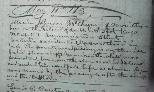
Upon arrival in New York, the Toys were immediately insured for $50,000, then a
considerable sum. With them came a "Birth Certificate", signed in Milne's own
handwriting. The text (with Milne's signature) was reproduced in a much abbreviated
form on the back of The World of Pooh (Dutton, 1957).
Milne's account in the Certificate of what happened to Piglet differs significantly from
Christopher's own account. Milne's account implies that the little Piglet was the one
Library Center at the New York Public Library -- in a glass case, of course.
Milne apparently insisted that the Toys should never be cleaned, but rather should look
as if a child had just finished playing with them. "No explanation is needed for the
world-weariness of Pooh and Eeyore," he wrote. "Time's hand has been upon them
since 1921. That was a long time ago".
Owl and Rabbit, of course, were never toys -- nor were they really specific animals in
the Forest (though owls and rabbits were and remain abundant in the area). They were
the imaginary creations of A.A. Milne.
Upon arrival in New York, the Toys were immediately insured for $50,000, then a
considerable sum. With them came a "Birth Certificate", signed in Milne's own
handwriting. The text (with Milne's signature) was reproduced in a much abbreviated
form on the back of The World of Pooh (Dutton, 1957).
Milne's account in the Certificate of what happened to Piglet differs significantly from
Christopher's own account. Milne's account implies that the little Piglet was the one

bitten in the face by the family dog.
Christopher's account in The Enchanted
Places maintains that the earlier, larger
Piglet was bitten (explaining why it was
replaced with the smaller version).
Conversely, in the original Certificate
Milne adds details to the story of Roo's
disappearance, details mentioned by
neither Christopher nor Ann Thwaite.
According to Milne, the family dog hid
Roo in the trunk of a hollow tree, from
which Roo was extracted a year later.
But not long after, Roo vanished once
more, never to be seen again...
Christopher's account in The Enchanted
Places maintains that the earlier, larger
Piglet was bitten (explaining why it was
replaced with the smaller version).
Conversely, in the original Certificate
Milne adds details to the story of Roo's
disappearance, details mentioned by
neither Christopher nor Ann Thwaite.
According to Milne, the family dog hid
Roo in the trunk of a hollow tree, from
which Roo was extracted a year later.
But not long after, Roo vanished once
more, never to be seen again...
| Birth Certificate (Artist's Rendition) |